
World War II
Puzzle 76 · Arsenal and Sustainment · Page 111 in print
Kaiser Shipyards
Kaiser’s special assembly trial launched SS Robert E. Peary in under five days in November 1942.
Jump to a word
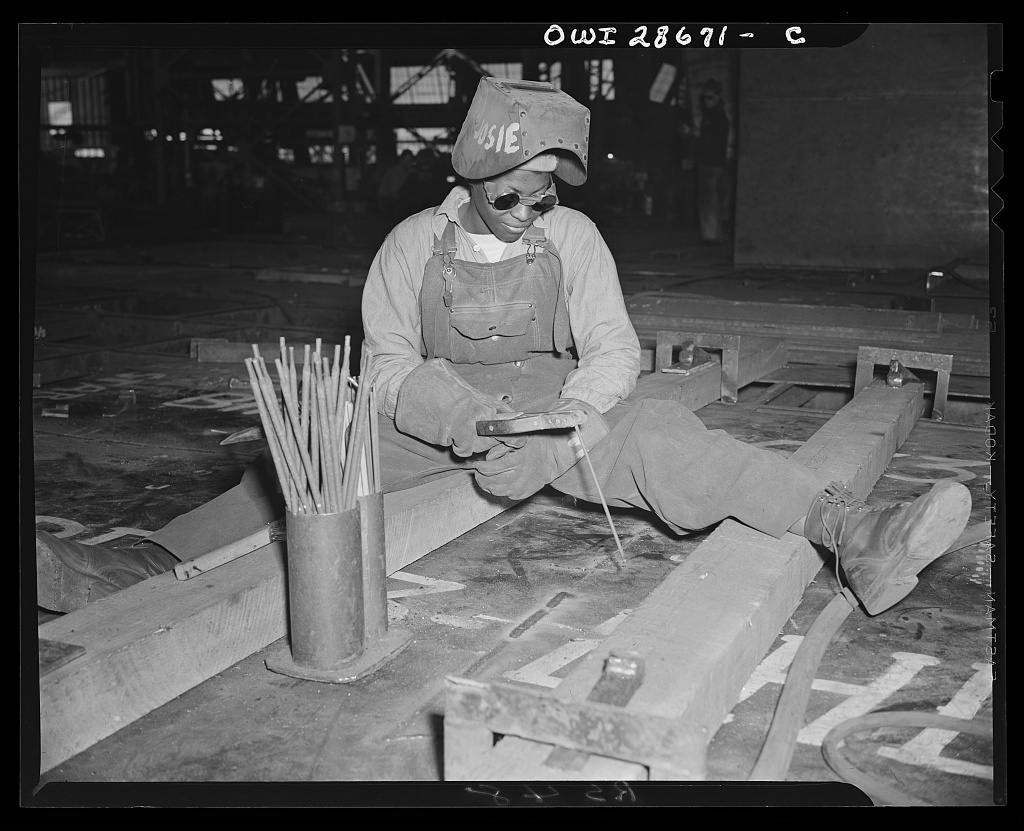
Josie Lucille Owens helps build the Liberty ship SS George Washington Carver at Kaiser’s Richmond shipyard in 1943.
E. F. Joseph / Library of Congress, Prints & Photographs Division, FSA/OWI Black-and-White Negatives (LC-USW3-028671-C) · Public domain · Original recordImage changes
Display copies resized; original archive JPEG preserved.
The words
Assembly
At Richmond, huge cranes moved pre-made ship parts into position. Welders joined them together. The method divided construction into repeated tasks that new workers could learn.
Cargo
Merchant ships carried food, fuel, ammunition and other supplies to the war fronts. Delivering those loads exposed their crews to enemy attack as well as the dangers of the sea.
Childcare
Childcare centers at Kaiser shipyards helped parents work their shifts. Staff included teachers and nurses, and sites near the yard entrances made drop-off and collection easier.
Did you know?
Some Kaiser centers offered hot dinners that workers could collect when picking up their children.
Fabrication
Fabrication meant making a ship’s component sections before final assembly. Liberty-ship builders prepared deckhouses, bow units and other large sections so they could be joined at the yard.
Reading 1 · Park Service: Liberty and Victory ships (opens a new tab)
Kaiser
Henry J. Kaiser came to shipbuilding from large construction projects, including Hoover and Grand Coulee Dams. His firm joined partners to build yards for British merchant-ship orders.
Maritime
The U.S. Maritime Commission contracted with Kaiser for ships. These government orders supported a network of yards that needed welders, riveters, electricians and administrative workers.
Oregon Ship
The Oregon Shipbuilding Corporation yard stood near the meeting of the Columbia and Willamette Rivers. It was distinct from the nearby Swan Island and Vancouver yards.
Permanente
Permanente Metals Corporation operated Richmond yards that built Victory ships. Its Yard 1 built Red Oak Victory, while other ships in the same program came from Yard 2.
Readings 2–3 · Park Service: Liberty and Victory ships (opens a new tab)
Prefabricated
Some ship components were made away from the yard and sent by rail for final assembly. Prefabrication linked separate factories with the shipyards that brought the sections together.
Record Launch
In a special trial, SS Robert E. Peary reached launch on November 12, 1942, after four days, fifteen hours and twenty-nine minutes of assembly. Further outfitting was needed before it could sail.
Richmond
Richmond’s shipyards opened industrial jobs to women and minority workers. Those opportunities coexisted with unequal pay, separate union arrangements and prejudice, which workers challenged through strikes and other protests.
Shipyards
The yards employed people in many trades, but work opportunities did not guarantee fair treatment. Some women sought transfers after sexual harassment by male coworkers or supervisors.
Swan Island
Swan Island’s shipyard stood on Portland’s Willamette River. Mary Carroll began welding there in April 1942, as women gained access to jobs building ships.
Vancouver
Kaiser’s Washington yard stood on the Columbia River. Black women there faced restrictions on skilled jobs and training, despite company claims that the yard was not segregated.
Vessels
Kaiser’s output included Liberty and Victory cargo ships. The later Victory design used a steam turbine and could travel faster than the Liberty ships, helping extend their usefulness beyond wartime.
Reading 2 · Park Service: Liberty and Victory ships (opens a new tab)
Sources
- Richmond Shipyard Number ThreeU.S. National Park Service; Rosie the Riveter WWII Home Front National Historical Park, historical-place account, updated September 16, 2020
- Liberty Ships and Victory Ships, America’s Lifeline in War (Teaching with Historic Places)U.S. National Park Service; Jay Michalsky, with Jean West and Teaching with Historic Places staff; lesson based on National Register and National Historic Landmark records
- Childcare on the World War II Home FrontU.S. National Park Service; Ella Wagner, PhD, Cultural Resources Office of Interpretation and Education, historical article with notes and bibliography
- Working Women at Vancouver’s Kaiser ShipyardsU.S. National Park Service; Tara Gibbs, American Conservation Experience Collections Assistant; Fort Vancouver National Historic Site, Bos’n’s Whistle archival collection, updated October 7, 2024
- On the Prow of LibertyBowdoin College; Kathryn Miles, Bowdoin Magazine, Winter 2021, published online March 19, 2021; interviews and historical reporting