
World War II
Puzzle 74 · Arsenal and Sustainment · Page 109 in print
Roosevelt and Lend-Lease
Roosevelt signed the Lend-Lease Act on 11 March 1941 to aid Allied nations.
Jump to a word
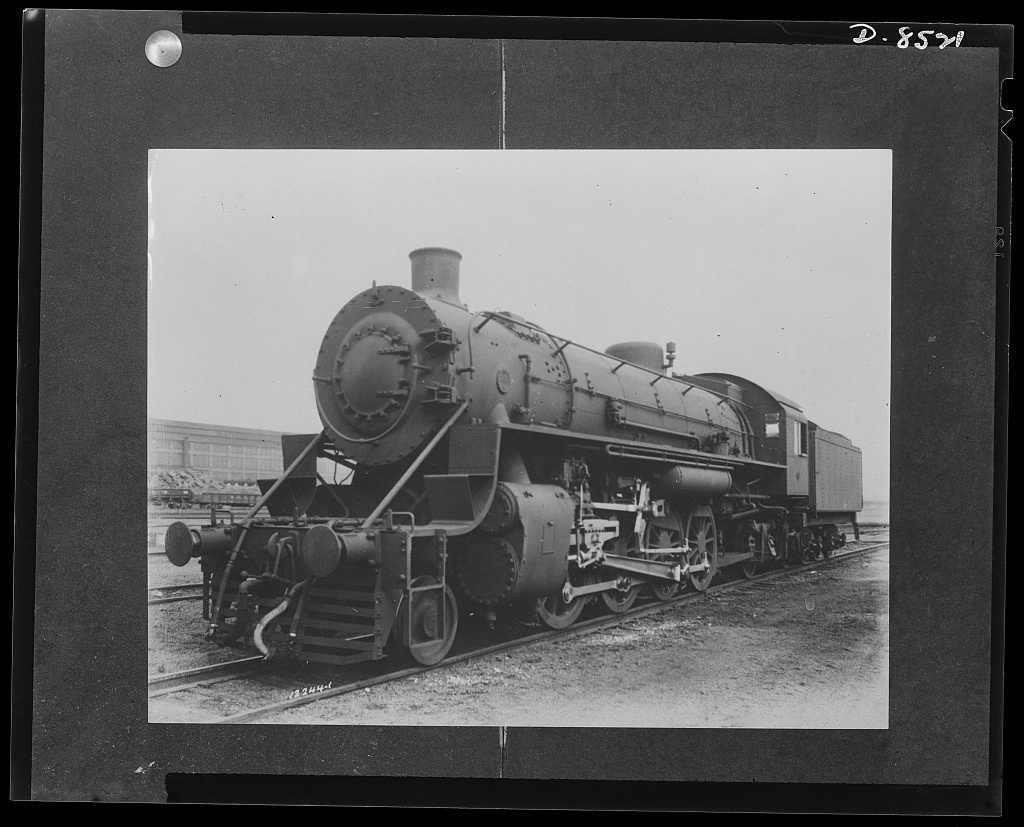
A U.S.-built locomotive supplied to Britain under Lend-Lease.
Official British photograph P-732 / Library of Congress, Prints & Photographs Division, FSA/OWI Black-and-White Negatives (LC-USE6-D-008521) · Public domain · Original recordImage changes
Display copies resized; original archive JPEG preserved.
The words
Arsenal
In his December 29, 1940, radio address, Roosevelt called for America’s factories to supply nations resisting the Axis. The arsenal image turned industrial production into a means of national defense.
pp. 7–8 · Roosevelt: December 1940 radio address (opens a new tab)
Britain
By late 1940, Britain’s currency and gold reserves were nearly exhausted. Its difficulty paying cash for American supplies helped prompt Roosevelt to seek another way of providing aid.
Congress
Congress passed the legislation and authorized funding. The law also required the president to report to Congress at least once every ninety days.
Did you know?
The bill carried the number H.R. 1776. Its formal title was An Act to Promote the Defense of the United States.
Secs. 5–6 · National Archives: the Lend-Lease Act (opens a new tab) · FDR Library: managing Lend-Lease (opens a new tab)
Democracy
Roosevelt presented aid to countries resisting the Axis as a way to protect American freedom. In the December 1940 address, democracy described the cause he urged Americans to support.
pp. 5–6, 8 · Roosevelt: December 1940 radio address (opens a new tab)
Economic Aid
Lend-Lease supplied more than weapons. Food, clothing, machine tools and raw materials supported Allied forces and civilians, linking American agriculture and industry to the wider war effort.
Fireside
This word points to Roosevelt’s December 29, 1940, radio address. He spoke to the American public about national security and called for faster production of supplies for countries resisting the Axis.
pp. 1, 5–8 · Roosevelt: December 1940 radio address (opens a new tab)
Garden Hose
At his December 17, 1940, press conference, Roosevelt imagined lending a hose to a neighbor whose house was burning. Returning or replacing the hose illustrated aid without requiring an immediate cash sale.
pp. 2–3 · Roosevelt: the garden-hose analogy (opens a new tab)
Hopkins
Harry Hopkins was the program’s first administrator, serving from March to August 1941. He helped manage the early phase of an aid effort that posed major supply and transport challenges.
Lend-Lease
The March 1941 law allowed defense supplies to reach countries whose defense the president considered vital to American security. It authorized several kinds of transfer, including lending, leasing and transferring ownership.
Secs. 2–3 · National Archives: the Lend-Lease Act (opens a new tab)
Murmansk
Murmansk was an ice-free Soviet port reached by Arctic supply convoys. Their cargo helped sustain the Soviet war effort, but crews faced freezing seas, German submarines and aircraft operating from Norway.
President
The act gave the president authority to select eligible recipient countries and set acceptable aid terms. Congress retained a role through funding and required reports on the program.
Secs. 3, 5–6 · National Archives: the Lend-Lease Act (opens a new tab)
Resources
Roosevelt’s appeal included skilled workers, managers, engineers, machines and raw materials. He argued that supplying defense needs required coordinated human effort as well as money and factory space.
pp. 6–7 · Roosevelt: December 1940 radio address (opens a new tab)
Roosevelt
President Franklin D. Roosevelt proposed the aid bill and signed it on March 11, 1941. He argued that supporting Britain would help protect the United States.
Introduction; approval line · National Archives: the Lend-Lease Act (opens a new tab)
War Economy
Aid shipments competed with American factories for scarce equipment. In November 1941, Roosevelt sought a study of machine-tool exports because domestic munitions plants also needed those tools.
War Production
Roosevelt urged manufacturers to expand capacity and put defense needs ahead of some consumer goods. His December 1940 speech called for a larger effort while production was still increasing.
p. 7 · Roosevelt: December 1940 radio address (opens a new tab)
Sources
- Fireside Chat, December 29, 1940Franklin D. Roosevelt Presidential Library & Museum; eight-page transcript of Roosevelt’s radio address, reproduced from The American Presidency Project
- Lend-Lease Act (1941): historical introduction and full transcriptU.S. National Archives; original legislation, approved March 11, 1941, with historical context and transcript
- The Lend-Lease Program, 1941–1945Franklin D. Roosevelt Presidential Library & Museum; Mark Seidl, historical essay with primary-source bibliography
- Franklin Roosevelt’s Press Conference, December 17, 1940Franklin D. Roosevelt Presidential Library & Museum; seven-page presidential press-conference transcript
- Murmansk RunU.S. National Park Service; World War II Memorial historical account, updated April 21, 2025