
World War II
Puzzle 39 · Bombers Over Europe · Page 63 in print
Harris and Bomber Command
Harris took command in February 1942 and directed Bomber Command’s night campaign against German cities.
Jump to a word
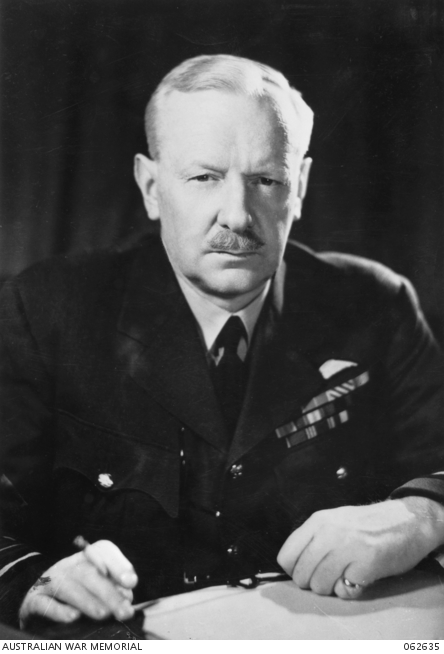
Air Chief Marshal Arthur Harris, commander of RAF Bomber Command, in London in 1944.
Australian War Memorial (062635) · Public domain · Original recordImage changes
Display copies resized; original downloaded JPEG preserved.
The words
Air Marshal
Air Marshal Sir Arthur Harris took command of Bomber Command on February 22, 1942, with responsibility for directing the RAF’s expanding offensive against Germany.
RAF Museum: the 1942 aviation timeline (opens a new tab) · RAF history: the 1942 bomber offensive (opens a new tab)
Area Bombing
The February 1942 directive targeted civilian morale, particularly industrial workers. Aiming at built-up districts put homes and residents within the planned area of attack.
Ch. VII, the February directive and aiming points · RAF history: the 1942 bomber offensive (opens a new tab)
Blockbuster
Blockbusters were high-capacity blast bombs used in attacks on built-up areas. Their blast damage helped incendiary bombs start fires that could spread through a wide area.
RAF Museum: bomber offensive and weapons (opens a new tab) · IWM record: HC bombs (Commons copy) (opens a new tab)
Bomber Command
Bomber Command brought together RAF and Commonwealth crews, including Australians in mixed-nationality units. They attacked industrial centers and cities, suffering heavy aircrew losses.
Crews and operations · War Memorial: Bomber Command’s crews (opens a new tab)
Butcher
According to biographer Henry Probert, some media called Harris “Butcher,” while his aircrews widely used “Butch.” He distinguished these from the media’s “Bomber” nickname.
Journal 31, p. 121, Probert’s answer to Bernard Fitch · Probert: Harris’s nicknames (opens a new tab)
Cologne
The May 30–31, 1942, raid sent a large bomber force against Cologne. The city’s report recorded deaths, injuries and widespread homelessness after the bombing.
Ch. VII, the Cologne raid and German damage report · RAF history: the 1942 bomber offensive (opens a new tab)
Dehousing
Dehousing sought to weaken civilian morale by destroying homes. Built-up districts became aiming points, placing workers and their families in danger.
Evangelista: bombing and civilian homes (opens a new tab) · RAF history: the 1942 bomber offensive (opens a new tab)
Gomorrah
Gomorrah named the bombing campaign against Hamburg in July and August 1943. British night raids and American daylight attacks devastated the city and killed civilians.
The Hamburg campaign and its human consequences · WWII Museum: the Hamburg bombing campaign (opens a new tab)
Hamburg
The attacks on Hamburg produced a firestorm in densely built districts. Thousands of residents died, and many others lost their homes or fled the city.
Ch. I, the Hamburg attacks and firestorm · RAF history: area attacks in 1943 (opens a new tab)
Harris
Harris directed the city-bombing offensive as Bomber Command’s leader. The RAF Museum identifies civilian deaths and aircrew losses as central to the campaign’s continuing controversy.
Printed p. 41 (PDF p. 42), Arthur Harris · RAF Museum: bomber offensive and weapons (opens a new tab)
High Wycombe
Bomber Command’s headquarters stood in beech woods near High Wycombe. The Air Ministry wanted a site close to London that was difficult to spot from the air.
Station history, the 1938 search for a headquarters · RAF: the High Wycombe headquarters (opens a new tab)
Millennium
Millennium named the mass raid on Cologne in May 1942. The force combined front-line aircraft with machines drawn from training groups.
Did you know?
The force included Wellingtons, Whitleys and Hampdens alongside newer Stirlings, Halifaxes, Manchesters and Lancasters.
RAF Museum: the 1942 aviation timeline (opens a new tab) · RAF history: the 1942 bomber offensive (opens a new tab)
Night Bombing
Heavy losses in early daylight raids led the RAF to concentrate on night bombing. Darkness reduced visibility for defenders but also made finding the intended targets difficult.
Printed p. 9 (PDF p. 10), the RAF bomber offensive · RAF Museum: bomber offensive and weapons (opens a new tab)
Night Strikes
German night fighters used airborne radar to find bombers in the darkness. Searchlights and antiaircraft guns added to the dangers during attacks over Germany.
Ch. I, German night defenses · RAF history: area attacks in 1943 (opens a new tab)
Pathfinder
The Pathfinder Force marked targets for the main bomber stream. Formed in August 1942, its crews dropped flares to help following aircraft find the aiming area.
RAF Museum: the 1942 aviation timeline (opens a new tab) · RAF Museum: bomber offensive and weapons (opens a new tab)
Sources
- Royal Air Force 1939–1945, Volume II: The Fight Avails, Chapter VII: Bomber Command and the Assault on GermanyDenis Richards and Hilary St. George Saunders; HMSO, 1954, HyperWar transcription
- Royal Air Force 1939–1945, Volume III: The Fight is Won, Chapter I: POINTBLANK and Area AttacksHilary St. George Saunders; HMSO, 1954, HyperWar transcription
- British Military Aviation in 1942Royal Air Force Museum
- Royal Air Force Historical Society Journal 31: Bomber Command Association symposium, discussionHenry Probert, discussion at the October 12, 2002 symposium; Royal Air Force Historical Society, 2004
- Large print guide, AttackRoyal Air Force Museum
- Striking by Night – History of Bomber CommandAustralian War Memorial
- Introduction, Allied Air Attacks and Civilian Harm in Italy, 1940–1945: Bombing among FriendsMatthew Evangelista; Routledge, 2022, chapter abstract on Taylor & Francis
- RAF High WycombeRoyal Air Force; station history section
- Operation Gomorrah: The First of the FirestormsThe National WWII Museum, July 2023
- Royal Air Force Bomber Command, 1942–1945 (CH 12450)Imperial War Museums photograph CH 12450; catalogue caption reproduced on Wikimedia Commons