
Wildlife of the World
Puzzle 07 · African Plains and Floodplains · Page 19 in print
Ground Pangolin
When threatened, Temminck’s ground pangolin curls into a ball, presenting overlapping keratin scales to its attacker; the scales form armour around the softer underside.
Jump to a word
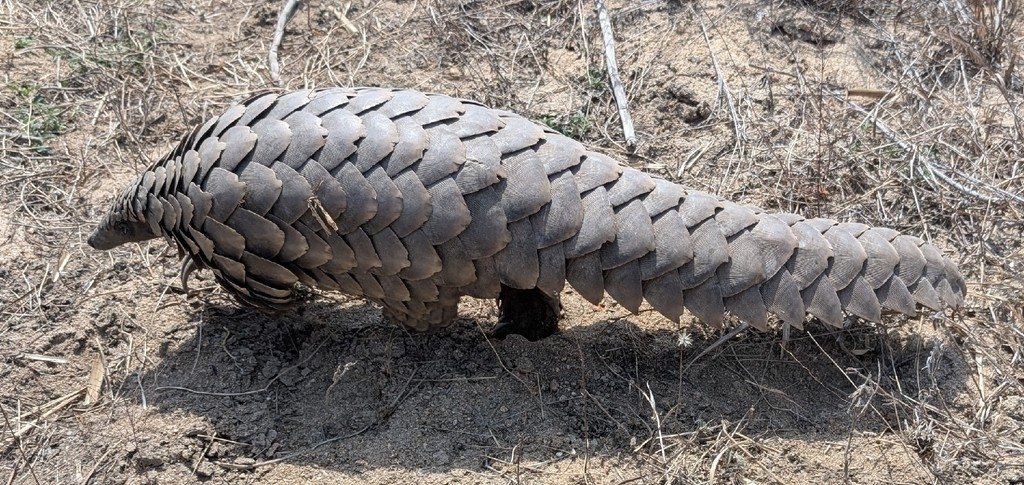
A ground pangolin walks with its heavy scaled tail extended.
Species reference for Ground Pangolin. The photograph does not necessarily show the population or place named in the puzzle.
(c) Shedron Mukhumo, some rights reserved (CC BY) · CC BY 4.0 · Original recordImage changes
Resized and converted to JPEG for display; no subject alteration.
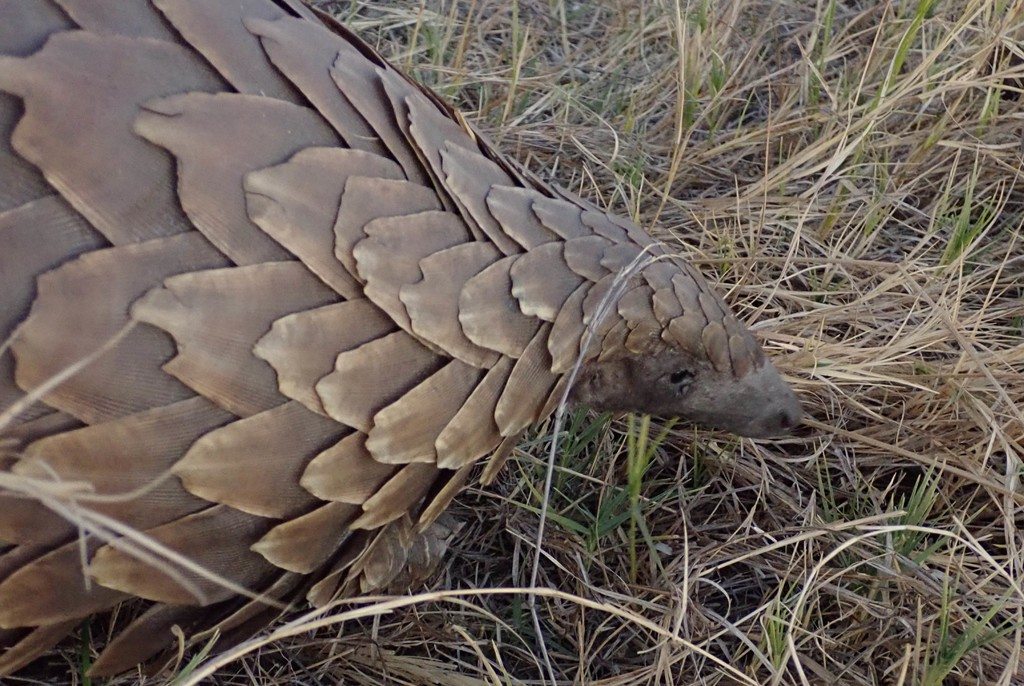
Overlapping scales protect a ground pangolin's head and shoulders.
Species reference for Ground Pangolin. The photograph does not necessarily show the population or place named in the puzzle.
(c) Wilderness Safaris Botswana - Conservation Team, some rights reserved (CC BY) · CC BY 4.0 · Original recordImage changes
Resized and converted to JPEG for display; no subject alteration.
The words
Aardvark
Temminck's pangolin lives in burrows dug by aardvarks and springhares.
South African National Biodiversity Institute (opens a new tab)
Armour
Overlapping plate-like scales protect it from predators.
South African National Biodiversity Institute (opens a new tab)
Bushveld
In South Africa the pangolin occurs in bushveld areas.
South African National Biodiversity Institute (opens a new tab)
Gastrolith
The pangolin swallows stones and keeps them in the stomach to help crush food.
Keratin
The horn-like material its scales are made of.
The pangolin's scales are thick and keratinized.
Pinecone
What the scaly pangolin looks like.
Its scales give it a look similar to a pine cone.
Rolled
When threatened it rolls into a ball.
South African National Biodiversity Institute (opens a new tab)
Scaled
The pangolins' order, Pholidota, means 'scaled animals'.
Scaly Anteater
An alternative common name for a pangolin, linking its protective scales with its ant-and-termite diet.
South African National Biodiversity Institute (opens a new tab)
Sticky Tongue
A very long, sticky tongue for catching insects.
Subterranean
Underground: ground pangolins shelter in burrows, including those dug by other animals.
animaldiversity.org (opens a new tab) · South African National Biodiversity Institute (opens a new tab)
Temminck
Temminck’s ground pangolin is the full common name of the animal featured here.
South African National Biodiversity Institute (opens a new tab)
Termite Mounds
It finds ant and termite hills by smell and tears them open with its claws.
animaldiversity.org (opens a new tab) · South African National Biodiversity Institute (opens a new tab)
Timid
Shy and easily alarmed.
This timid species uses its scales for protection.
Toothless
Pangolins have no teeth.
South African National Biodiversity Institute (opens a new tab) · animaldiversity.org (opens a new tab)
Sources
- Temminck Ground Pangolin (source capture)South African National Biodiversity Institute (SANBI)
- Temminck ground pangolinanimaldiversity.org