
Wildlife of the World
Puzzle 06 · African Plains and Floodplains · Page 18 in print
Caracal
A caracal can spring three metres into the air to catch a flying bird; its powerful hind legs also help this stealthy cat pounce on hares and rodents at ground level.
Jump to a word
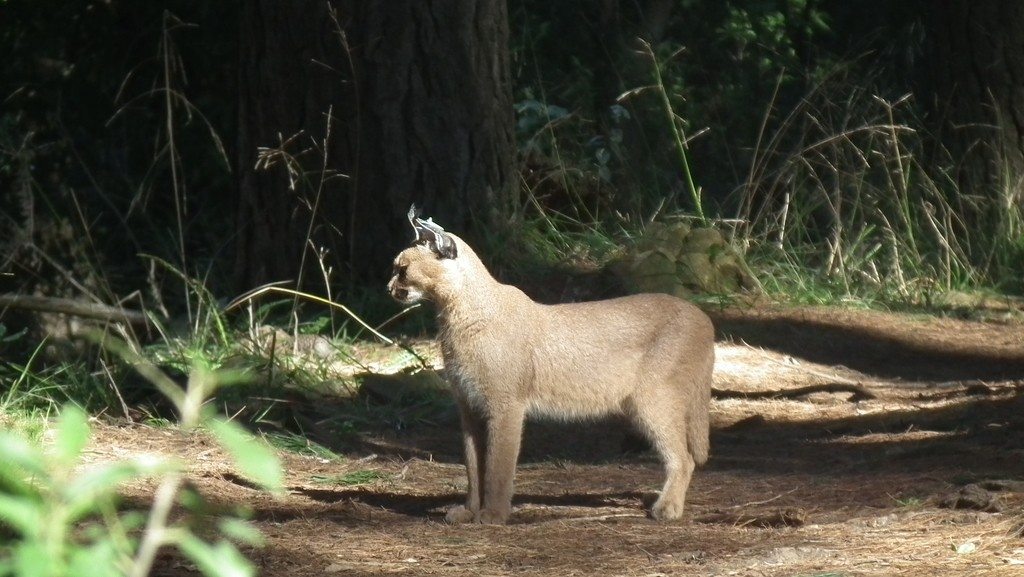
A caracal pauses beside a wooded path.
Species reference for Caracal. The photograph does not necessarily show the population or place named in the puzzle.
(c) Shaun Swanepoel, some rights reserved (CC BY) · CC BY 4.0 · Original recordImage changes
Resized and converted to JPEG for display; no subject alteration.
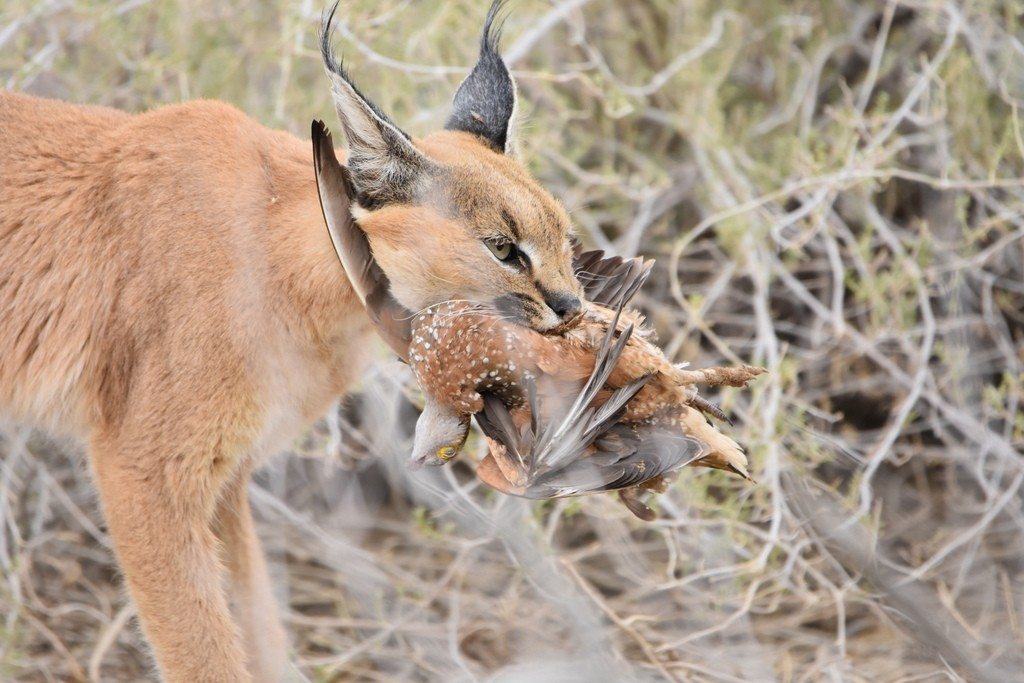
Long black ear tufts distinguish the caracal's profile.
Species reference for Caracal. The photograph does not necessarily show the population or place named in the puzzle.
(c) Justin Ponder, some rights reserved (CC BY) · CC BY 4.0 · Original recordImage changes
Resized and converted to JPEG for display; no subject alteration.
The words
Ambush
Surprising prey from close range.
Caracals are ambush predators.
Caracal
The caracal and its black ear tufts.
Desert Lynx
The caracal is also called the desert lynx, though it is not a true lynx.
Ear Tufts
The long, black ear tufts are its most noticeable feature.
Guineafowl
Caracals hunt game birds like guinea fowl.
South African National Biodiversity Institute (opens a new tab)
Hind Legs
The hind legs are disproportionately tall and well muscled.
Impala
Caracals occasionally kill mammals as large as an impala.
Karakulak
'caracal' comes from the Turkish 'karakulak', black ear.
South African National Biodiversity Institute (opens a new tab) · Urban Caracal Project (opens a new tab)
Leaping
Springing high to catch birds.
Caracals leap up to 3 m to swat a flying bird.
Livestock
Farm animals that caracals sometimes take.
Predation on small livestock leads to thousands of caracals being killed each year, especially in South Africa and Namibia.
animals.sandiegozoo.org (opens a new tab) · animaldiversity.org (opens a new tab)
Pounce
The sudden spring onto prey.
After stalking, caracals catch prey with a direct pounce.
Rock Hyrax
Caracals frequently eat rock hyraxes, caught among rocks.
South African National Biodiversity Institute (opens a new tab) · Urban Caracal Project (opens a new tab)
Rooikat
In South Africa the caracal is also known as the rooikat (Afrikaans).
South African National Biodiversity Institute (opens a new tab)
Stalking
Creeping close to prey before the final leap.
Caracals quietly stalk prey to within a few bounds.
animaldiversity.org (opens a new tab) · Urban Caracal Project (opens a new tab)
Tassels
Its long, black ear tufts, or tassels.
Sources
- Caracal (source capture)Urban Caracal Project
- Caracalanimals.sandiegozoo.org
- Caracal (source capture)South African National Biodiversity Institute (SANBI)
- Caracal anatomy and dietanimaldiversity.org