
Wildlife of the World
Puzzle 08 · African Plains and Floodplains · Page 20 in print
Kori Bustard
The kori bustard is among the heaviest flying birds, with large males reaching about 19 kilograms; it strides across the open plains and light woodland of eastern and southern Africa.
Jump to a word
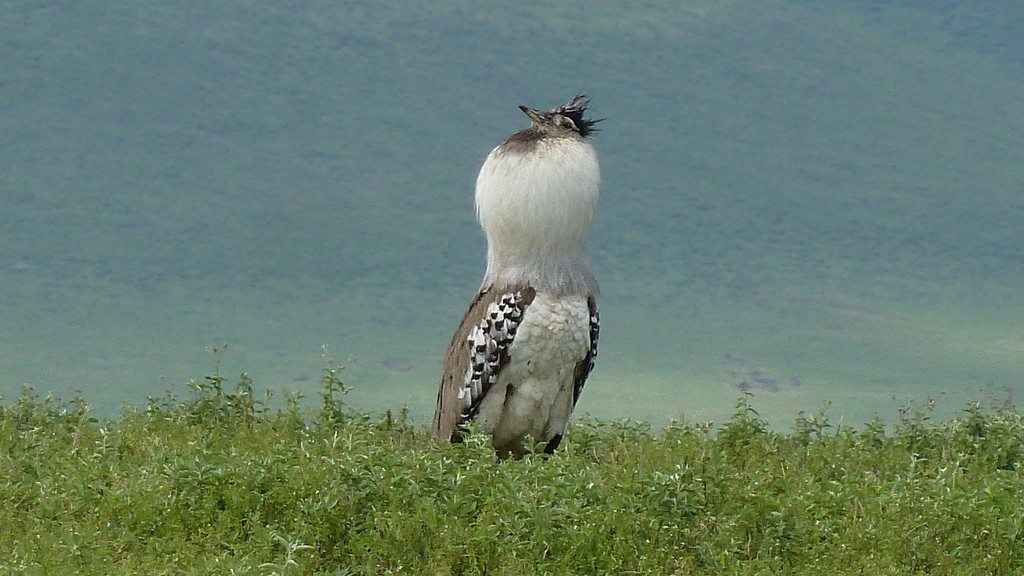
A kori bustard displays with its throat feathers inflated.
Species reference for Kori Bustard. The photograph does not necessarily show the population or place named in the puzzle.
(c) tlaloc27, some rights reserved (CC BY) · CC BY 4.0 · Original recordImage changes
Resized and converted to JPEG for display; no subject alteration.
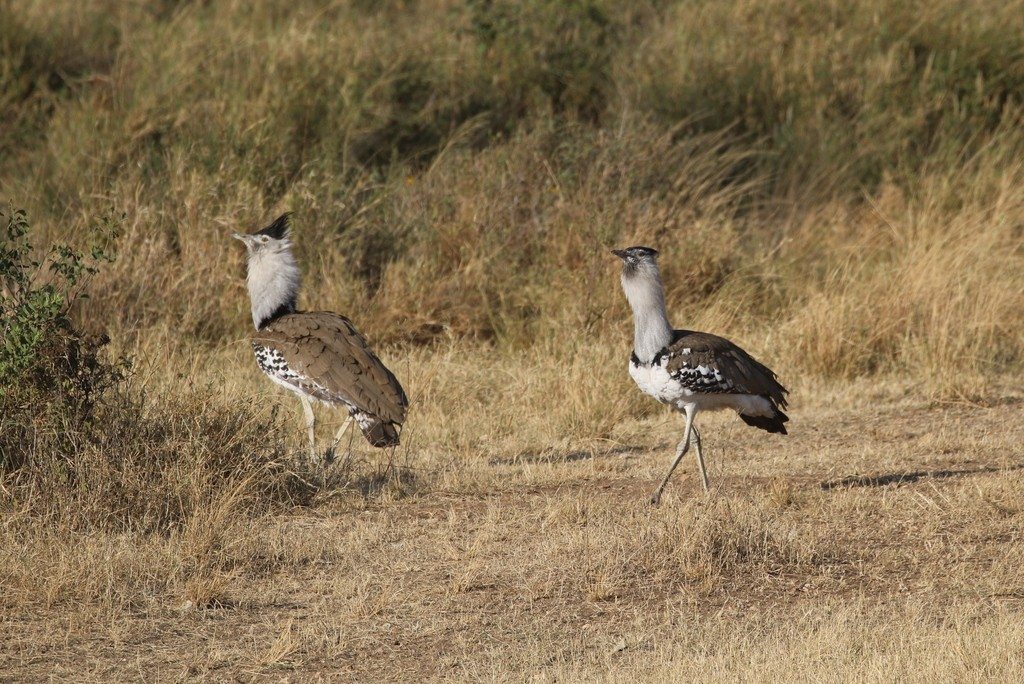
Two kori bustards stand in dry grassland.
Species reference for Kori Bustard. The photograph does not necessarily show the population or place named in the puzzle.
Henggang Cui / iNaturalist (CC0) · CC0 1.0 · Original recordImage changes
Resized and converted to JPEG for display; no subject alteration.
The words
Acacia Gum
Kori bustards eat the gum of acacia trees.
Bee-Eater
Carmine bee-eaters perch on kori bustards' backs and catch the insects they stir up.
Berries
Fruit in its varied diet.
Kori bustards eat seeds and berries as well as animals.
Smithsonian's National Zoo and Conservation Biology Institute (opens a new tab)
Bill Snapping
The courting male bows with neck inflated and bill snapping.
Bowing
The courting male bows toward the female.
Bush Fires
Grass fires that draw the birds to feed.
Kori bustards are drawn to bush fires to eat insects killed in the blaze.
Bustard
The family of large ground birds the kori belongs to.
Male kori bustards weigh 11-19 kg.
Dust Bath
Kori bustards have no preen gland and practise dust bathing.
Ground Nest
Eggs are laid on the ground in a shallow scrape.
Smithsonian's National Zoo and Conservation Biology Institute (opens a new tab)
Heaviest
Male kori bustards are exceptionally heavy flying birds, although they spend much of their time walking.
Inflated
The displaying male inflates his throat to four times its normal size.
Smithsonian's National Zoo and Conservation Biology Institute (opens a new tab)
Kori
The kori bustard is a large African bird that forages on foot across open country.
Lekking
Males gather in loose, lek-like formations and display for females.
Polygynous
A male kori bustard mates with more than one female.
Smithsonian's National Zoo and Conservation Biology Institute (opens a new tab)
Striding
The kori bustard lives on the ground and rarely flies unless in serious danger. It is often seen walking quickly with long strides.
Animal Diversity Web (opens a new tab) · Smithsonian's National Zoo and Conservation Biology Institute (opens a new tab)
Sources
- Kori Bustard (source capture)Animal Diversity Web, University of Michigan Museum of Zoology
- Kori Bustard (source capture)Smithsonian's National Zoo and Conservation Biology Institute
- Kori bustardwww.nationalzoo.si.edu