
Wildlife of the World
Puzzle 44 · Australasia and Zealandia · Page 70 in print
Kakapo
The kakapo is a flightless, nocturnal parrot of New Zealand; conservation teams monitor birds on protected islands and have trialled a fenced mainland sanctuary as additional habitat.
Jump to a word
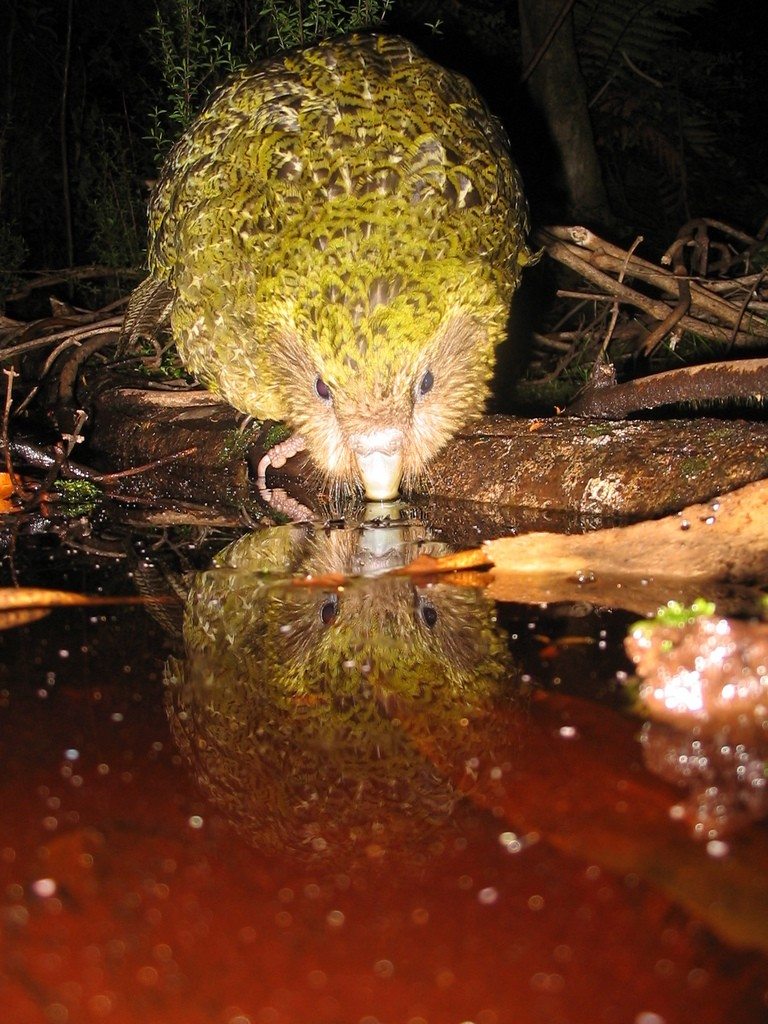
A kākāpō forages at night.
Species reference for Kakapo. The photograph does not necessarily show the population or place named in the puzzle.
(c) M Rutherford, some rights reserved (CC BY) · CC BY 4.0 · Original recordImage changes
Resized and converted to JPEG for display; no subject alteration.
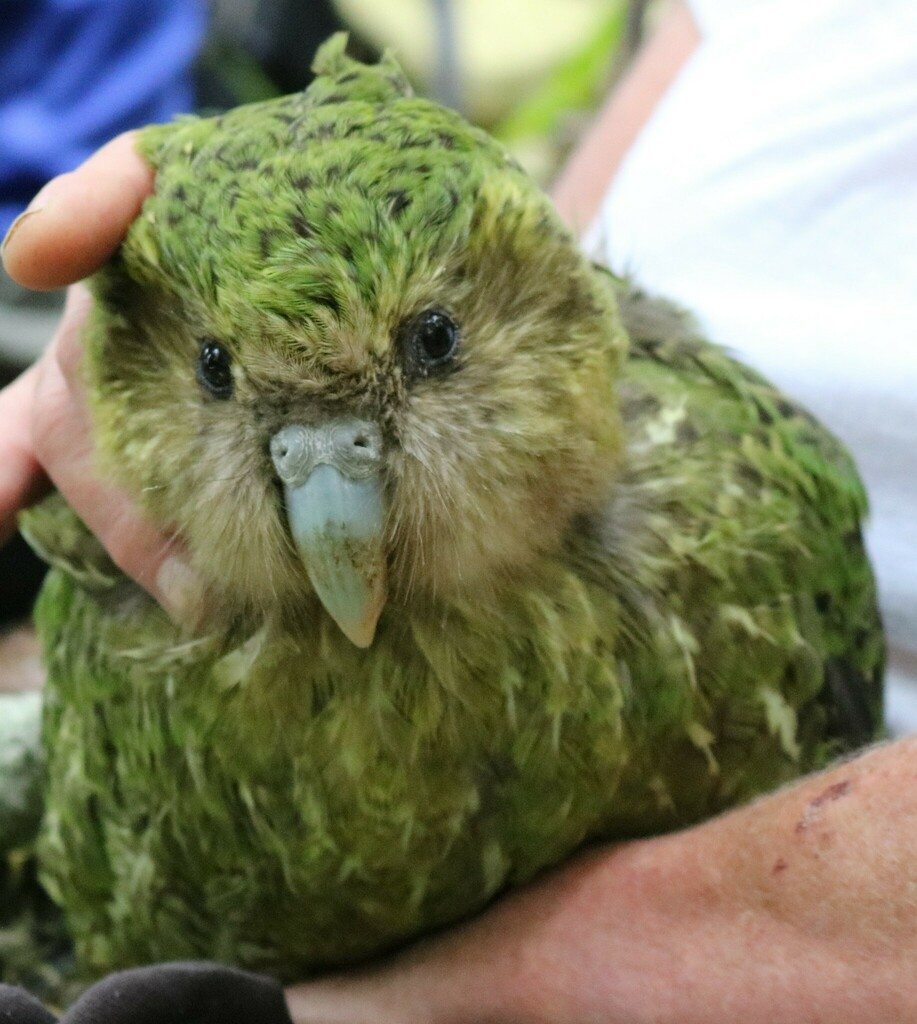
A kākāpō seen close up while being held by a person.
Species reference for Kakapo. The photograph does not necessarily show the population or place named in the puzzle.
(c) Oscar Dove, some rights reserved (CC BY) · CC BY 4.0 · Original recordImage changes
Resized and converted to JPEG for display; no subject alteration.
The words
Anchor Island
Anchor Island's rimu forest supports kākāpō breeding.
Department of Conservation Te Papa Atawhai (opens a new tab)
Booming
Males boom from their bowls to attract females.
Department of Conservation Te Papa Atawhai (opens a new tab)
Bowls
Males dig shallow bowls linked by tracks.
Department of Conservation Te Papa Atawhai (opens a new tab)
Cats
Introduced cats threaten kākāpō, which evolved without native land-mammal predators.
Department of Conservation Te Papa Atawhai (opens a new tab)
Codfish Island
Whenua Hou/Codfish Island is the centre for Kākāpō Recovery.
Department of Conservation Te Papa Atawhai (opens a new tab) · Department of Conservation Te Papa Atawhai (2) (opens a new tab)
Kakapo
The kākāpō is a large, green, flightless parrot.
Department of Conservation Te Papa Atawhai (opens a new tab)
Nestling
Female kakapo feed the nestlings.
New Zealand
Kākāpō were once widespread on mainland New Zealand.
Department of Conservation Te Papa Atawhai (opens a new tab)
Owl Parrot
An alternative name for the kākāpō, a nocturnal New Zealand parrot.
Rats
Introduced rats threaten kākāpō and are one reason predator control matters to their recovery.
Department of Conservation Te Papa Atawhai (opens a new tab)
Rimu
Kākāpō only breed when rimu trees mass fruit.
Department of Conservation Te Papa Atawhai (opens a new tab)
Roosts
Kākāpō sleep by day in ground or tree-top roosts.
Department of Conservation Te Papa Atawhai (opens a new tab)
Scent
The kakapo has a strong scent that predators can follow.
Stoats
Introduced stoats are predators that threaten kākāpō.
Department of Conservation Te Papa Atawhai (opens a new tab)
Strigops
The scientific name Strigops means owl-like.
Sources
- Kakapo (source capture)Department of Conservation Te Papa Atawhai, New Zealand
- Kakapo (source capture)Department of Conservation Te Papa Atawhai, New Zealand
- Kakapo (source capture)Department of Conservation Te Papa Atawhai, New Zealand
- Kakapo (source capture)Animal Diversity Web, University of Michigan Museum of Zoology
- Kakapo (source capture)New Zealand Birds Online (Museum of New Zealand Te Papa Tongarewa, Birds New Zealand and Department of Conservation)