
Wildlife of the World
Puzzle 43 · Australasia and Zealandia · Page 69 in print
Platypus Streams
Male platypuses have venomous spurs on their hind legs, and their venom glands become more active during the breeding season; these egg-laying mammals find underwater prey using sensitive bills.
Jump to a word
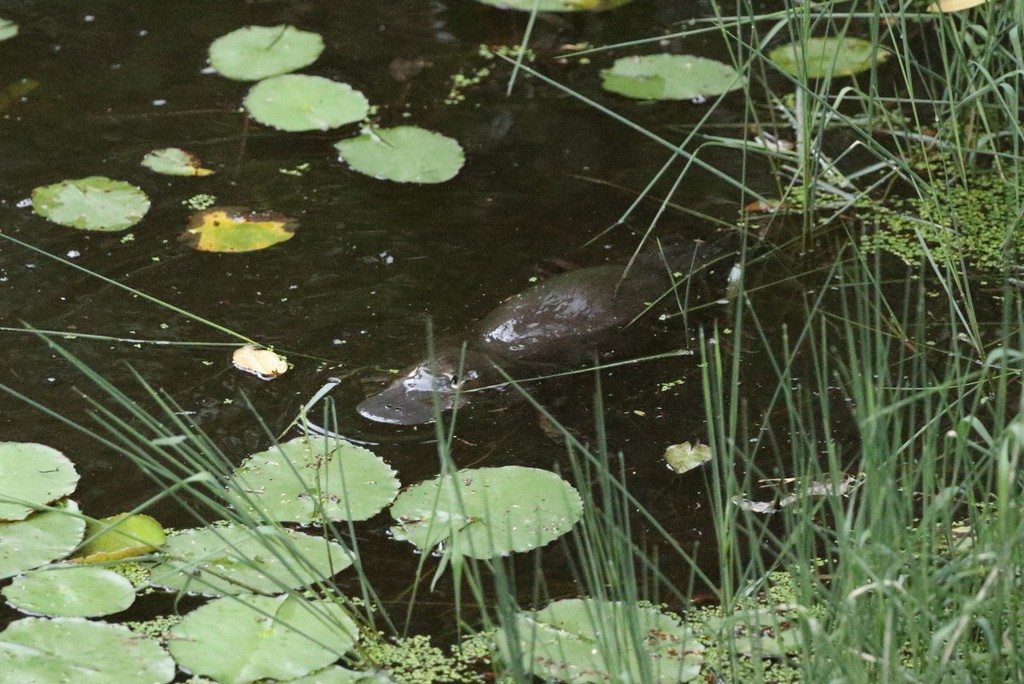
A platypus swims among floating leaves.
Species reference for Platypus Streams. The photograph does not necessarily show the population or place named in the puzzle.
Richard Fuller / iNaturalist (CC0) · CC0 1.0 · Original recordImage changes
Resized and converted to JPEG for display; no subject alteration.
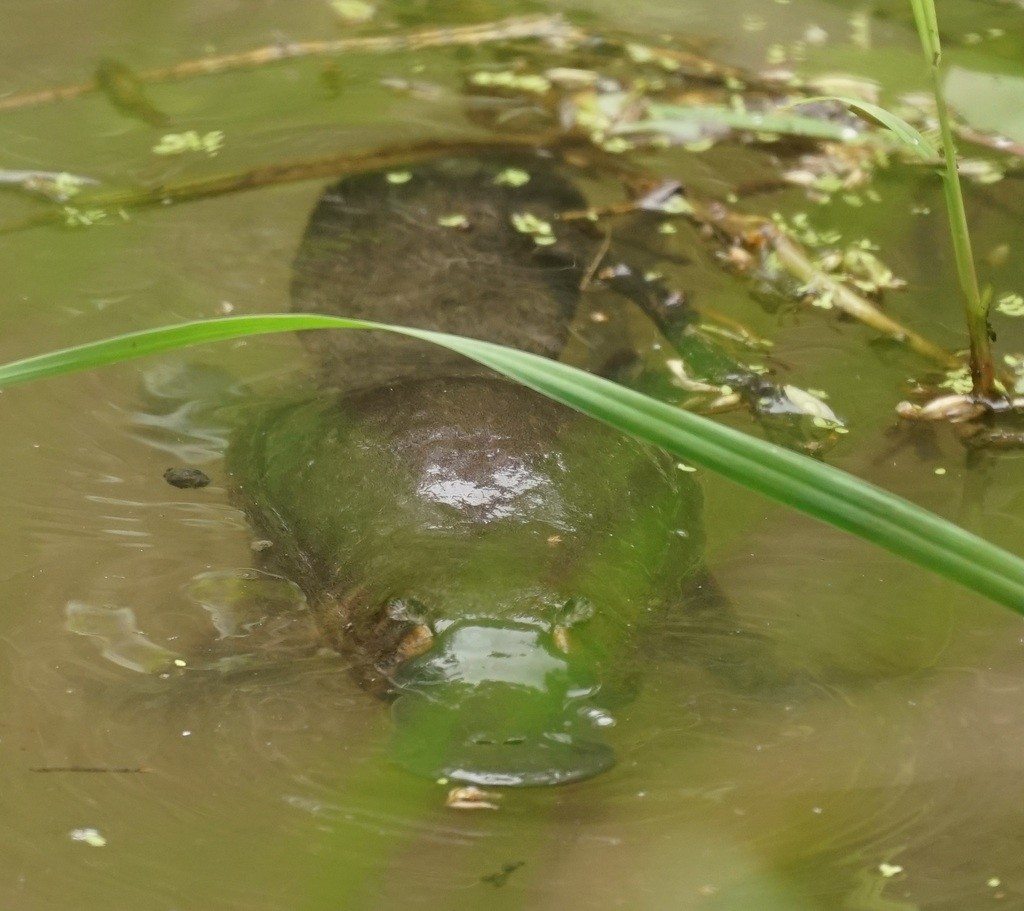
A platypus glides just below the water's surface.
Species reference for Platypus Streams. The photograph does not necessarily show the population or place named in the puzzle.
(c) Tim, some rights reserved (CC BY) · CC BY 4.0 · Original recordImage changes
Resized and converted to JPEG for display; no subject alteration.
The words
Creek
The platypus burrows into the banks of rivers, creeks and ponds.
Duckbill
A familiar name for the platypus’s broad, flattened bill, which it uses while searching underwater for food.
Echidna
Echidnas share the monotreme order with the platypus.
Electric Sense
The bill, its primary sense organ, is equipped with pressure receptors and electro-receptors.
Insect Larvae
The platypus eats mainly insect larvae.
Lagoons
Platypuses inhabit rivers, lagoons and streams.
Milk Patches
The young suckle from two fur-covered milk patches.
Monotreme
Platypuses and echidnas are monotremes, mammals that lay eggs.
Platypus
The platypus is a unique Australian species.
Rudders
The partially webbed hind feet act as rudders.
Shrimp
Platypuses eat shrimps.
Australian Museum (opens a new tab) · Animal Diversity Web (opens a new tab)
Spur
Males have a sharp spur on each ankle.
Stream
The platypus depends on rivers, streams and freshwater.
Venom
The spur connects to a venom gland.
Water Bugs
The platypus feeds on water bugs.
Sources
- Platypus Streams (source capture)Australian Museum
- Platypus Streams (source capture)Animal Diversity Web, University of Michigan Museum of Zoology