
Wildlife of the World
Puzzle 28 · Northern Forests and Grasslands · Page 49 in print
Bison Prairie
In 1902, only 23 bison remained in Yellowstone National Park; protection and restoration helped the population recover, and the park now supports herds that graze and migrate across its grasslands.
Jump to a word
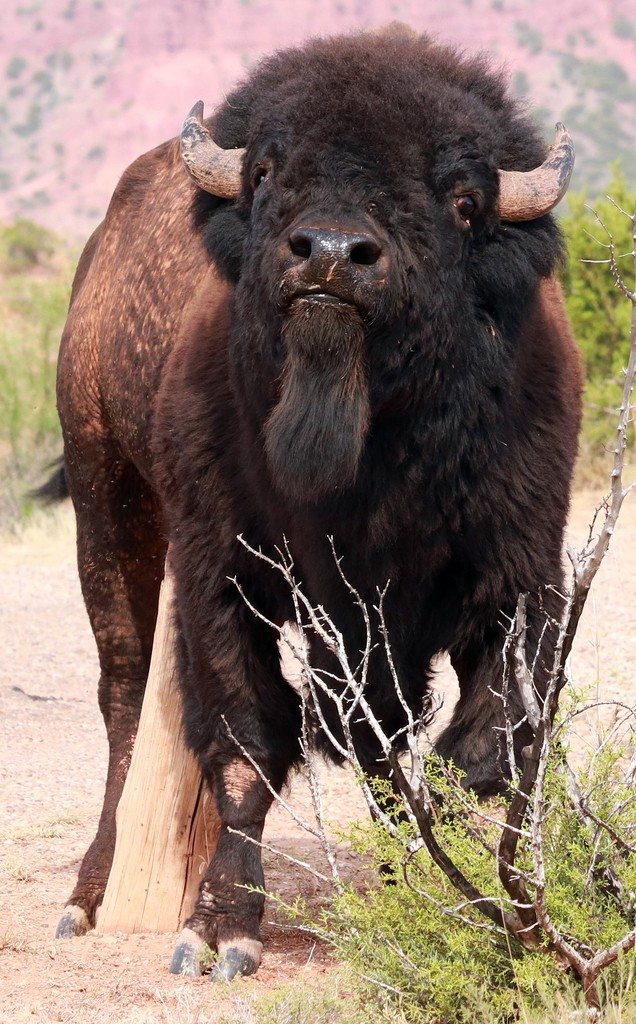
The bison's heavy forequarters and woolly head seen from the front.
Species reference for Bison Prairie. The photograph does not necessarily show the population or place named in the puzzle.
(c) Catherine C. Galley, some rights reserved (CC BY) · CC BY 4.0 · Original recordImage changes
Resized and converted to JPEG for display; no subject alteration.
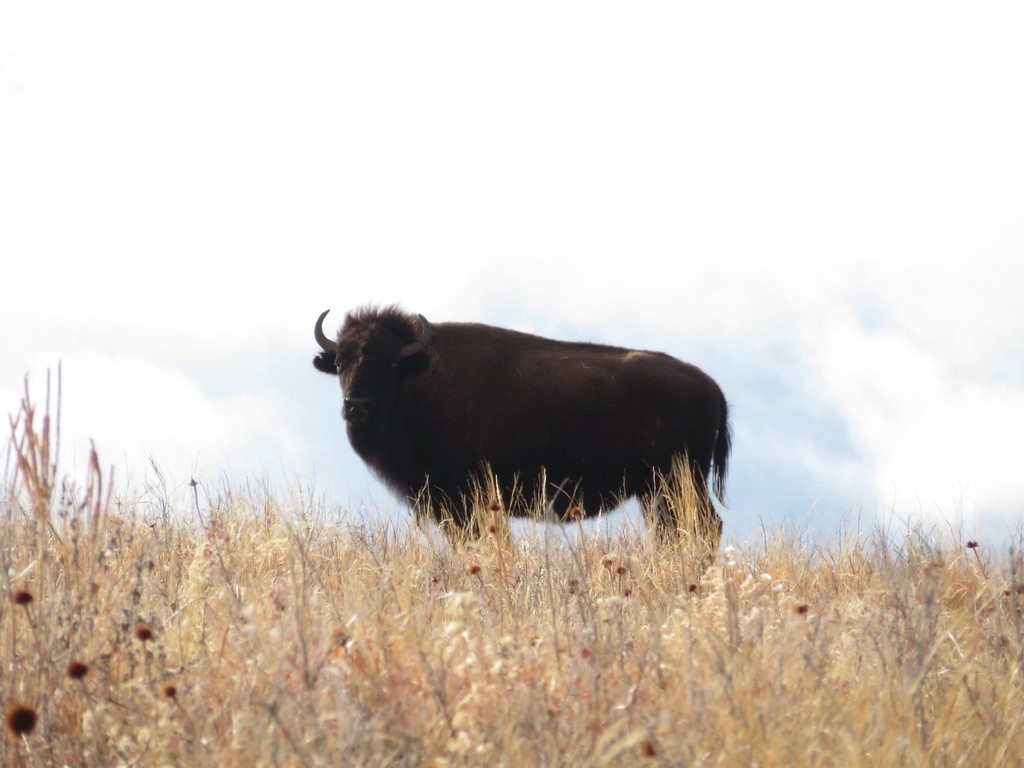
A bison stands amid prairie grass in South Dakota.
Species reference for Bison Prairie. The photograph does not necessarily show the population or place named in the puzzle.
(c) Eric Schmidt, some rights reserved (CC BY) · CC BY 4.0 · Original recordImage changes
Resized and converted to JPEG for display; no subject alteration.
The words
Bison
The American bison is the large grazing mammal associated with North America’s prairie and grassland herds.
Blizzards
The shaggy head lets bison withstand blizzards facing into the wind.
Smithsonian's National Zoo and Conservation Biology Institute (opens a new tab)
Buffalo
In North America both bison and buffalo refer to the American bison.
Bull
Male bison, bulls, butt heads for mating rights.
Great Plains
The plains where tens of millions once lived.
Before 1800, bison roamed the Great Plains in vast numbers.
Smithsonian's National Zoo and Conservation Biology Institute (opens a new tab)
Hoof
Bison hooves are black and circular.
Horn
Bison horns are black and curve upward to a sharp tip.
Hump
The shoulder hump is a distinctive bison feature.
Lamar Valley
Bison graze intensively in Lamar Valley.
Prairie
Bison were found mainly in North America's grasslands and prairie.
nps.gov (opens a new tab) · Smithsonian's National Zoo and Conservation Biology Institute (opens a new tab)
Rangeland
Grazing land the herds feed on.
Rangeland monitoring tracks how bison graze the park.
Rubbing
Bison rub against signposts and roll on the ground, which helps them shed winter coats.
Tatanka
Tatanka is the Lakota word for bison.
Wallows
Bison wallows are bowl-like depressions important to the prairie.
Yellowstone
Yellowstone preserves a bison herd with a continuous history in the park, where the animals graze and migrate seasonally.
Sources
- Bison recoverywww.nps.gov
- Bison Prairie (source capture)Smithsonian's National Zoo and Conservation Biology Institute
- Bison Prairie (source capture)National Park Service
- Bison Prairie (source capture)National Park Service
- Bison Prairie (source capture)Animal Diversity Web, University of Michigan Museum of Zoology
- Bison wallowswww.nps.gov