
Wildlife of the World
Puzzle 29 · Northern Forests and Grasslands · Page 50 in print
Whooping Crane
The migratory whooping cranes of Wood Buffalo National Park breed in Canada and winter on the Texas coast; protection of wetlands along their route has helped this population recover.
Jump to a word
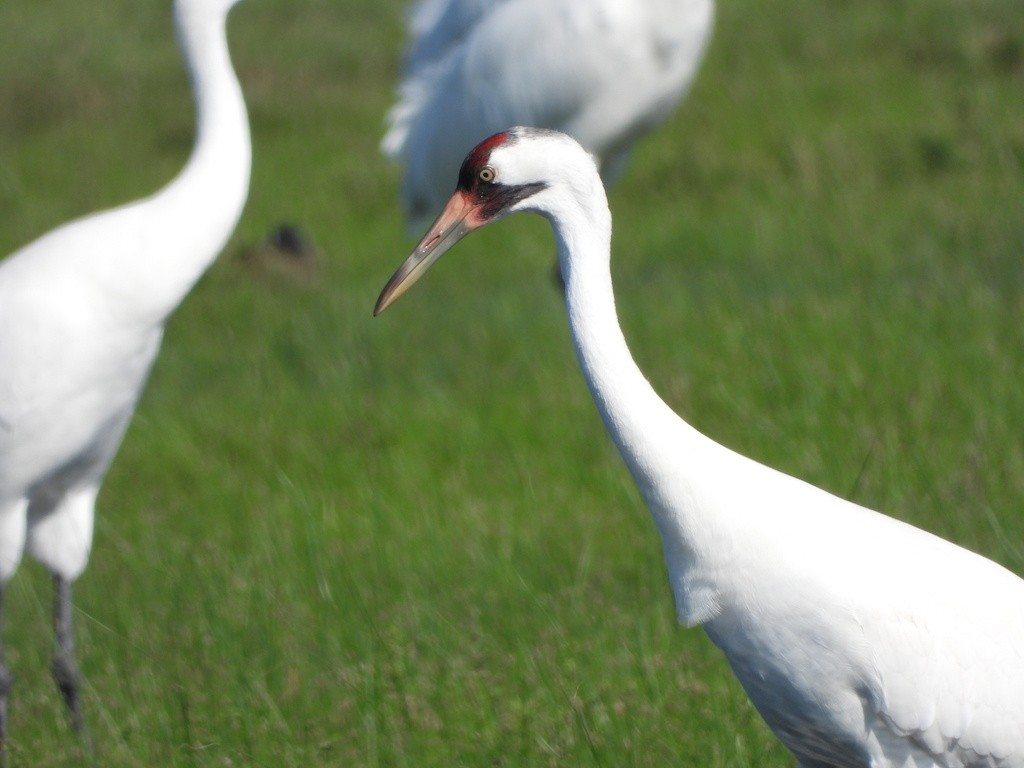
A whooping crane's white plumage contrasts with its dark bill.
Species reference for Whooping Crane. The photograph does not necessarily show the population or place named in the puzzle.
(c) Jared Shorma, some rights reserved (CC BY) · CC BY 4.0 · Original recordImage changes
Resized and converted to JPEG for display; no subject alteration.
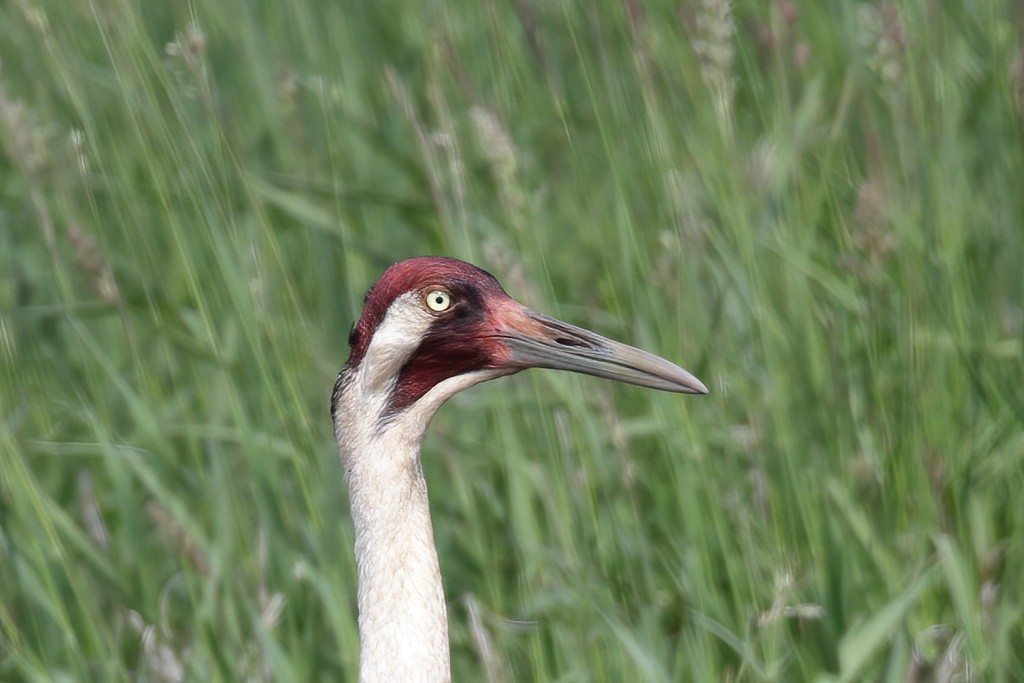
A closer look at a whooping crane's red crown and long bill.
Species reference for Whooping Crane. The photograph does not necessarily show the population or place named in the puzzle.
(c) Kim, some rights reserved (CC BY) · CC BY 4.0 · Original recordImage changes
Resized and converted to JPEG for display; no subject alteration.
The words
Aransas
The cranes winter at Aransas National Wildlife Refuge on the Texas coast.
Banding
Leg bands help researchers identify individual whooping cranes and follow their movements.
Black Wingtips
Whooping cranes are white birds, but their primaries, the largest flight feathers on the wing, are black and show as black wing tips in flight.
International Crane Foundation (opens a new tab) · U.S. Fish and Wildlife Service (opens a new tab)
Blue Crabs
The winter diet is mainly blue crabs, clams and Carolina wolfberry.
Bulrush
Marsh plants around the nesting ponds.
Whooping cranes nest in bulrush marshes.
Duets
A pair performs the unison call as a duet.
International Crane Foundation (opens a new tab) · Animal Diversity Web (opens a new tab)
Flyway
The migration route across the plains.
People along the central flyway may see the cranes stop at wetlands.
Leaps
In the courtship dance each crane repeatedly leaps into the air on stiff legs.
Mustache
The dark streak of feathers on the cheek.
Adult whooping cranes have a contrasting dark facial marking described as a black mustache.
fws.gov (opens a new tab) · International Crane Foundation (opens a new tab)
Platte River
Nebraska's Platte River often hosts the cranes on migration.
Red Crown
The patch of red skin on top of the head.
Adults have a dark red crown.
U.S. Fish and Wildlife Service (opens a new tab) · International Crane Foundation (opens a new tab)
Texas
The whooping cranes' Texas wintering grounds were protected early, with a refuge set up there in 1937. In 1941 the flock that wintered there fell to its all-time low of 15 birds.
Whooper
An informal name for the whooping crane, whose loud calls give the bird its common name.
Wolfberry
A coastal berry the cranes eat.
Carolina wolfberry is an important fall food.
Wood Buffalo
The cranes nest and raise chicks in Wood Buffalo National Park.
Sources
- Whooping crane migrationwww.fws.gov
- Whooping Crane (source capture)International Crane Foundation
- Whooping Crane (source capture)U.S. Fish and Wildlife Service
- Whooping Crane (source capture)Animal Diversity Web, University of Michigan Museum of Zoology