
Wildlife of the World
Puzzle 27 · Northern Forests and Grasslands · Page 48 in print
Wolverine Tracks
A wolverine may travel across hundreds of square kilometres of cold forest and tundra; it stores food for later, and powerful jaws help this compact scavenger crush bone.
Jump to a word
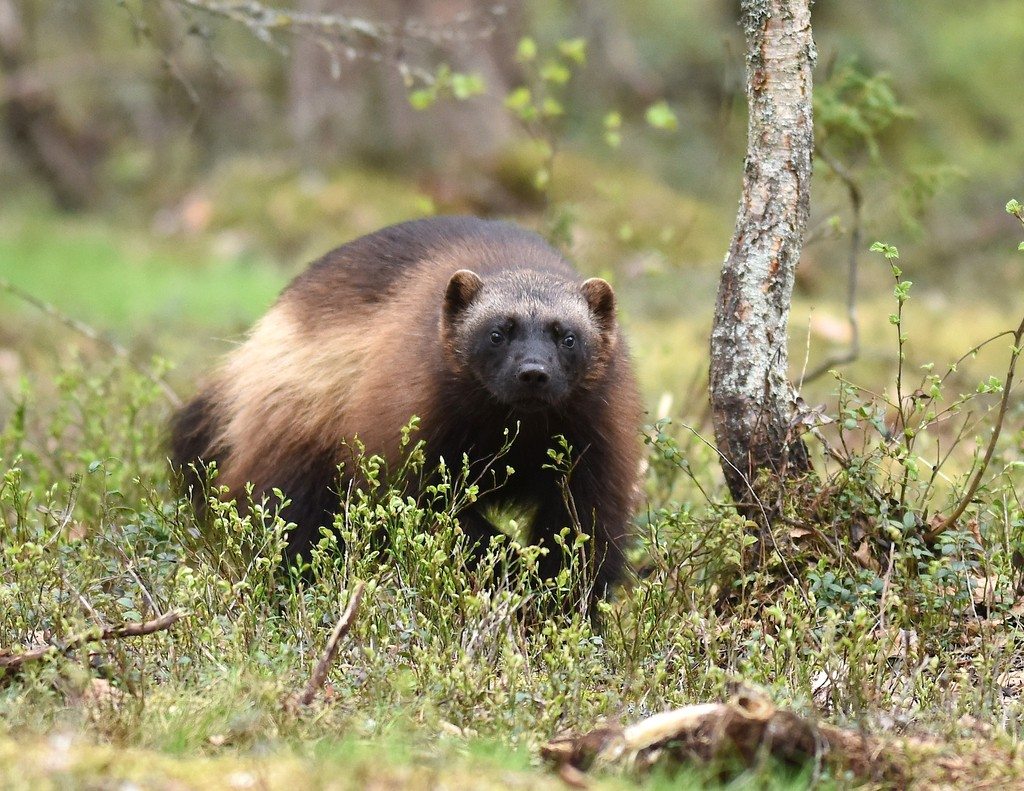
A wolverine moves through a northern woodland clearing.
Species reference for Wolverine Tracks. The photograph does not necessarily show the population or place named in the puzzle.
(c) Dennis Vollmar, some rights reserved (CC BY) · CC BY 4.0 · Original recordImage changes
Resized and converted to JPEG for display; no subject alteration.
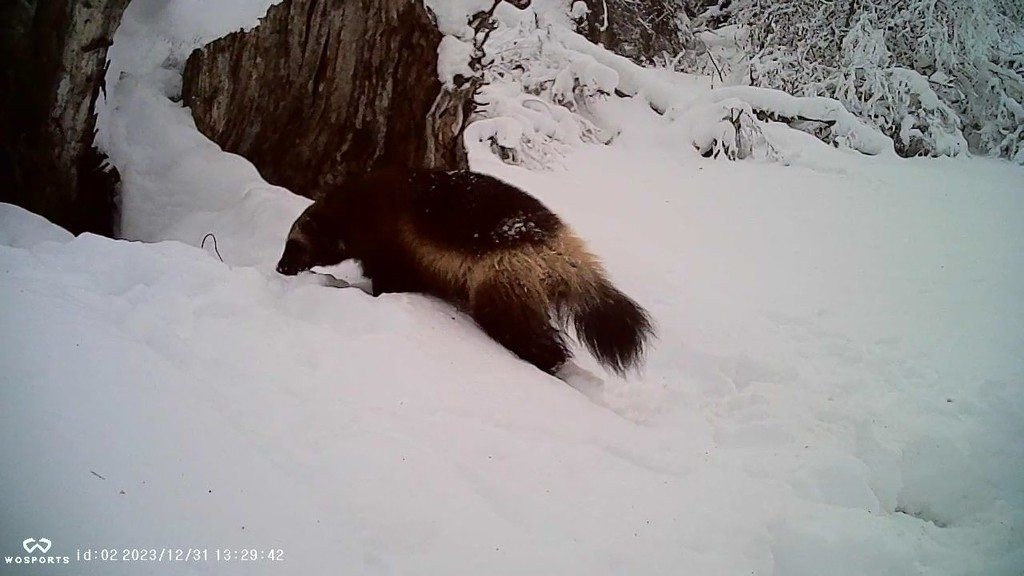
A wolverine travels through deep snow in Alaska.
Species reference for Wolverine Tracks. The photograph does not necessarily show the population or place named in the puzzle.
(c) Matt Muir, some rights reserved (CC BY) · CC BY 4.0 · Original recordImage changes
Resized and converted to JPEG for display; no subject alteration.
The words
Cache
Wolverines store food in caches, which the cold preserves.
Carcajou
Carcajou, of French Canadian and Algonquian origin, is another name for it.
Glutton
Gulo gulo means glutton, and glutton is another name for it.
Gulo
The scientific name Gulo gulo comes from the Latin for glutton.
Home Range
The huge area one wolverine uses.
Wolverines have large home ranges, 600–1,000 square kilometres for males.
Marmots
Wolverines eat marmots among other prey.
Mustelid
The wolverine is the largest land member of the weasel family, Mustelidae.
animaldiversity.org (opens a new tab) · Alaska Department of Fish and Game (opens a new tab)
Scavenging
Feeding on carcasses other animals leave.
Wolverines are specialized for scavenging and take over other predators' kills.
animaldiversity.org (opens a new tab) · Alaska Department of Fish and Game (opens a new tab)
Scent Glands
Wolverines mark territories and food caches with scent glands.
Skunk Bear
A folk name for the wolverine, a member of the weasel family rather than the bear family.
Smell
Scavenging wolverines have an advanced sense of smell.
Snow Den
Females give birth in dens dug in snow.
animaldiversity.org (opens a new tab) · National Park Service (opens a new tab)
Snowshoe Hares
Wolverines feed on snowshoe hares.
Tracks
Staff have documented wolverines through their tracks.
Wolverine
Wolverines live in alpine forests, tundra and boreal zones.
Sources
- Wolverineanimaldiversity.org
- Wolverine Tracks (source capture)Alaska Department of Fish and Game
- Wolverine Tracks (source capture)National Park Service