
Wildlife of the World
Puzzle 26 · Northern Forests and Grasslands · Page 47 in print
Boreal Moose
The moose is the largest deer in the world; large bulls grow broad palmate antlers approaching two metres across, and the animal browses willow, birch, and aquatic plants across the boreal forest.
Jump to a word
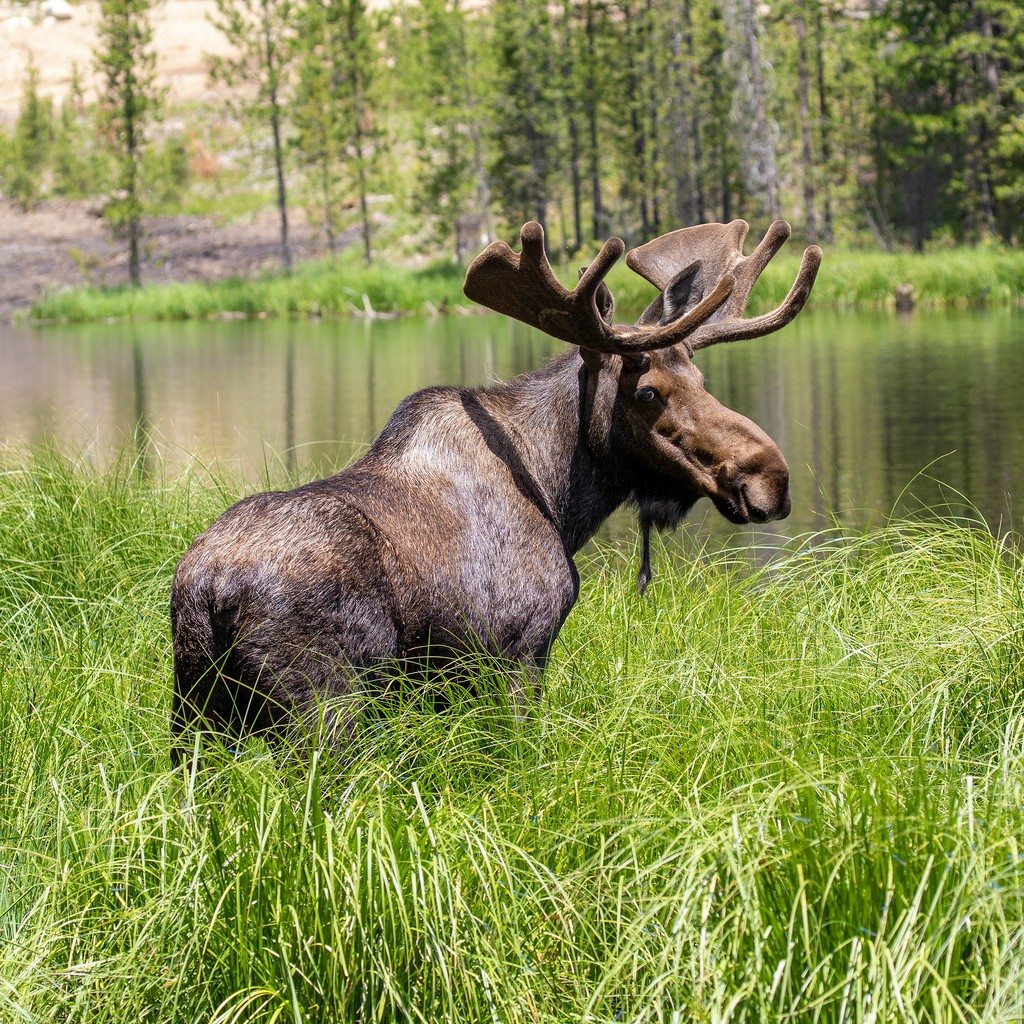
A bull moose stands in wet grass beside a lake.
Species reference for Boreal Moose. The photograph does not necessarily show the population or place named in the puzzle.
(c) Dan Vickers, some rights reserved (CC BY) · CC BY 4.0 · Original recordImage changes
Resized and converted to JPEG for display; no subject alteration.
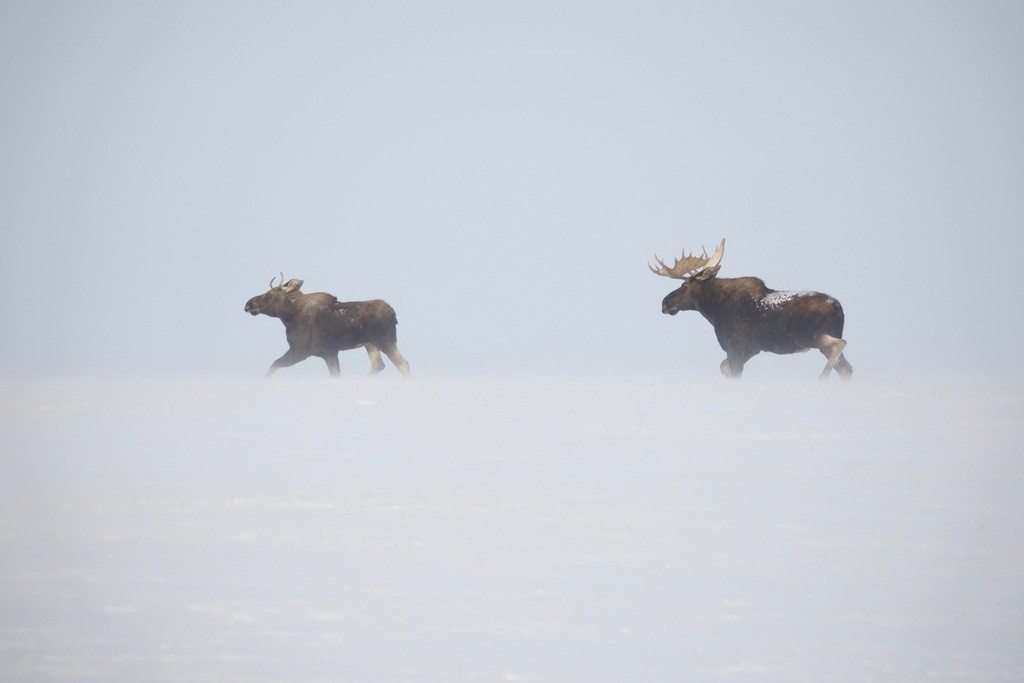
Two moose cross a snowy landscape in Canada.
Species reference for Boreal Moose. The photograph does not necessarily show the population or place named in the puzzle.
(c) John Krampl, some rights reserved (CC BY) · CC BY 4.0 · Original recordImage changes
Resized and converted to JPEG for display; no subject alteration.
The words
Alces
The moose is Alces alces.
Antlers
The bull's broad, yearly antlers.
Antlers are grown in spring and shed in winter each year.
Balsam Fir
A northern conifer the moose browses.
Moose also eat paper birch, quaking aspen and balsam fir.
Birch
Moose eat paper birch twigs and leaves.
Animal Diversity Web (opens a new tab) · Alaska Department of Fish and Game (opens a new tab)
Bogs
The wet, spongy ground moose rest in.
Isle Royale moose stay in shaded forests and bogs on hot days.
Brow Palm
North American moose antlers have a main palm and a brow palm.
Dewlap
A dewlap of skin, called a bell, hangs from the jaw.
Moose
Moose are the largest species in the deer family.
Pond
Moose seek ponds and feed in beaver ponds in summer.
Animal Diversity Web (opens a new tab) · National Park Service (opens a new tab)
Taiga
The northern boreal forest is a major habitat of moose, with trees and wetland plants for browsing.
Twig Eater
The word moose comes from the Algonquins and means 'twig eater'.
Velvet
Bulls shed the velvet covering of their antlers by mid-September.
Water Lily
A young bull moose eating water lilies belly-deep in a pond; moose feed on aquatic plants for sodium.
Society for the Protection of New Hampshire Forests (opens a new tab)
Willow
Moose eat large quantities of willow twigs.
Animal Diversity Web (opens a new tab) · Alaska Department of Fish and Game (opens a new tab)
Yearling
The young stay with the mother for about a year and are chased off before the next calf is born.
Animal Diversity Web (opens a new tab) · Alaska Department of Fish and Game (opens a new tab)
Sources
- Boreal Moose (source capture)Animal Diversity Web, University of Michigan Museum of Zoology
- Boreal Moose (source capture)Alaska Department of Fish and Game
- Boreal Moose (source capture)National Park Service
- Boreal Moose (source capture)National Park Service
- Boreal Moose (source capture)Society for the Protection of New Hampshire Forests (Forest Society)