
Wildlife of the World
Puzzle 25 · Amazonia and the Neotropics · Page 43 in print
Leafcutter Ants
Leafcutter ants carry plant fragments into their nests to grow fungus gardens; species of Atta and Acromyrmex depend on this cultivated fungus for nourishment.
Jump to a word
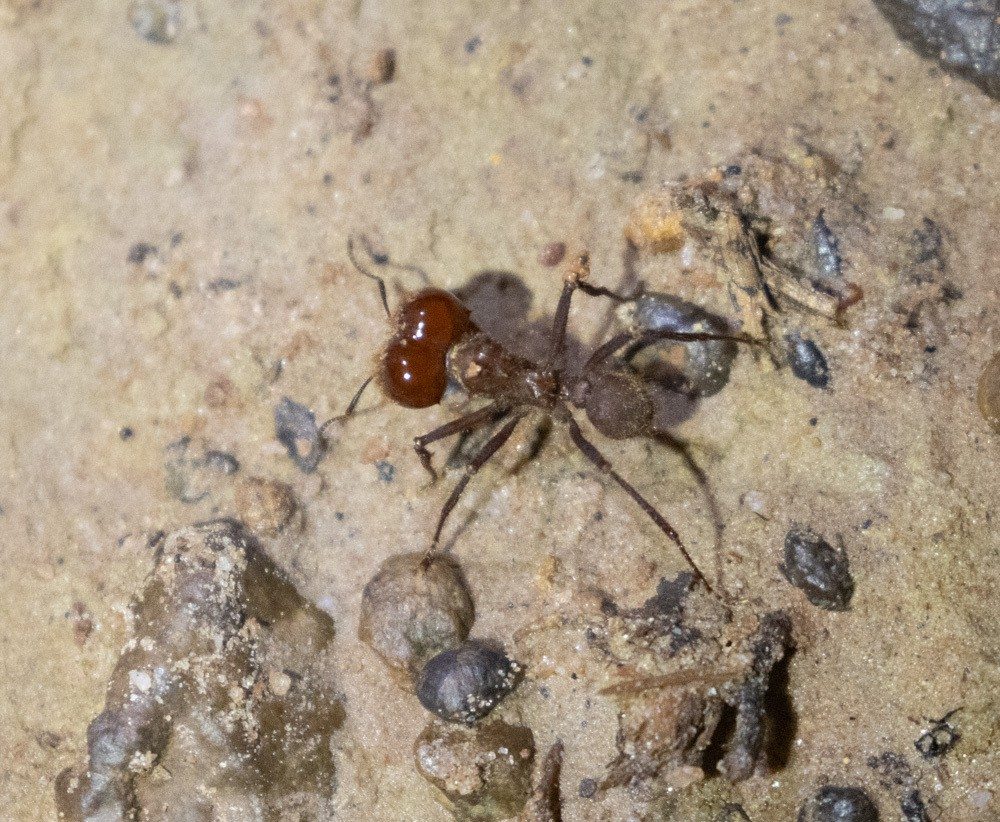
A leafcutter ant of the species Atta cephalotes seen at ground level.
Species reference for Leafcutter Ants. The photograph does not necessarily show the population or place named in the puzzle.
(c) avocat, some rights reserved (CC BY) · CC BY 4.0 · Original recordImage changes
Resized and converted to JPEG for display; no subject alteration.
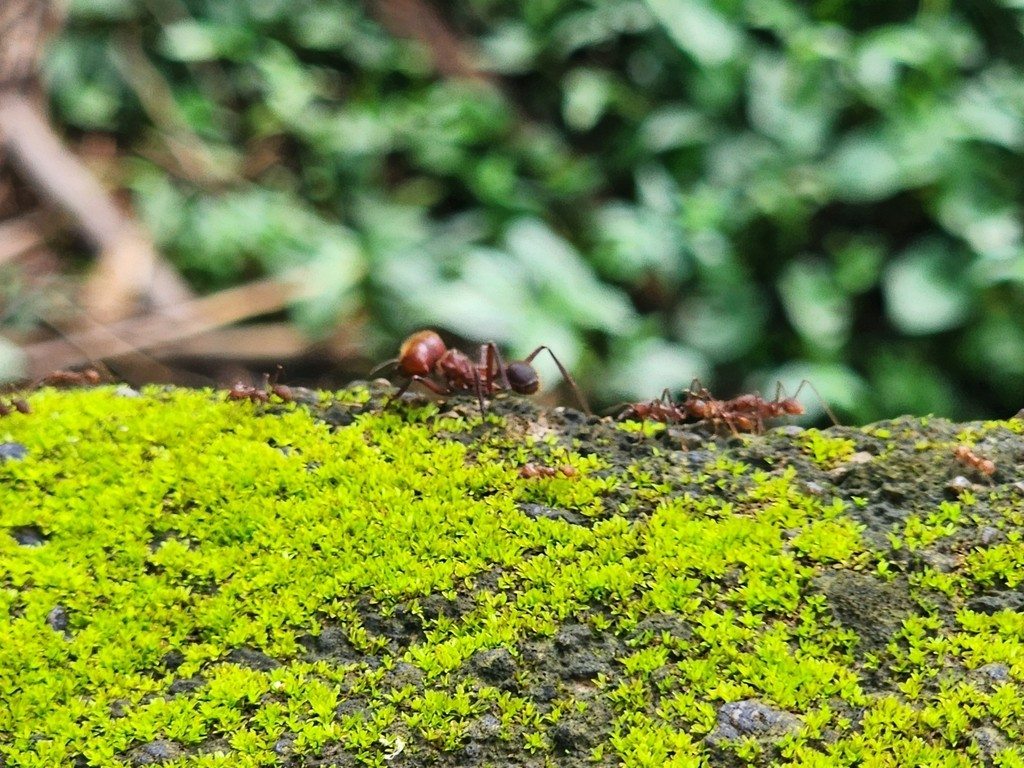
Leafcutter ants travel along a mossy surface.
Species reference for Leafcutter Ants. The photograph does not necessarily show the population or place named in the puzzle.
(c) Scott Allen Davis, some rights reserved (CC BY) · CC BY 4.0 · Original recordImage changes
Resized and converted to JPEG for display; no subject alteration.
The words
Acromyrmex
The other genus of leafcutter ants.
Atta and Acromyrmex leaf-cutting ants grow the same fungus.
Atta
Atta is a leafcutter genus that farms fungus.
stri-apps.si.edu (opens a new tab) · Animal Diversity Web (opens a new tab)
Castes
The worker size classes with different jobs.
A colony has four major castes.
Farming
Growing their own food crop.
Leafcutter ants cultivate fungus as food, tending it in underground gardens.
Firebreaks
Cleared strips that stop forest fires spreading.
Leafcutter ants create natural firebreaks in the Amazon.
Flower Petals
Flower petals are also used to grow the fungus.
Fungus
The leaves grow a fungus that the ants eat.
Gardens
The ants tend fungus gardens underground.
stri-apps.si.edu (opens a new tab) · Animal Diversity Web (opens a new tab)
Leafcutter
Leafcutter ants carry leaves in to grow fungus.
Mandibles
Soldiers have very sharp mandibles.
Nuptial Flight
The queen goes on a mating flight, the revoada.
Queen
The colony's egg-laying founder.
The queen is the largest ant in the colony.
Soldiers
Soldier ants defend the nest.
Trails
Workers run foraging trails up to 60 m long.
Worker
A sterile ant that does the colony's work.
Pupae hatch into adult workers that serve the colony.
Sources
- Leafcutter fungus farmingstri-apps.si.edu
- Leafcutter Ants (source capture)Animal Diversity Web, University of Michigan Museum of Zoology
- Leafcutter Ants (source capture)San Diego Zoo Wildlife Alliance