
Wildlife of the World
Puzzle 02 · African Plains and Floodplains · Page 14 in print
Okavango Sitatunga
Long, splayed hooves help the sitatunga cross soft ground in the Okavango Delta; this shy antelope finds food and shelter among the wetland’s papyrus, reeds and swamp channels.
Jump to a word
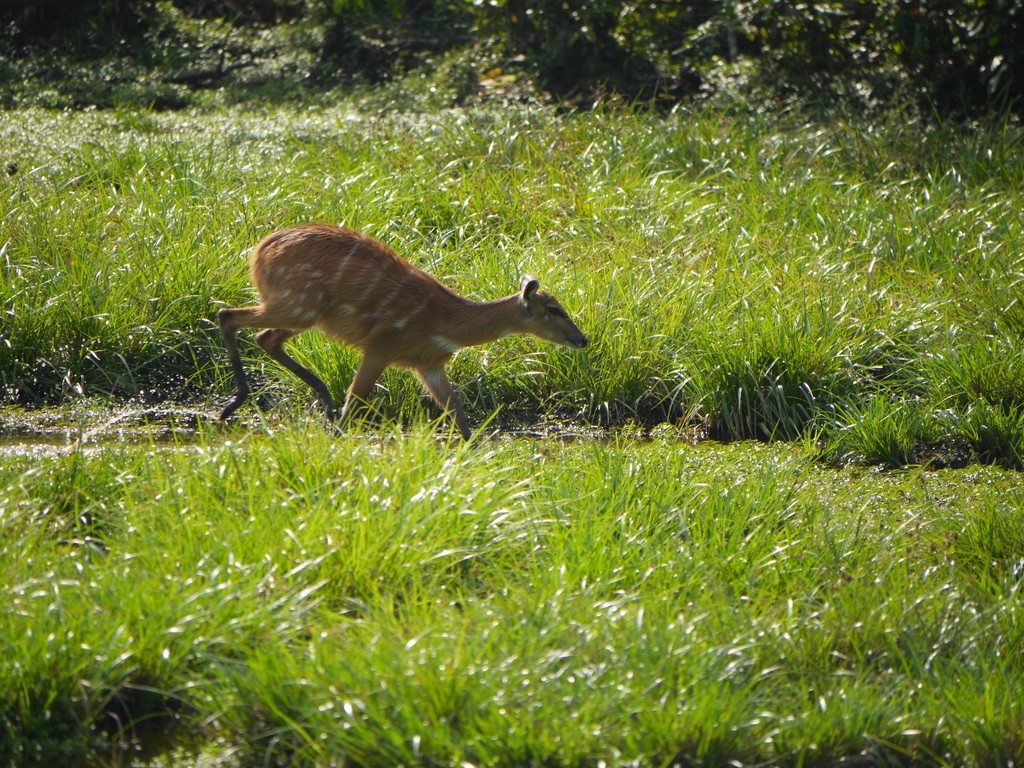
A forest sitatunga steps through wet grass; a view of the wider sitatunga species.
Species reference for Okavango Sitatunga. The photograph does not necessarily show the population or place named in the puzzle.
(c) Matt Muir, some rights reserved (CC BY) · CC BY 4.0 · Original recordImage changes
Resized and converted to JPEG for display; no subject alteration.
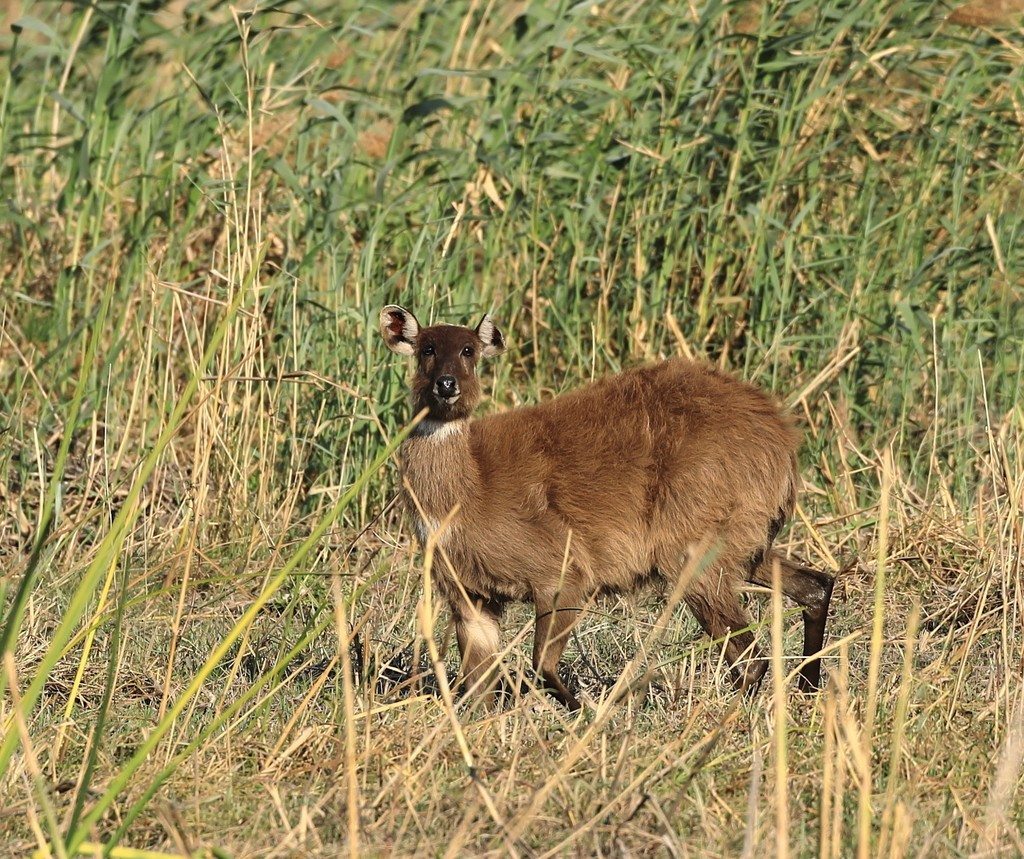
A southern sitatunga disappears into tall reeds in Namibia.
Species reference for Okavango Sitatunga. The photograph does not necessarily show the population or place named in the puzzle.
(c) Darren Obbard, some rights reserved (CC BY) · CC BY 4.0 · Original recordImage changes
Resized and converted to JPEG for display; no subject alteration.
The words
Botswana
Botswana contains the Okavango Delta, where sitatunga live among permanent wetlands.
InforMEA (opens a new tab) · Animal Diversity Web (opens a new tab)
Browsing
Feeding on leaves and creepers rather than grass.
Sitatunga browse on foliage and creepers in forests beside the swamps.
Delta
The Okavango Delta is a vast inland delta of permanent swamps; sitatunga are seen there.
InforMEA (opens a new tab) · University of Botswana research portal (opens a new tab)
Hooves
The long, wide hooves that spread its weight.
Broad, splayed hooves keep it from sinking in soft ground.
Marshbuck
The sitatunga, or marshbuck, is a swamp-dwelling antelope.
Marshes
The sitatunga occurs only in swamps or permanent marshes.
Okavango
The Jao area is the sitatunga sighting hotspot in the Okavango Delta.
Papyrus
The tall swamp sedge it eats and shelters in.
Young papyrus and reed shoots make up most of its diet.
Platforms
Resting beds it makes by trampling reeds.
Sitatunga rest on platforms of dried vegetation they build by trampling and circling.
Reeds
The tall reeds it feeds and hides among.
Reed stands give food and protection.
Sedge
Grass-like swamp plants it feeds on.
Sitatunga rear up to reach the flowers of tall reeds and sedges.
Spiral Horns
Adult males have impressive spiraled horns.
Smithsonian's National Zoo and Conservation Biology Institute (opens a new tab)
Splayed
Spread wide: the sitatunga’s long, widely spread hooves help support it on soft wetland ground.
Thicket
Dense undergrowth at the swamp edge.
Sitatunga favour seasonal swamps, marshy clearings and thickets.
Wetland
The sitatunga lives in wetlands of reeds and sedges.
Sources
- Okavango geographyInforMEA, United Nations portal on multilateral environmental agreements: World Heritage Committee decision inscribing the Okavango Delta (38th session, June 2014)
- Okavango Sitatunga (source capture)Animal Diversity Web, University of Michigan Museum of Zoology
- Sitatunga occurrence in the Okavango DeltaUniversity of Botswana research portal; K. B. Mfundisi, 2019
- Okavango Sitatunga (source capture)Wikipedia
- Okavango Sitatungawww.nationalzoo.si.edu
- Okavango Sitatunga (source capture)Smithsonian's National Zoo and Conservation Biology Institute