
Wildlife of the World
Puzzle 03 · African Plains and Floodplains · Page 15 in print
Savanna Elephant
Savanna elephants, the largest living land animals, live in families led by an older female with several generations of relatives; an adult may drink well over a hundred litres of water in a day.
Jump to a word
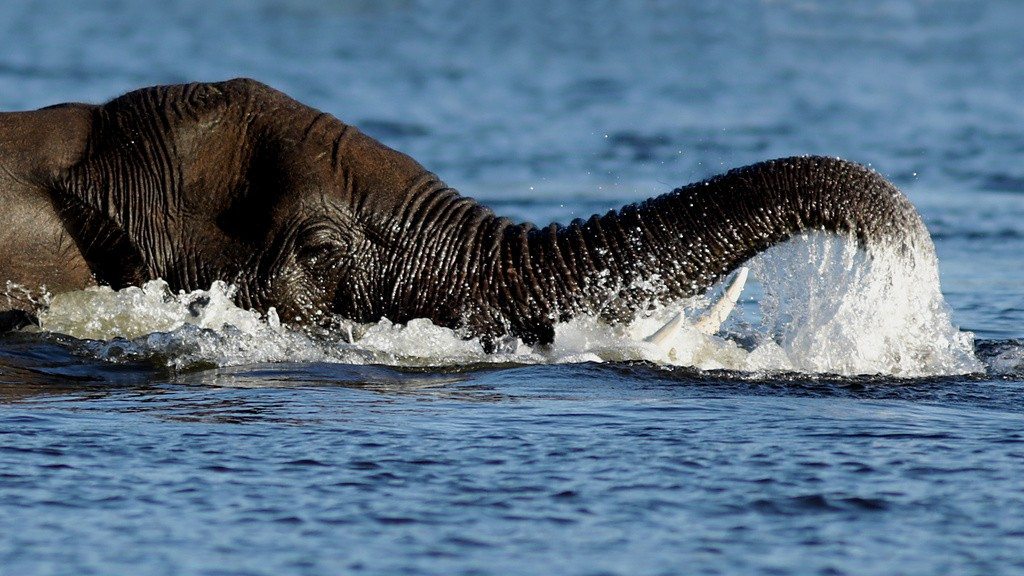
An African savanna elephant raises its trunk while swimming.
Species reference for Savanna Elephant. The photograph does not necessarily show the population or place named in the puzzle.
(c) Wynand Uys, some rights reserved (CC BY) · CC BY 4.0 · Original recordImage changes
Resized and converted to JPEG for display; no subject alteration.
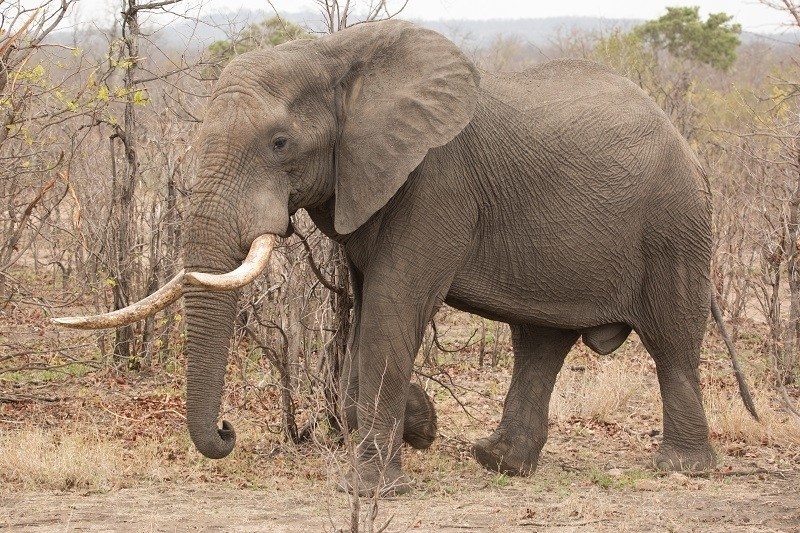
An elephant browses among shrubs in Kruger National Park.
Species reference for Savanna Elephant. The photograph does not necessarily show the population or place named in the puzzle.
(c) dhfischer, some rights reserved (CC BY) · CC BY 4.0 · Original recordImage changes
Resized and converted to JPEG for display; no subject alteration.
The words
Amboseli
Amboseli in Kenya is home to a long-running study of elephant families and behaviour.
Chobe
The Chobe area of Botswana is elephant country, where conservation projects address the challenges of people and elephants sharing land.
Dusting
Elephants roll in mud or dust for protection from sun and biting insects.
Elephant
Elephants spend most of the day roaming long distances to forage.
Ivory
The hard material of elephant tusks; demand for ivory has made tusks a target for poaching.
Loxodonta
The African savanna elephant is Loxodonta africana.
Matriarch
Families are led by an older matriarch with several generations of female relatives.
Memory
The matriarch must remember where to find food and water and how to avoid predators.
Musth
Musth in male African elephants brings aggression, temporal-gland secretions and high androgen levels.
Pachyderm
'pachyderm' means thick-skinned and often refers to elephants.
Rumble
African elephants communicate with very low-frequency rumbles.
Trunk
The muscular nose and upper lip.
The muscular trunk grabs objects and is used for breathing.
Tsavo
Tsavo in Kenya holds one of East Africa's elephant populations surveyed for ivory poaching.
Tusker
The term is often used for male elephants whose tusks are exceptionally large.
Tusks
Both sexes carry two thick, curved ivory tusks.
Sources
- Loxodonta Savanna Elephant (source capture)ElephantVoices
- Loxodonta Savanna Elephant (source capture)San Diego Zoo Wildlife Alliance
- Savanna Elephantwww.awf.org
- Loxodonta Savanna Elephant (source capture)Save the Elephants
- Loxodonta Savanna Elephant (source capture)Animal Diversity Web, University of Michigan Museum of Zoology