
The Space Race
Puzzle 61 · Apollo 11 · Page 87 in print
One Small Step
Moments after his first step, Armstrong likened the lunar dust to powdered charcoal.
Jump to a word
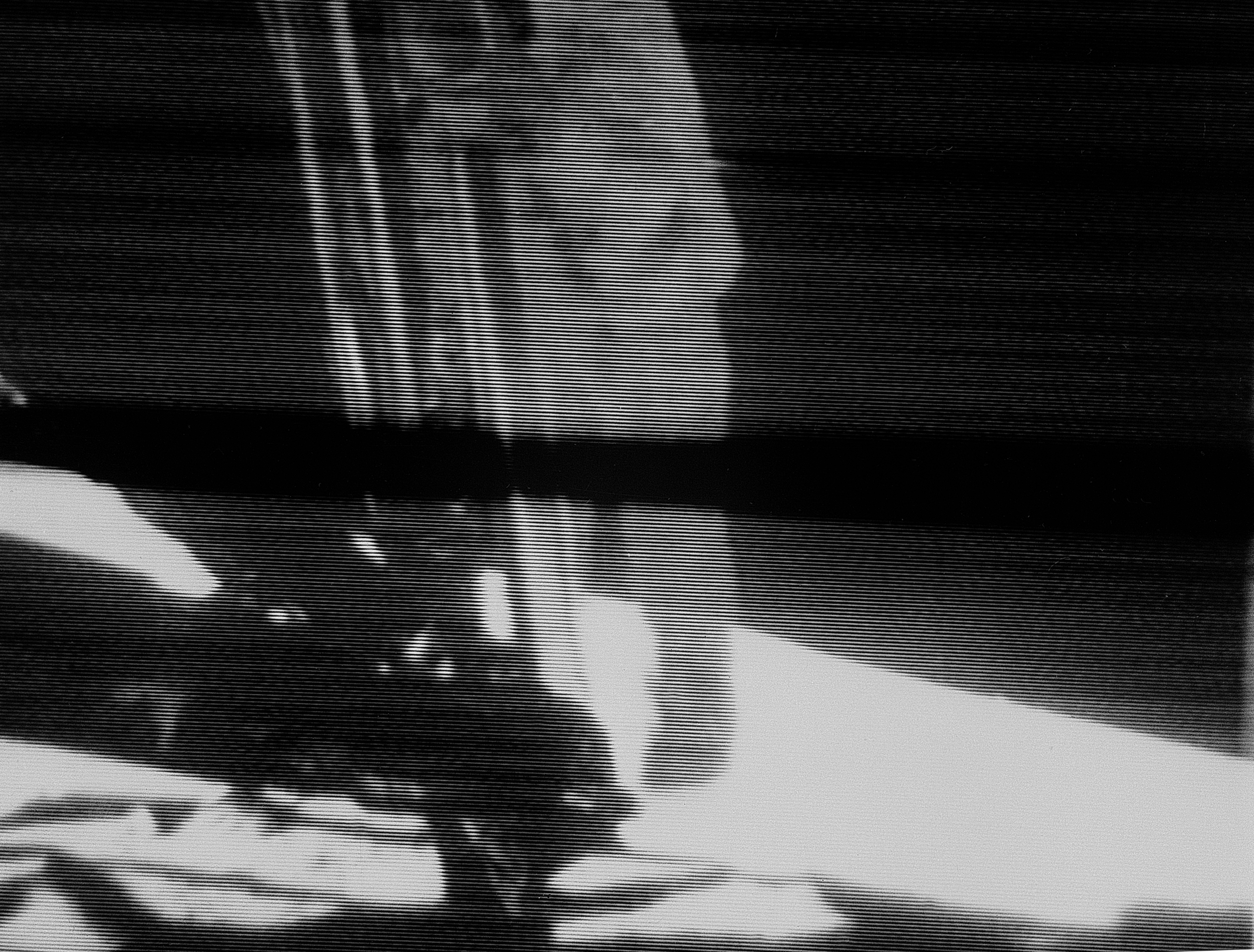
A television view of Neil Armstrong descending Eagle’s ladder.
NASA / Johnson Space Center (s69-42583) · NASA media-use guidelines · Original recordThe words
Armstrong
Neil Armstrong became the first person to step onto the Moon during Apollo 11. As commander, he went outside first; Aldrin joined him shortly afterward.
Desolation
Aldrin called the lunar landscape “magnificent desolation” soon after joining Armstrong outside. The phrase came during his first view from the surface.
Egress
A crew member’s exit from a spacecraft.
Aldrin helped Armstrong back through Eagle’s narrow hatch. His bulky spacesuit left little clearance as he moved onto the porch before descending the ladder.
Flag
Armstrong and Aldrin erected a United States flag beside Eagle. A horizontal rod supported the cloth, allowing it to remain spread out without a breeze on the airless Moon.
Did you know?
The horizontal rod would not extend fully. The cloth stayed partly gathered, leaving the rippled appearance visible in photographs of the flag on the Moon.
Giant Leap
In his first announcement on the surface, Armstrong paired one person’s small step with a leap for humankind. The words connected his own movement with the larger achievement.
High Desert
While describing the lunar landscape to Houston, Armstrong compared it with the high desert of the United States. He added that the scene had a stark beauty of its own.
Kangaroo Hop
Aldrin tried two-footed hopping while testing ways to move in lunar gravity. He told Houston that it worked, but he could travel forward better by putting one foot after the other.
Ladder
Armstrong climbed down Eagle’s ladder to a landing footpad before stepping onto the soil. He first checked that he could jump back up to the lowest rung.
Lunar Soil
Armstrong collected an early contingency sample near Eagle. It ensured that some lunar material could return to Earth even if the astronauts had to cut their surface work short.
Did you know?
The first bag held loose material and several small rocks. Armstrong gathered it before the longer work of collecting and describing the main set of samples.
McCandless
Astronaut Bruce McCandless served as capsule communicator in Houston during the moonwalk. He passed messages between the flight controllers and Armstrong and Aldrin while they worked outside Eagle.
Did you know?
In 1984, McCandless flew outside Challenger using a maneuvering backpack. He tested it without a tether connecting him to the shuttle.
NASA: the moonwalk and Mission Control (opens a new tab) · NASA: McCandless’s 1984 spacewalk (opens a new tab)
Moonwalk
Armstrong and Aldrin’s trip outside Eagle combined exploration with practical work. They photographed the surroundings, collected rock and soil samples, and set out instruments to study the Moon.
Oval Office
President Richard Nixon spoke to Armstrong and Aldrin from the Oval Office while they stood on the Moon. McCandless had asked the astronauts to position themselves in front of the television camera.
Parkes
Australia’s Parkes radio telescope supplied much of the moonwalk television broadcast. Honeysuckle Creek carried Armstrong’s first step; NASA switched to Parkes’s signal later as the Moon rose into its view.
Small Step
Armstrong stepped onto the Moon on July 20, 1969, by U.S. Eastern Daylight Time. In Universal Time, the date was already July 21, explaining the two dates attached to the event.
TV Camera
The black-and-white television camera first showed Armstrong on the ladder. He then moved it away from Eagle onto a tripod so viewers could watch the work on the surface.
Sources
- July 20, 1969: One Giant Leap For MankindNASA; July 20, 2019; first step, Armstrong’s announcement and Aldrin’s arrival; exact audible wording is not adjudicated
- Apollo 11 Lunar Module / EASEPNASA Space Science Data Coordinated Archive, spacecraft 1969-059C; Mission Profile, first-step dates in UT and EDT and surface sample, photography and experiment work
- 50 Years Ago: One Small Step, One Giant LeapJohn Uri; NASA Johnson Space Center; July 19, 2019; Green Team and McCandless as Capcom, Nixon’s Oval Office call and television camera moved to a tripod
- One Small StepEric M. Jones and contributors; NASA Apollo Lunar Surface Journal; 109:19–109:43 and commentary, cabin exit, ladder, powdered-charcoal comparison, contingency sample and Aldrin’s first view
- Apollo 11 - 30th AnniversaryNASA NSSDCA; 1999 anniversary account; flag photograph AS11-40-5875 and caption, horizontal rod and incomplete extension
- Apollo 11 - Technical Air-to-Ground Voice TranscriptionNASA; original technical voice transcript, mission day 04 13:34:54–13:35:30 (109:34:54–109:35:30), Armstrong’s high-desert comparison
- Mobility and PhotographyEric M. Jones and contributors; NASA Apollo Lunar Surface Journal; 110:13:42 and surrounding commentary, Aldrin compares two-footed hopping with alternating steps
- Apollo 11 Moon landingCSIRO; agency account of Parkes and Honeysuckle Creek television reception, initial first-step pictures and later selection of Parkes’s signal
- 40 Years Ago: STS-41B, the First Flight of the Manned Maneuvering UnitJohn Uri; NASA Johnson Space Center; February 6, 2024; mission introduction and flight-day-five spacewalk, McCandless’s untethered maneuvering-unit test in 1984