
The Great Stories of the Old Testament
Puzzle 66 · The Twelve · Page 99 in print
Hosea and Gomer
Hosea’s family becomes part of a prophetic sign, while the book joins warnings about unfaithfulness with promises of restoration.
Jump to a word
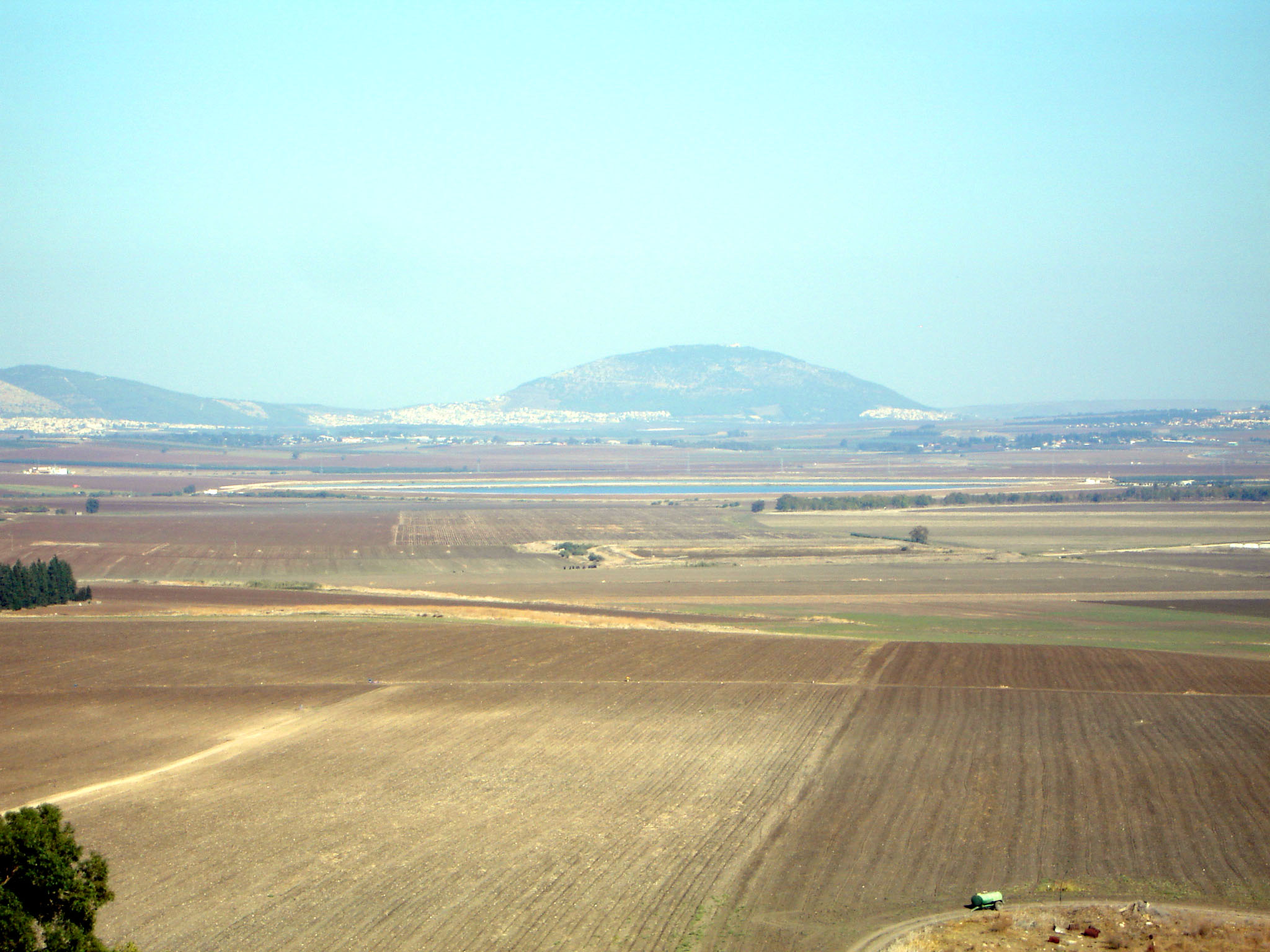
Jezreel Valley seen from Megiddo, photographed November 9, 2005.
Joe Freeman / Wikimedia Commons · CC BY-SA 2.5 · Original recordImage changes
Display copies resized; original downloaded JPEG preserved.
The words
Backsliding
Waywardness, in the NET.
Near the book’s close, the LORD promises to heal Israel’s backsliding and love them freely, saying his anger has turned away.
Hosea 14:1; Hosea 14:4 (opens a new tab) · NET Bible: Hosea 14:4 (opens a new tab)
Beeri
The book opens with the word of the LORD coming to Hosea, identified as Beeri’s son, during the reigns of named kings.
Betroth
Pledge a future marriage, in Webster’s definition.
The LORD promises, “I will betroth thee unto me for ever,” describing the relationship through righteousness, lovingkindness, mercy and faithfulness.
Hosea 2:19–20 (opens a new tab) · Webster’s 1828: betroth (opens a new tab)
Diblaim
Gomer is identified as Diblaim’s daughter when Hosea takes her as wife; the opening account then describes the birth of a son.
Gomer
Hosea takes Gomer, Diblaim’s daughter, following the command to take “a wife of whoredoms”; she then bears the son named Jezreel.
Hosea
Hosea’s opening dates his message to four kings of Judah and Jeroboam son of Joash in Israel; his family becomes a prophetic sign.
Jezreel
The first son is named Jezreel; the LORD announces punishment on Jehu’s house for the killings at Jezreel.
Hosea 1:3–5 (opens a new tab) · NET Bible: Hosea 1:4-9 (opens a new tab)
Living God
Where Israel had been told, “Ye are not my people,” the promise instead calls them “the sons of the living God.”
Did you know?
Romans 9:26 later quotes this promise, using “the children of the living God” in the KJV where Hosea says “sons.”
Hosea 1:10 (opens a new tab) · Romans 9:26 (opens a new tab)
Lo-ammi
Not My People, in the NET.
The son’s name voices “ye are not my people”; later the book reverses that declaration, saying “Thou art my people.”
Hosea 1:8–9 (opens a new tab) · Hosea 2:23 (opens a new tab) · NET Bible: Hosea 1:4-9 (opens a new tab)
Lo-ruhamah
No Pity, in the NET.
The daughter’s name accompanies the announcement that the LORD will no longer show mercy to the house of Israel.
Hosea 1:6 (opens a new tab) · NET Bible: Hosea 1:4-9 (opens a new tab)
Love
Hosea must love “an adulteress,” as the LORD loves Israel; he then says he bought her. The NET note identifies her as probably Gomer.
Hosea 3:1–2 (opens a new tab) · NET Bible: Hosea 3:1 (opens a new tab)
Plead
Urge reasons for or against, in Webster’s definition.
Children are told to plead with their mother, representing Israel; the next verse threatens to strip her and kill her with thirst.
Hosea 2:2–3 (opens a new tab) · NET Bible: Hosea 2:2 (opens a new tab) · Webster’s 1828: plead (opens a new tab)
Redeem
The KJV promises, “I will redeem them from death”; the NET reads a question answered “No, I will not!”
Hosea 13:14 (opens a new tab) · NET Bible: Hosea 13:14 (opens a new tab)
Return
The closing chapter calls Israel to return to the LORD, ask forgiveness and renounce reliance on Asshur, horses and handmade gods.
Did you know?
The NET note links “return” with “backsliding” through a shared Hebrew root, a wordplay connecting the call and the promised healing.
Hosea 14:1–4 (opens a new tab) · NET Bible: Hosea 14:4 (opens a new tab)
Wife
The LORD tells Hosea to take “a wife of whoredoms,” making the marriage a sign of the land’s departure from him.
Sources
- Hosea 1:1-5 (King James Version)King James Version, passage navigation via Bible Gateway
- Hosea 1:6-11 (King James Version)King James Version, passage navigation via Bible Gateway
- Hosea 2:1-5 (King James Version)King James Version, passage navigation via Bible Gateway
- Hosea 2:14-23 (King James Version)King James Version, passage navigation via Bible Gateway
- Hosea 3:1-5 (King James Version)King James Version, passage navigation via Bible Gateway
- Hosea 13:14 (King James Version)King James Version, passage navigation via Bible Gateway
- Hosea 14:1-9 (King James Version)King James Version, passage navigation via Bible Gateway
- Hosea 1:4-9 (NET Bible), translation and notesNET Bible, via Bible Gateway
- Hosea 13:14 (NET Bible), translation and notesNET Bible, via Bible Gateway
- Hosea 14:4 (NET Bible), translation and notesNET Bible, via Bible Gateway
- Hosea 2:2 (NET Bible), translation and notesNET Bible, via Bible Gateway
- Hosea 3:1 (NET Bible), translation and notesNET Bible, via Bible Gateway
- Romans 9:26 (King James Version)King James Version, passage navigation via Bible Gateway
- Webster’s 1828: betrothWebster’s Dictionary 1828, online transcription
- Webster’s 1828: pleadWebster’s Dictionary 1828, online transcription