
The Great Stories of the Old Testament
Puzzle 52 · Divided Kingdom and Restoration · Page 80 in print
Hezekiah and Sennacherib
Assyria’s threats reach Jerusalem; Hezekiah lays the letter before the Lord and receives Isaiah’s reply.
Jump to a word
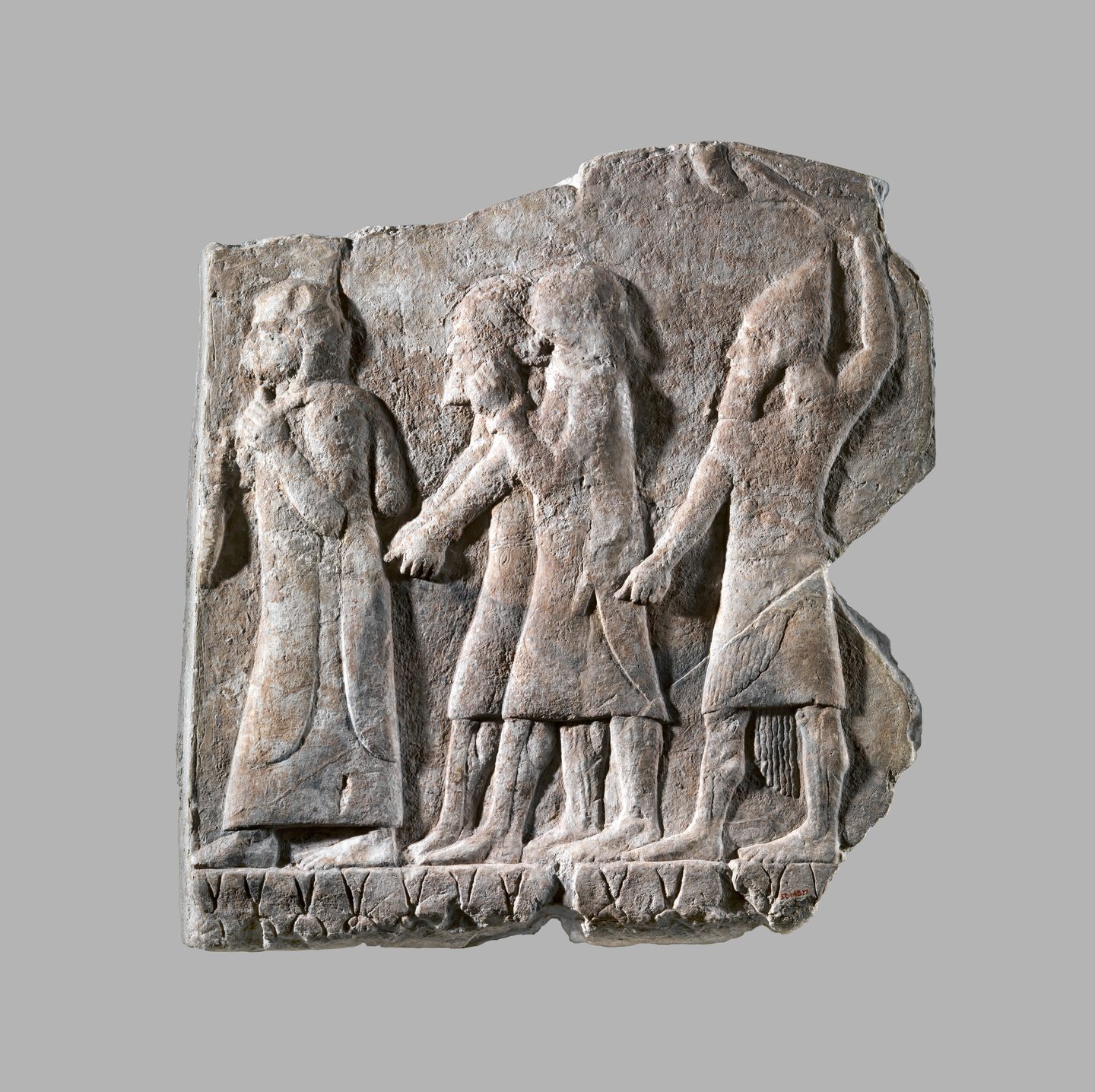
Assyrian relief from Nineveh.
The Assyrian relief supplies material context for the empire threatening Judah; it does not depict this particular exchange.
The Metropolitan Museum of Art (image provider; individual photographer uncredited) · Public Domain / The Met Open Access CC0 · Original recordImage changes
Resized proportionally to at most 1440px and JPEG compressed; no crop or content alteration.
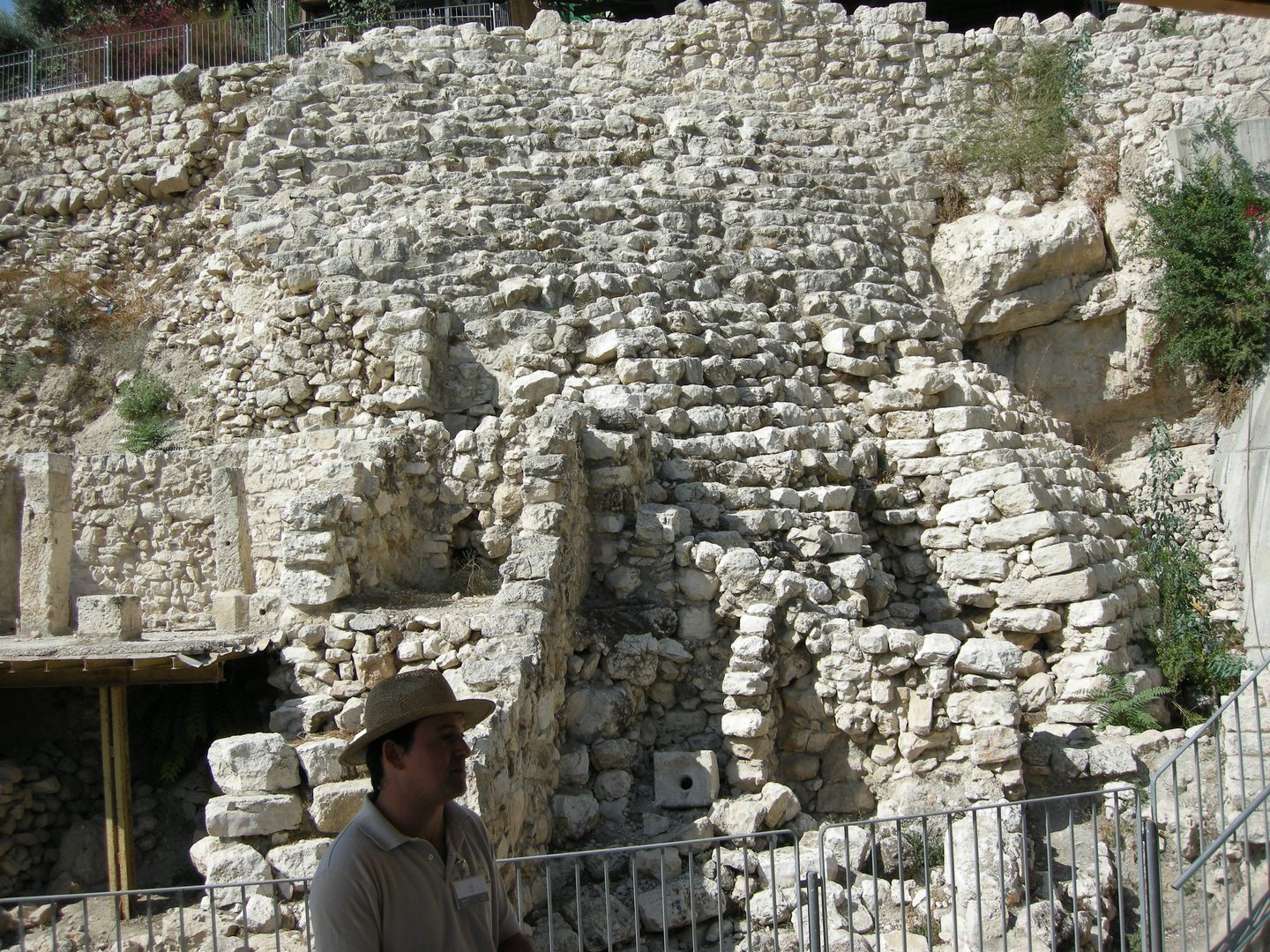
City of David archaeological site.
The Jerusalem archaeological landscape connects with the defended city and its water systems, without identifying the envoys’ meeting spot.
Yoav Dothan · Public domain · Original recordImage changes
Resized proportionally to at most 1440px and JPEG compressed; no crop or content alteration.
The words
Assyria
Kings says Sennacherib captures Judah’s fortified cities; later it reports the LORD’s angel killing 185,000 Assyrians in their camp before the king returns to Nineveh.
2 Kings 18:13 (opens a new tab) · 2 Kings 19:35–36 (opens a new tab)
Conduit
The envoys stand beside the upper pool’s channel, on the road to the field used for washing and drying cloth.
2 Kings 18:17 (opens a new tab) · NET Bible: 2 Kings 18:17 (opens a new tab)
Eliakim
Eliakim asks Rabshakeh to speak Aramaic, which the officials understand, and avoid using the people’s language within their hearing.
2 Kings 18:26–28 (opens a new tab) · NET Bible: 2 Kings 18:26-28 (opens a new tab)
Hezekiah
Hezekiah spreads the letter before the LORD and prays for deliverance; Isaiah sends word that his prayer has been heard.
Lachish
Kings places Sennacherib at Lachish; the British Museum describes palace reliefs showing its assault and the deportation of citizens.
2 Kings 18:14; 2 Kings 18:17 (opens a new tab) · British Museum: Taylor Prism (opens a new tab)
Letter
Sennacherib’s renewed message warns Hezekiah against trusting in deliverance; Hezekiah reads the letter and spreads it before the LORD.
2 Kings 19:9–14 (opens a new tab) · 2 Kings 19:14–20 (opens a new tab)
Libnah
Rabshakeh returns and finds Sennacherib fighting against Libnah, having left Lachish; a report about Tirhakah then prompts another message to Hezekiah.
Nisroch
Kings says Sennacherib’s sons kill him with a sword while he worships in the house of Nisroch, his god.
Pool
The upper pool’s conduit is the meeting place where Eliakim, Shebna and Joah come out to hear the Assyrian delegation.
Did you know?
Isaiah 7:3 also names the upper pool’s conduit and the fuller’s field when directing Isaiah to meet Ahaz.
2 Kings 18:17–18 (opens a new tab) · Isaiah 7:3 (opens a new tab)
Rabsaris
An official’s title, rendered “chief eunuch” by the NET Bible.
Rabsaris accompanies Tartan and Rabshakeh from Lachish with a large army; Hezekiah’s officials come out to meet the delegation.
2 Kings 18:17–18 (opens a new tab) · NET Bible: 2 Kings 18:17 (opens a new tab)
Rabshakeh
Chief adviser, in the NET Bible.
Rabshakeh loudly urges the people not to trust Hezekiah, offering surrender terms that include deportation to another land.
2 Kings 18:17 · 2 Kings 18:28–32 (opens a new tab) · NET Bible: 2 Kings 18:17 (opens a new tab)
Reproach
Here, to taunt, in the NET Bible.
Hezekiah’s messengers tell Isaiah that the Assyrian king sent Rabshakeh to reproach the living God, and ask him to pray.
2 Kings 19:2–4 (opens a new tab) · NET Bible: 2 Kings 19:4 (opens a new tab)
Sennacherib
Kings says Sennacherib returns to Nineveh and is killed by two sons while worshipping; another son, Esarhaddon, succeeds him.
Did you know?
The British Museum describes the Taylor Prism as a six-sided clay record of Sennacherib’s claimed achievements, discovered at Nineveh.
2 Kings 19:36–37 (opens a new tab) · British Museum: Taylor Prism (opens a new tab)
Tartan
Commanding general, in the NET Bible.
Tartan is one of three officers sent from Lachish to Jerusalem with a large army, meeting Hezekiah’s officials by the upper pool.
2 Kings 18:17–18 (opens a new tab) · NET Bible: 2 Kings 18:17 (opens a new tab)
Tirhakah
King of Cush, in the NET Bible’s note.
Sennacherib hears that Tirhakah is coming to fight him and sends another threatening message to Hezekiah.
2 Kings 19:9–10 (opens a new tab) · NET Bible: 2 Kings 19:9 (opens a new tab)
Sources
- 2 Kings 18:13-18 (King James Version)King James Version, passage navigation via Bible Gateway
- 2 Kings 18:19-27 (King James Version)King James Version, passage navigation via Bible Gateway
- 2 Kings 18:28-37 (King James Version)King James Version, passage navigation via Bible Gateway
- 2 Kings 19:1-7 (King James Version)King James Version, passage navigation via Bible Gateway
- 2 Kings 19:8-13 (King James Version)King James Version, passage navigation via Bible Gateway
- 2 Kings 19:14-20 (King James Version)King James Version, passage navigation via Bible Gateway
- 2 Kings 19:32-37 (King James Version)King James Version, passage navigation via Bible Gateway
- 2 Kings 18:17 (NET Bible), translation and notesNET Bible, via Bible Gateway
- 2 Kings 19:4 (NET Bible), translation and notesNET Bible, via Bible Gateway
- 2 Kings 19:9 (NET Bible), translation and notesNET Bible, via Bible Gateway
- Isaiah 7:3 (King James Version)King James Version, passage navigation via Bible Gateway
- 2 Kings 18:26-28 (NET Bible), translation and notesNET Bible, via Bible Gateway
- Sennacherib the Assyrian lays siege to JerusalemBritish Museum, via Google Arts & Culture