
The Great Stories of the Old Testament
Puzzle 51 · Divided Kingdom and Restoration · Page 79 in print
Elisha and Naaman
Naaman’s healing turns on obeying an unexpectedly simple instruction; Gehazi’s deception forms a contrasting ending.
Jump to a word
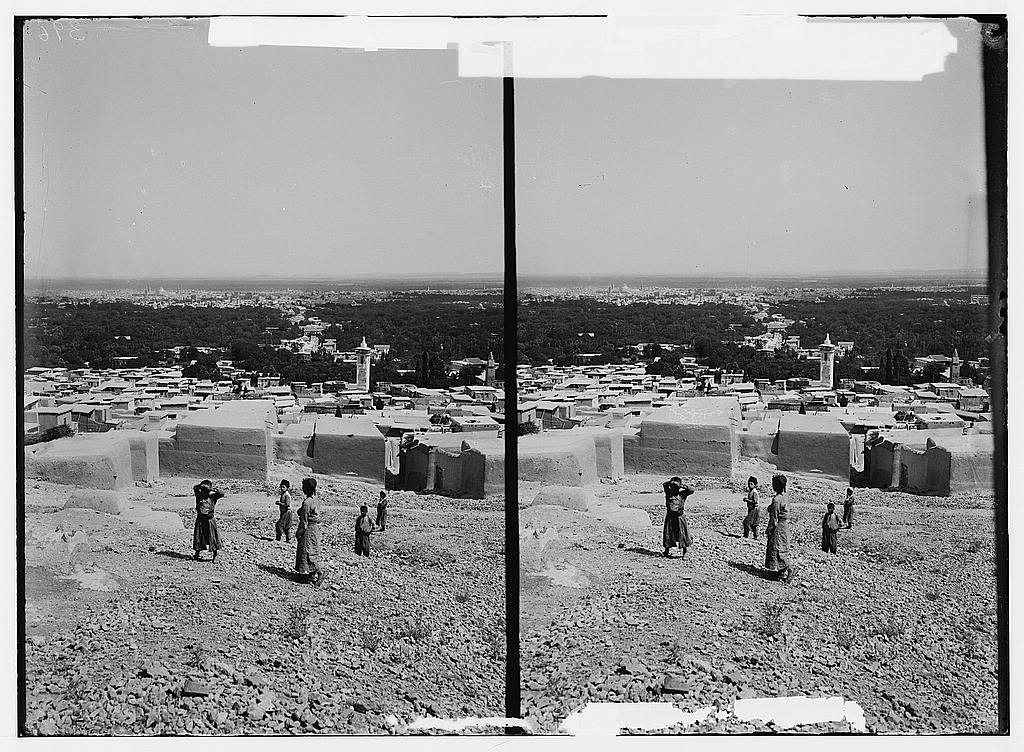
View of Damascus from al-Salihiyah, about 1900–1920.
The later view of Damascus directly connects with Naaman’s comparison of its rivers with the Jordan.
American Colony (Jerusalem). Photo Department; G. Eric and Edith Matson Photograph Collection, Library of Congress. · No known restrictions on publication · Original recordImage changes
Resized proportionally to at most 1440px and JPEG compressed; no crop or content alteration.
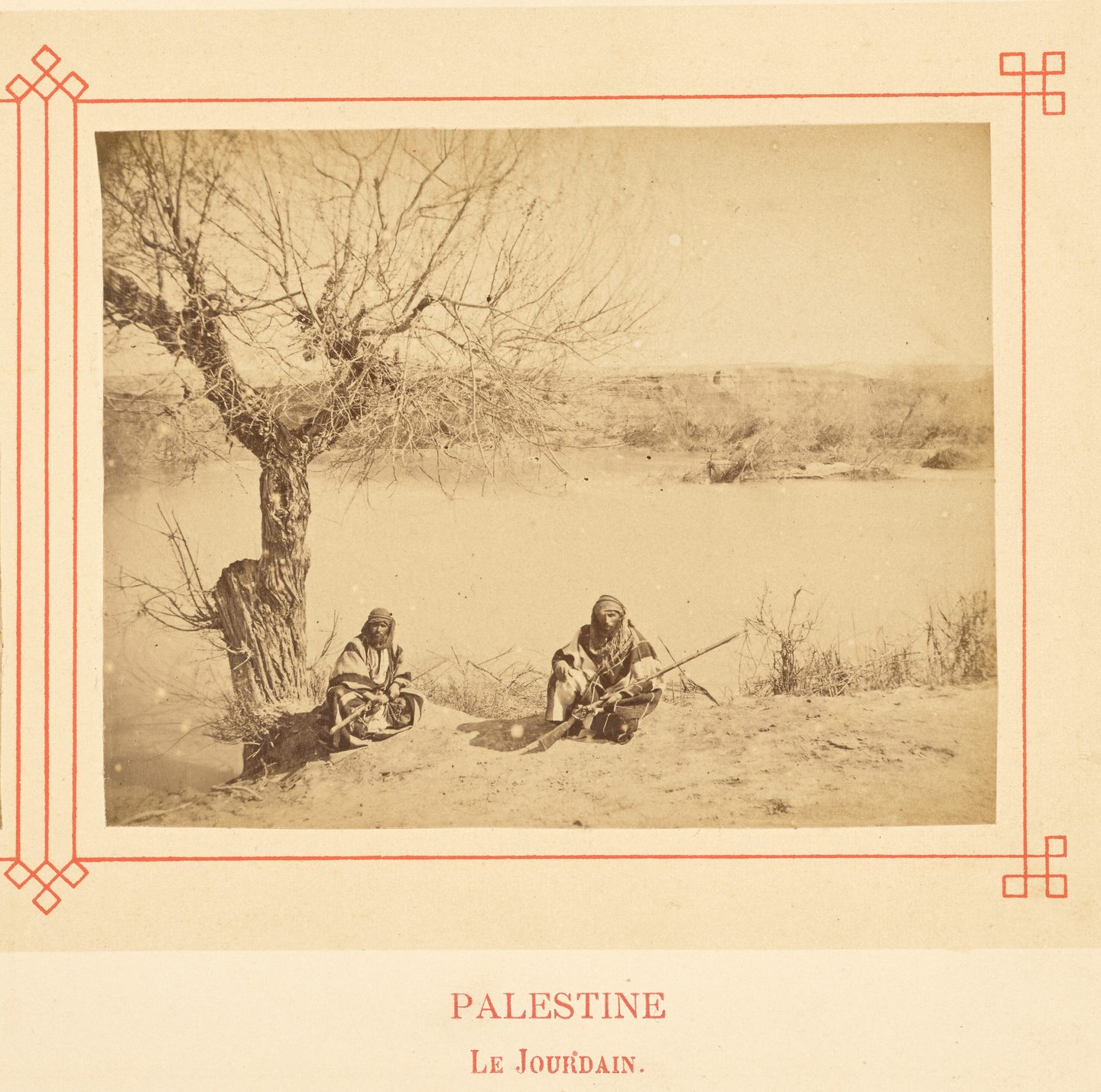
Le Jourdain.
The river gives geographical context for Naaman’s commanded washing, not a proven site of the event.
Félix Bonfils · CC0 1.0 · Original recordImage changes
Resized proportionally to at most 1440px and JPEG compressed; no crop or content alteration.
The words
Abana
Naaman names Abana as a river of Damascus, asking why he cannot wash there instead of in Israel’s waters.
Blessing
Naaman asks Elisha to accept a “blessing” after his return; Elisha refuses even when Naaman urges him.
Captain
Naaman commands the Syrian king’s army and enjoys his master’s favor; the narrator also describes him as a man with a skin disease.
Did you know?
Alongside the royal letter, Naaman takes ten changes of clothing on the journey, as well as gold and silver.
2 Kings 5:1; 2 Kings 5:5 (opens a new tab) · NET Bible: 2 Kings 5:1 (opens a new tab)
Damascus
In anger, Naaman praises the rivers of Damascus over Israel’s waters; his servants then urge him to follow the prophet’s instruction.
Dipped
Naaman dips himself seven times in the Jordan; the narrator describes his flesh restored like a child’s and calls him clean.
Elisha
Elisha sends a messenger to Naaman at his door; Naaman angrily says he expected the prophet to come out himself.
Did you know?
Before Naaman reaches Elisha, Israel’s king tears his clothes over the request for healing; the prophet asks that the commander be sent to him.
2 Kings 5:7–11 (opens a new tab) · 2 Kings 5:11–14 (opens a new tab)
Gehazi
Gehazi falsely claims Elisha needs gifts for two young prophets; he hides the silver, and Elisha declares Naaman’s condition will cling to him.
2 Kings 5:20–27 (opens a new tab) · 2 Kings 5:25–27 (opens a new tab)
Leprosy
A biblical term covering several skin diseases, according to the ESV note.
The KJV calls Naaman a leper; the NET Bible reads “skin disease” and cautions that this probably was not Hansen’s disease.
2 Kings 5:1 (opens a new tab) · NET Bible: 2 Kings 5:1 (opens a new tab) · ESV: 2 Kings 5:1 (opens a new tab)
Little Maid
A girl taken captive from Israel serves Naaman’s wife; she tells her mistress about the prophet in Samaria.
2 Kings 5:2–3 (opens a new tab) · NET Bible: 2 Kings 5:2-3 (opens a new tab)
Naaman
After washing in the Jordan, Naaman returns to Elisha and declares that there is no God except in Israel.
Did you know?
Naaman asks Elisha for two mules’ burdens of earth before departure, a request made after the prophet refuses his gift.
2 Kings 5:14–17 (opens a new tab) · 2 Kings 5:15–19 (opens a new tab)
Pharpar
Naaman pairs Pharpar with Abana in his angry comparison; he turns away before his servants persuade him to wash.
Rimmon
Naaman asks pardon for bowing in Rimmon’s temple while supporting his master, who leans on his hand; Elisha says, “Go in peace.”
Seven Times
Elisha’s messenger tells Naaman to wash seven times in the Jordan; his servants persuade him to obey the simple instruction.
2 Kings 5:10 (opens a new tab) · 2 Kings 5:13–14 (opens a new tab)
Syria
The Syrian king sends Naaman to Israel’s king with a letter requesting healing; the captive girl’s earlier advice has prompted the journey.
2 Kings 5:2–6 (opens a new tab) · 2 Kings 5:6–10 (opens a new tab)
Talents
A talent weighed about 75 pounds (34 kg), in the ESV note.
Gehazi asks for one talent of silver, but Naaman gives him two, packed in two bags and carried by two servants.
2 Kings 5:5 · 2 Kings 5:22–23 (opens a new tab) · ESV: 2 Kings 5:5 (opens a new tab)
Sources
- 2 Kings 5:1-5 (King James Version)King James Version, passage navigation via Bible Gateway
- 2 Kings 5:6-10 (King James Version)King James Version, passage navigation via Bible Gateway
- 2 Kings 5:11-14 (King James Version)King James Version, passage navigation via Bible Gateway
- 2 Kings 5:15-19 (King James Version)King James Version, passage navigation via Bible Gateway
- 2 Kings 5:20-24 (King James Version)King James Version, passage navigation via Bible Gateway
- 2 Kings 5:25-27 (King James Version)King James Version, passage navigation via Bible Gateway
- 2 Kings 5:1 (NET Bible), translation and notesNET Bible, via Bible Gateway
- 2 Kings 5:2-3 (NET Bible), translation and notesNET Bible, via Bible Gateway
- 2 Kings 5:1 (English Standard Version), text and footnotesEnglish Standard Version, via Bible Gateway
- 2 Kings 5:5 (English Standard Version), text and footnotesEnglish Standard Version, via Bible Gateway