
America’s National Parks
Puzzle 31 · The Great Plains · Page 49 in print
Tallgrass Prairie
Tallgrass prairie once covered 170 million acres of North America; today less than 4 percent remains intact, most of it in the Flint Hills of Kansas.
Jump to a word
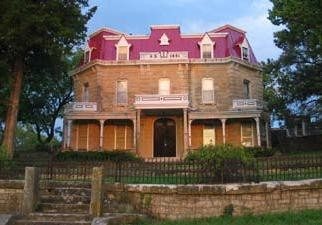
Spring Hill Ranch House at sunrise.
NPS Photo · Public domain (U.S. federal government work) · Original recordImage changes
Resized and converted to JPEG for display; no subject alteration.
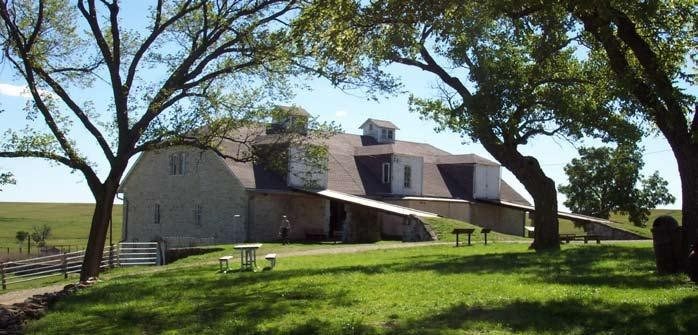
The preserve's limestone barn, framed by cottonwoods.
NPS Photo · Public domain (U.S. federal government work) · Original recordImage changes
Resized and converted to JPEG for display; no subject alteration.
The words
Big Bluestem
Big bluestem, one of the grasses dominating the prairie.
Bobwhite
The northern bobwhite, a bird recorded in the preserve.
Compass Plant
Compass plant, the prairie wildflower documented in the preserve's seed collection chart.
Dickcissel
The dickcissel, a grassland bird found in the Flint Hills.
Flint Hills
The Flint Hills, the Kansas region containing the preserve.
Fox Creek
Lower Fox Creek School, the historic school in the preserve.
Indiangrass
Indiangrass, one of the grasses dominating the prairie.
Limestone Barn
The limestone barn, the historic ranch building in the preserve.
Monarch
The monarch butterfly, a pollinator associated with the preserve's prairie plants.
Prairie Fire
Prairie fire, the disturbance that helps maintain the grassland ecosystem.
Spring Hill
Spring Hill Ranch, the historic ranch within the preserve.
Stephen Jones
Stephen Jones, the ranch owner who donated land for Lower Fox Creek School.
Stone Fences
Stone fences, the stone walls interpreted on the preserve’s ranch tour.
Switchgrass
Switchgrass, one of the grasses dominating the prairie.
Tallgrass
Tallgrass prairie, the grassland ecosystem protected by the preserve.
Sources
- A Complex Prairie Ecosystem - Tallgrass Prairie National PreserveNational Park Service
- Birds at Tallgrass Prairie - Tallgrass Prairie National PreserveNational Park Service
- Prairie Stewards Seed Collection: Tallgrass Prairie National Preserve (April 2020)The Nature Conservancy; Tallgrass Prairie National Preserve
- Tallgrass Prairie National Preserve Quick FactsNational Park Service
- Safety - Tallgrass Prairie National PreserveNational Park Service
- Virtual Tour Lower Fox Creek School - Tallgrass Prairie National PreserveNational Park Service
- Bison Bellows: Tallgrass Prairie National PreserveNational Park Service
- Nature - Tallgrass Prairie National PreserveNational Park Service
- Cell Phone Tours - Tallgrass Prairie National PreserveNational Park Service
- Nature Trails - Tallgrass Prairie National PreserveNational Park Service