
America’s National Parks
Puzzle 32 · The Great Plains · Page 50 in print
Agate Fossil Beds
In 1904 a small rodent skeleton found inside one of Agate’s Daemonelix, the spiral “Devil’s Corkscrews,” suggested they were burrows dug by Palaeocastor, a dry-land beaver that built no dams.
Jump to a word
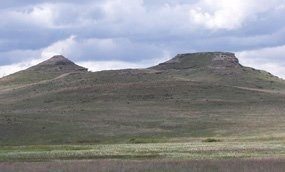
University and Carnegie Hills mark the fossil-bearing landscape.
NPS Photo · Public domain (U.S. federal government work) · Original recordImage changes
Resized and converted to JPEG for display; no subject alteration.
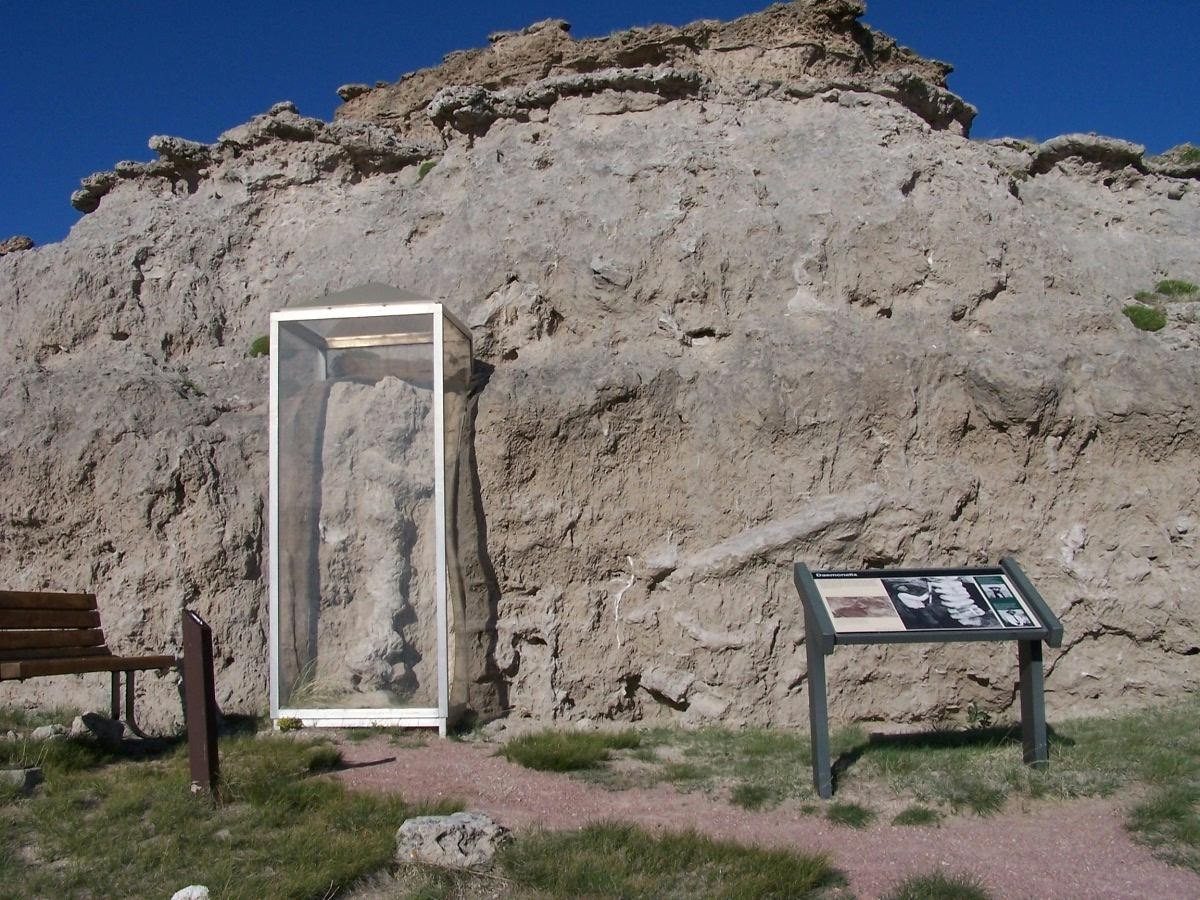
A fossil exhibit along the Daemonelix Trail.
NPS Photo · Public domain (U.S. federal government work) · Original recordImage changes
Resized and converted to JPEG for display; no subject alteration.
The words
Agate
Agate Fossil Beds, the national monument abbreviated here as Agate.
Beardog
A beardog, an extinct carnivore whose fossil den is recorded at Agate.
Carnegie Hill
Carnegie Hill, one of the monument's fossil-bearing quarry hills.
Corkscrew
The corkscrew form of the fossil beaver burrows.
Daemonelix
Daemonelix, the fossil spiral burrows made by ancient land beavers.
Fossil Hills
Fossil Hills, the named hills and trail leading to the fossil quarries.
Fossil Quarry
A fossil quarry, one of the excavation sites on University and Carnegie Hills.
Harold Cook
Harold Cook, James Cook’s son who operated Agate Springs Ranch, home of the fossil beds.
James Cook
James Cook, the local rancher who discovered fossil bones on the hills.
Menoceras
Menoceras, the extinct rhinoceros represented among the monument's fossils.
Miocene
The Miocene, the geological epoch represented by the monument's mammal fossils.
Niobrara River
The Niobrara River, the river beside the Cook ranch and monument.
Palaeocastor
Palaeocastor, the extinct land beaver whose burrows are preserved here.
Red Cloud
Red Cloud, the Lakota leader represented in the Cook collection.
Waterhole
The drying waterhole where ancient mammal remains accumulated.
Sources
- Outdoor Activities - Agate Fossil Beds National MonumentNational Park Service
- Mammal Fossils - Agate Fossil Beds National MonumentNational Park Service
- Women of Agate - Agate Fossil Beds National MonumentNational Park Service
- Things To Do - Agate Fossil Beds National MonumentNational Park Service
- History & Culture - Agate Fossil Beds National MonumentNational Park Service
- Indoor Activities - Agate Fossil Beds National MonumentNational Park Service
- Agate Fossil Beds National MonumentNational Park Service