
America’s National Parks
Puzzle 16 · Southeast and Caribbean · Page 30 in print
Virgin Islands
The Trunk Bay snorkel trail follows a line of informational plaques along the western side of Trunk Cay, where snorkelers can look for colorful parrotfish, yellowtail snapper and angelfish.
Jump to a word
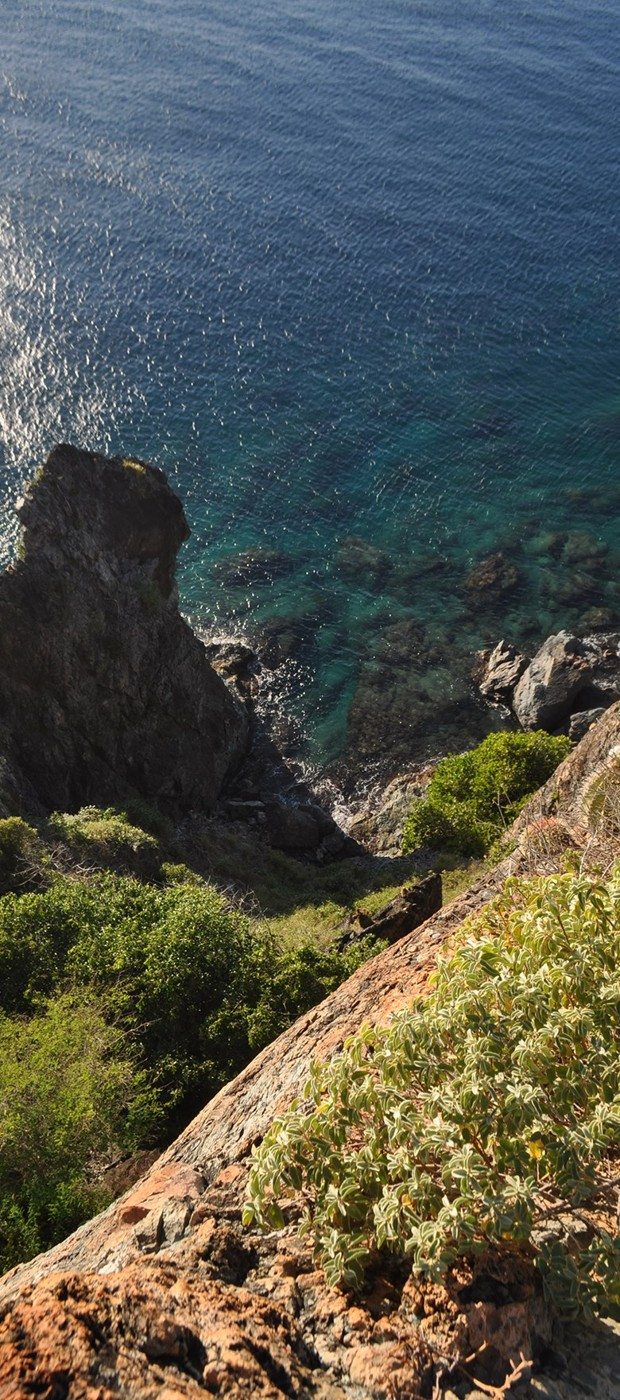
The Caribbean seen from the Ram Head Trail.
NPS Photo. · Public domain (U.S. federal government work) · Original recordImage changes
Resized and converted to JPEG for display; no subject alteration.
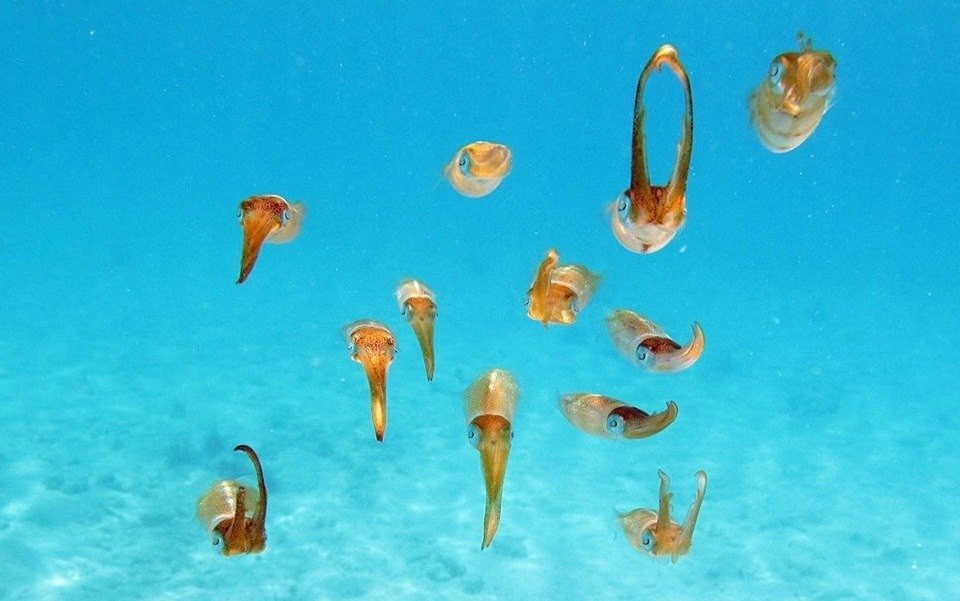
Squid in the waters of Virgin Islands National Park.
NPS Photo/Caroline Rogers · Public domain (U.S. federal government work) · Original recordImage changes
Resized and converted to JPEG for display; no subject alteration.
The words
Annaberg
Enslaved Africans built and worked Annaberg’s sugar estate under Danish colonial rule. Its surviving factory, windmill, animal mill and living quarters show the machinery and human labor behind the sugar trade.
Bananaquit
The bananaquit is a small yellow-and-black bird with a bold white stripe above its eyes. On St. John it favors shrubbery, forest edges, gardens and other open areas.
Did you know?
A female bananaquit builds a nest with an entrance in the side; she sometimes makes several nests and sleeps in one.
Bordeaux
Bordeaux Mountain rises 1,286 feet (392 m) above St. John. Its steep slopes belong to the park’s mountainous landscape, which includes both dry and moist forests alongside coastal and marine habitats.
Park Service: Mountain and coastal habitats (opens a new tab)
Catherineberg
Catherineberg’s windmill and boiling-house ruins preserve part of a Danish colonial sugar plantation. Enslaved workers produced sugar for export, linking the surviving masonry to the island’s history of forced labor.
Park Service: Plantations and reefs (opens a new tab) · Park Service: Plantation landscapes (opens a new tab)
Cinnamon Bay
Cinnamon Bay holds evidence of several periods of island life. Taino people settled here before Danish colonists established a plantation, where enslaved Africans were forced to work.
Elkhorn
Elkhorn coral forms broad, branching colonies that create shelter for reef fish and other organisms. The Park Service identifies elkhorn at Hawksnest, where juvenile fish use the spaces among its branches.
Did you know?
Broken pieces of elkhorn coral can attach to hard surfaces and grow into new colonies, one way this coral reproduces.
NOAA: Elkhorn coral biology (opens a new tab) · Park Service: Coastal waters and Salt Pond (opens a new tab)
Emancipation
Emancipation ended legal slavery in the Danish West Indies on July 3, 1848, after enslaved people demanded freedom at Frederiksted. St. John’s sugar production continued into the twentieth century.
Virgin Islands: Emancipation history (opens a new tab) · Park Service: Plantation landscapes (opens a new tab)
Hawksbill
Hawksbill sea turtles shelter along rocky ledges and coral reefs in the park’s waters. Their diet includes sponges and other invertebrates; harvesting their patterned shells historically caused severe population declines.
Did you know?
Female hawksbills return every two to three years to lay eggs on the beaches where they hatched.
Petroglyphs
Images carved into a rock surface.
The Reef Bay carvings are associated with Taino religious life. The Park Service interprets the faces as ancestral leaders whom living people sought to consult for guidance, rather than treating them as decoration.
Ram Head
Ram Head is a rocky headland beyond Salt Pond Bay. A narrow trail climbs to its summit, opening views across the Caribbean and contrasting with the nearby beach below.
Reef Bay
Reef Bay’s forest contains the remains of four sugar estates. The trail passes through this former plantation landscape before reaching old factory buildings and steam-powered machinery near the shore.
Park Service: Reef Bay’s forest and ruins (opens a new tab) · Park Service: Plantations and reefs (opens a new tab)
Salt Pond
Salt Pond Bay’s seagrass beds support green turtles, southern stingrays and other marine life. Behind the southeastern shore lies the salt pond itself, a separate wetland connected to the coastal landscape.
Did you know?
At some times of year, sea salt forms around the pond’s edges, making its name visible in the landscape.
Park Service: Coastal waters and Salt Pond (opens a new tab)
Sugar Mill
The Reef Bay sugar factory combined older stone, brick and coral masonry with later metal equipment. Production continued into the early 1900s, long after slavery ended in the Danish West Indies.
Did you know?
The factory’s earlier animal-powered mill was replaced by steam power sometime after 1861; much of the engine remains.
Park Service: Plantation landscapes (opens a new tab) · Park Service: Plantations and reefs (opens a new tab)
Taino
Taino communities established villages at Cinnamon, Coral, Caneel and Lameshur bays. Their archaeological record includes farming, stone tools and ceremonial objects, showing a developed island culture distinct from its mainland ancestors.
Trunk Bay
Trunk Bay combines a white-sand beach with an important archaeological record. Artifacts found here and at Cinnamon Bay helped researchers identify Taino cultural traditions on St. John.
Park Service: Trunk Bay’s coastal setting (opens a new tab) · Park Service: Island archaeology (opens a new tab)
Sources
- Places To Go - Virgin Islands National ParkNational Park Service
- Forest Birds of the Virgin Islands - Virgin Islands National ParkNational Park Service
- Nature - Virgin Islands National ParkNational Park Service
- Turtles of the Virgin Islands - Virgin Islands National ParkNational Park Service
- Salt Pond Bay and Ram Head TrailsNational Park Service
- Places - Virgin Islands National ParkNational Park Service
- Indigenous PeoplesNational Park Service
- Reef Bay Trail and Sugar PlantationNational Park Service
- Governor Bryan Statement on 178 Anniversary of July 3, 1848, Emancipation ProclamationGovernment of the United States Virgin Islands
- Elkhorn CoralNOAA Fisheries
- Snorkeling - Virgin Islands National ParkNational Park Service
- Petroglyphs of Reef BayNational Park Service
- National Park Getaway: Virgin Islands National ParkNational Park Service