
America’s National Parks
Puzzle 12 · Southeast and Caribbean · Page 26 in print
Congaree
Congaree’s synchronous firefly, Photuris frontalis, is known as the Snappy Single Sync: its males fly low to the ground and flash quickly every 0.65 seconds.
Jump to a word
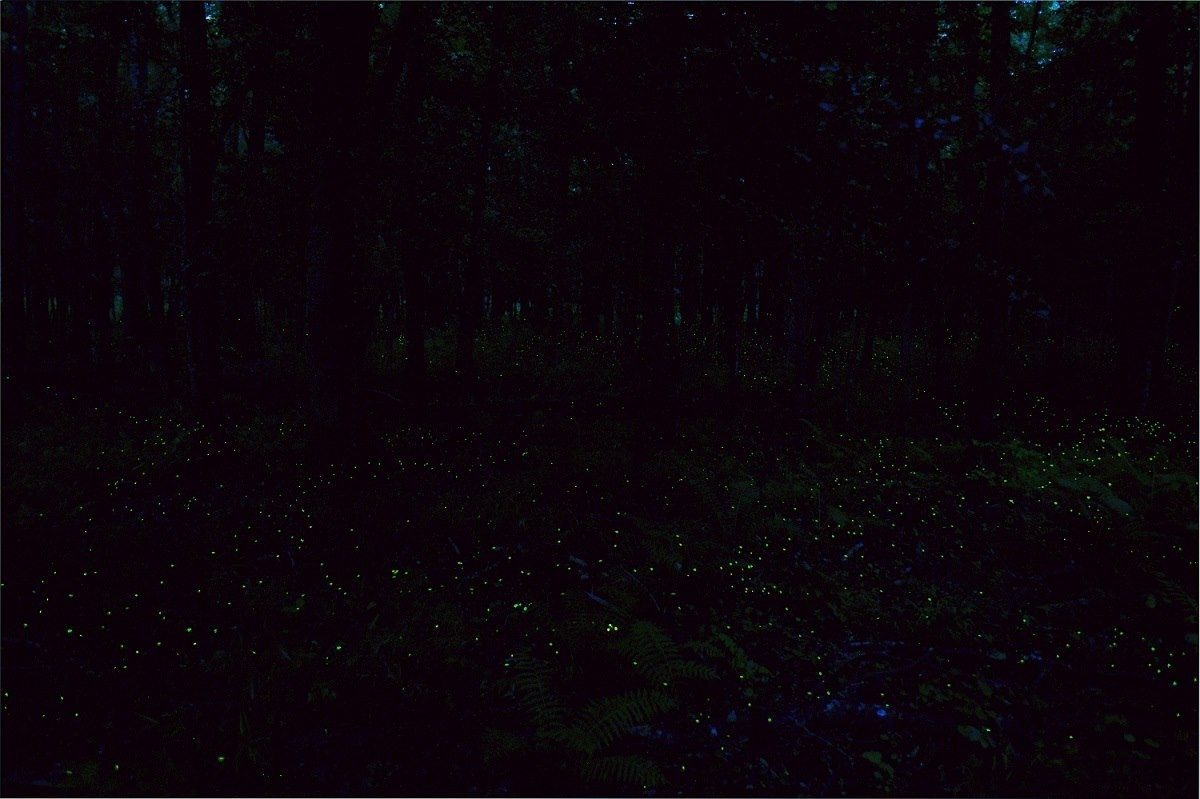
Synchronous fireflies are part of Congaree's forest life.
NPS Photo · Public domain (U.S. federal government work) · Original recordImage changes
Resized and converted to JPEG for display; no subject alteration.
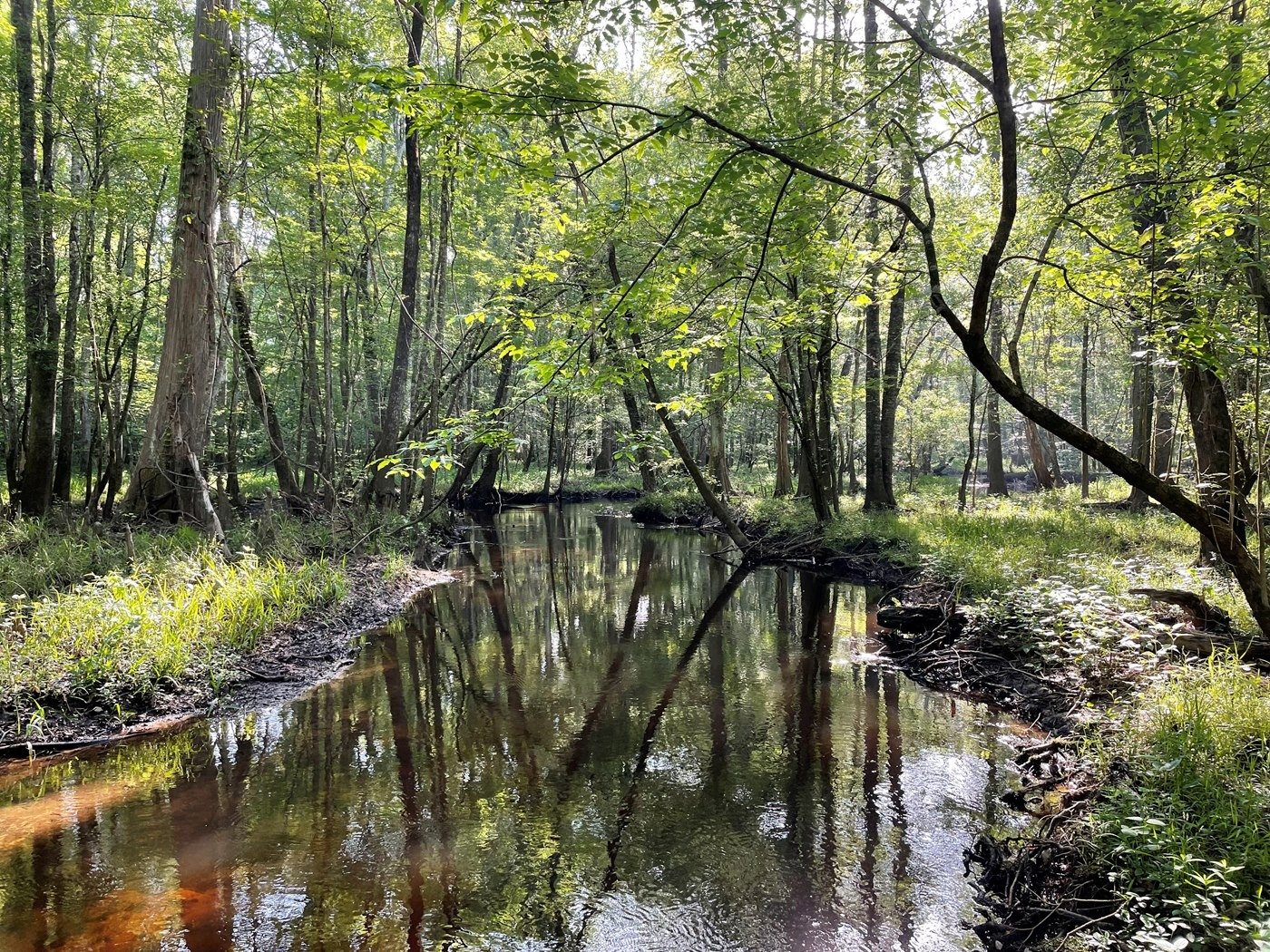
Cedar Creek runs through Congaree's floodplain forest.
NPS photo / SECN staff · Public domain (U.S. federal government work) · Original recordImage changes
Resized and converted to JPEG for display; no subject alteration.
The words
Bald Cypress
Bald cypress grows in Congaree’s lowest, wettest forest alongside tupelo. Older trees develop wide, buttressed bases, spreading their trunks where they meet the ground.
Did you know?
Its needle-like leaves turn orange to cinnamon-brown in autumn and fall off, leaving the branches bare for winter.
Park Service: Congaree’s forest trails (opens a new tab) · Tennessee Arboretum: Bald cypress (opens a new tab)
Barred Owl
The barred owl is a woodland hunter with brown eyes and bands across its chest. In Congaree’s forest it feeds on crayfish, fish, insects, rodents and reptiles, especially at night.
Bottomland
Low ground beside a river or stream that is periodically covered by water.
Congaree’s bottomland forest sheltered people escaping slavery on nearby plantations. The Park Service calls them maroons and describes their efforts to live freely while remaining near family and supplies.
Park Service: Bottomland and floodplain (opens a new tab) · Park Service: People in the floodplain (opens a new tab)
Cedar Creek
Cedar Creek flows through Congaree’s forest as part of its connected floodplain waters. Scientists monitor the creek’s depth, oxygen, acidity and temperature to track changes in habitat for fish and other wildlife.
Park Service: Floodplain and creek science (opens a new tab)
Champion Tree
Congaree’s warm growing season and flood-delivered moisture and nutrients help trees reach exceptional sizes. Champion status recognizes the largest recorded tree within a species, with national and state lists.
Did you know?
Scores combine height, trunk circumference and one quarter of the tree’s average crown spread.
Cherrybark
Cherrybark is a red oak whose mature bark resembles a cherry tree’s. Listed in the park’s 2009 champion-tree brochure, it grows best on moist but well-drained bottomland sites.
Did you know?
Its acorns need two years to ripen, with mature trees producing food for woodland wildlife.
Park Service: Champion tree guide (2009) (opens a new tab) · NC State: Cherrybark oak biology (opens a new tab)
Cypress Knee
Cypress knees are woody growths rising from the tree’s root system on wet ground. Their exact function remains uncertain; gas exchange and support for shallow roots are proposed explanations.
Fireflies
The light of Congaree’s fireflies comes from a chemical reaction in the abdomen. These insects are beetles, and their flashes help adults find and communicate with potential mates.
Did you know?
Most of a firefly’s life is spent in the soil as a larva, feeding on worms, snails and other small animals.
Floodplain
Flooding brings sediment and nutrients into Congaree’s forest. How often the water rises, how deep it becomes and how long it stays help determine which plant communities grow in different areas.
Park Service: Floodplain and creek science (opens a new tab)
Harry Hampton
Reporter Harry Hampton used his Woods and Waters newspaper column and political advocacy to argue for preserving Congaree’s forest. His campaign inspired later activists who secured national monument protection in 1976.
Loblolly
Loblolly pines join oaks, maples and holly in the forest along Congaree’s boardwalk. Their long needles grow in bundles of three, a useful identifying feature among the broad-leaved hardwoods.
Park Service: Congaree’s forest trails (opens a new tab) · NC State: Loblolly pine identification (opens a new tab)
Old Growth
Congaree’s old-growth forest is a remnant of the bottomland forests once widespread across the Southeast. Difficult access helped protect surviving trees even as loggers cut many of the area’s large cypresses.
Park Service: Forest and river history (opens a new tab) · Park Service: People in the floodplain (opens a new tab)
Oxbow
Oxbow lakes form when rivers abandon bends in their channels. Weston Lake is Congaree’s familiar example, showing how a changing river can leave a separate body of water behind.
Did you know?
Bates Old River, another oxbow at Congaree, formed during a hurricane in 1852.
Park Service: Forest and river history (opens a new tab) · Park Service: Congaree’s forest trails (opens a new tab)
Water Tupelo
Water tupelos grow where water is plentiful, and their swollen trunks stand out in Congaree’s wettest forest. Moss on the lower trunks can indicate the levels reached by earlier floods.
Weston Lake
Weston Lake is a former bend of the Congaree River, left behind as the river changed course. Its waters and fallen logs support turtles, waterbirds and other floodplain wildlife.
Park Service: Forest and river history (opens a new tab) · Park Service: Weston Lake wildlife (opens a new tab)
Sources
- Trail Information - Congaree National ParkNational Park Service
- Bird Calls Lesson PlanNational Park Service
- Frequently Asked Questions - Congaree National ParkNational Park Service
- Monitoring at Congaree National ParkNational Park Service
- Synchronous Fireflies at Congaree - Congaree National ParkNational Park Service
- National Park Getaway: Congaree National ParkNational Park Service
- Congaree Self Guided Boardwalk Tour Stop #4National Park Service
- Big Trees! Champion Trees in Congaree National ParkNational Park Service
- Harry R.E. HamptonNational Park Service
- People in the FloodplainNational Park Service
- Cherrybark Oak - Quercus pagodaNC State Extension
- Congaree Self Guided Boardwalk Tour Stop #10National Park Service
- Forest Resources Center & Arboretum - Bald CypressUniversity of Tennessee
- Pinus taeda (Loblolly Pine, Oldfield Pine, Yellow Pine)NC State Extension