
America’s National Parks
Puzzle 11 · Southeast and Caribbean · Page 25 in print
Dry Tortugas
Fort Jefferson, begun in 1846 on Garden Key, was the largest all-masonry fort in the United States, built to protect American shipping in the Gulf of Mexico.
Jump to a word
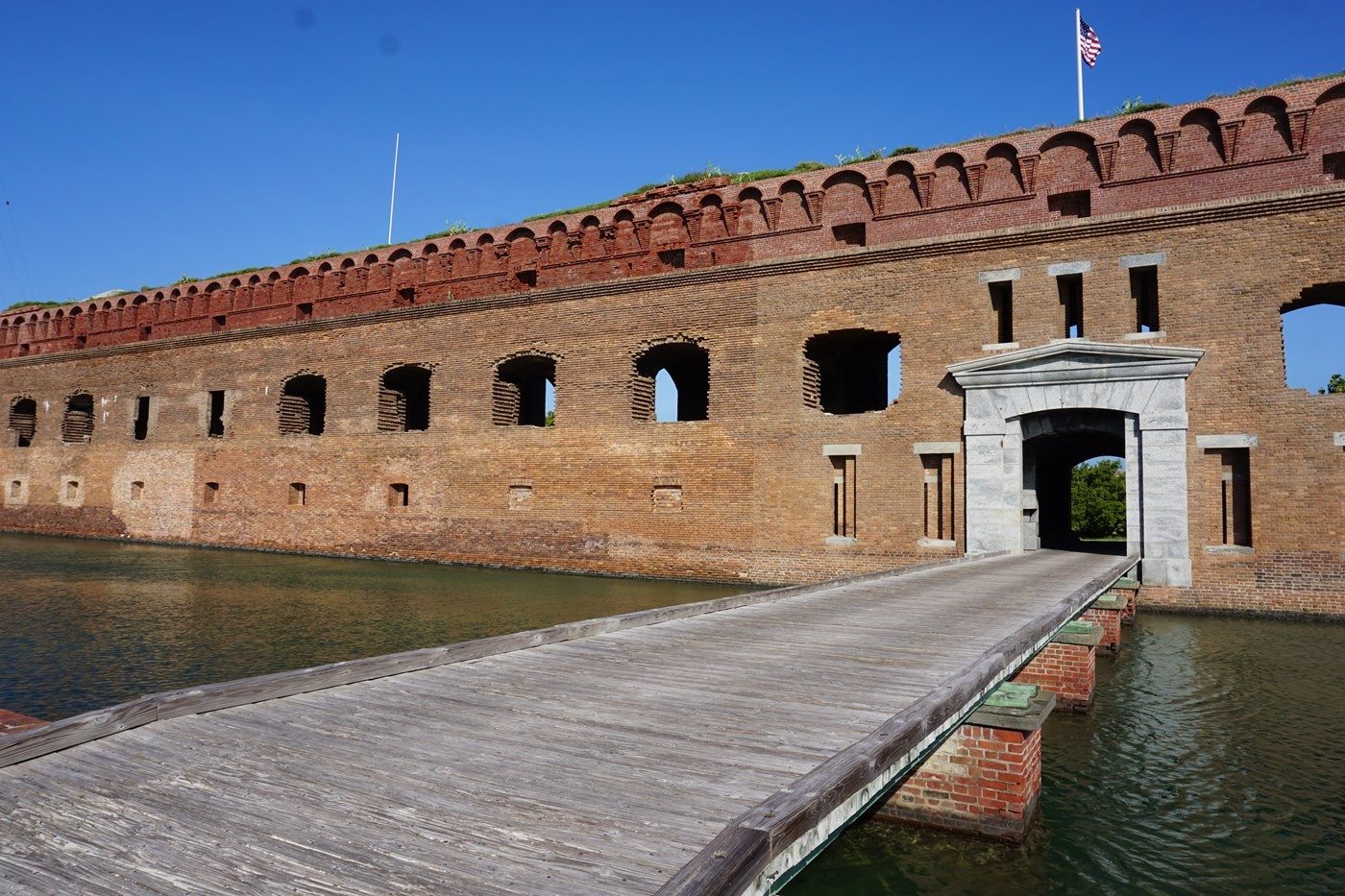
The sally port opens into Fort Jefferson on Garden Key.
NPS Photo Denise Diaz · Public domain (U.S. federal government work) · Original recordImage changes
Resized and converted to JPEG for display; no subject alteration.
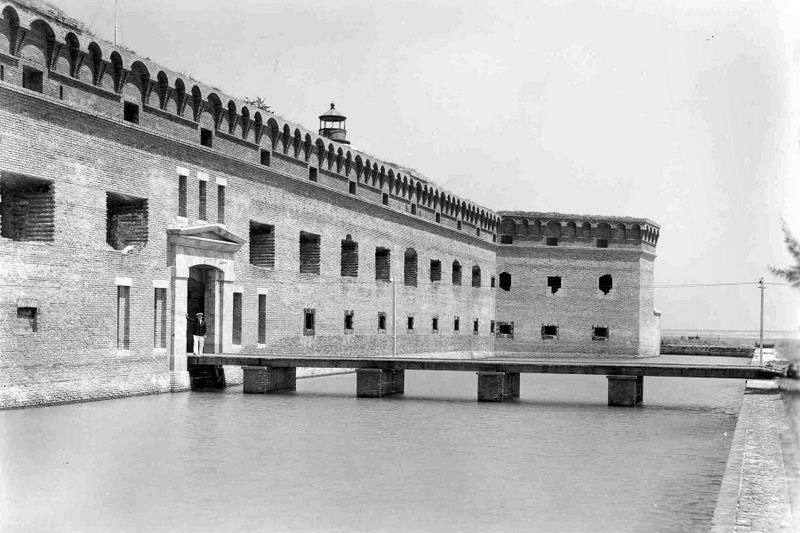
Fort Jefferson's masonry walls rise above the island.
NPS Photo · Public domain (U.S. federal government work) · Original recordImage changes
Resized and converted to JPEG for display; no subject alteration.
The words
Bush Key
Bush Key’s sandy shore and vegetation support breeding colonies of sooty terns and brown noddies. Shifting sand can join it to Garden Key or leave water between the islands.
Casemate
An enclosed, vaulted gunroom within a fort’s defensive walls.
Fort Jefferson’s plan stacked gunrooms in three tiers around its walls. The masonry arches formed the fort’s structural framework, and some second-tier rooms were later used to house soldiers and prisoners.
Park Service: Fort Jefferson nomination (opens a new tab) · Park Service: Fort Jefferson tour booklet (opens a new tab)
Fort Jefferson
Fort Jefferson guarded a deepwater harbor used by Union warships during the Civil War. Enslaved workers from Key West helped build the fort, which remained unfinished after decades of construction.
Park Service: Fort Jefferson’s harbor (opens a new tab) · Park Service: Fort workers and prisoners (opens a new tab)
Frigatebird
Magnificent frigatebirds are among the park’s seabirds. Long, angular wings and hooked bills distinguish them; adult males have a red throat pouch used in display, while females have a white chest.
Park Service: Dry Tortugas seabirds (opens a new tab) · Audubon: Magnificent frigatebird (opens a new tab)
Garden Key
Garden Key holds Fort Jefferson and the park’s headquarters, visitor center and campground. This concentration of buildings and activity has made it the most heavily altered of the Dry Tortugas islands.
Green Turtle
Green sea turtles nest on the islands and use nearby marine habitats between nesting visits. Adults eat seagrasses and algae, while young turtles offshore eat a mixture of plants and small animals.
Did you know?
Their name refers to the greenish color of their fat; their shells can show several other colors.
Harbor Light
The iron harbor light was built atop Fort Jefferson in 1876, replacing an earlier Garden Key lighthouse damaged by hurricanes. Its metal structure was chosen to reduce shrapnel if struck by artillery.
Moat Wall
The low wall around Fort Jefferson’s moat was designed as a breakwater against waves and storm surge. Inside it, the water-filled moat formed a barrier between the fort and potential attackers.
Noddy
The brown noddy is a dark tern with a pale cap and a wedge-shaped tail. It nests on Bush Key, sharing the island with nesting sooty terns.
Park Service: Dry Tortugas seabirds (opens a new tab) · Audubon: Brown noddy identification (opens a new tab)
Parade Ground
Fort Jefferson’s open parade ground was used for marching and military training. During the long, unfinished construction project, the same interior space also served as an extensive work yard.
Ponce de Leon
Spanish explorer Juan Ponce de León reached the islands in 1513 and named them Las Tortugas, meaning The Turtles, after the sea turtles he found there.
Did you know?
Mariners later added Dry to the name as a warning that the islands had no fresh drinking water.
Queen Conch
The park’s reef surveys track queen conch, large marine snails that graze on algae and plant material. Juveniles are especially associated with seagrass beds, while adults also use sand and rubble bottoms.
Did you know?
Once mature, a queen conch stops growing longer; its shell’s flared lip continues to thicken.
NOAA: Dry Tortugas reef survey fields (opens a new tab) · NOAA: Queen conch biology (opens a new tab)
Samuel Mudd
Mudd, a physician and slave owner, treated John Wilkes Booth’s broken leg. Convicted as a conspirator in Lincoln’s assassination, he was imprisoned here, helped during the 1867 yellow fever outbreak and received a presidential pardon in 1869.
Park Service: Samuel Mudd’s biography (opens a new tab) · Park Service: Fort workers and prisoners (opens a new tab)
Sooty Tern
Sooty terns nest along Bush Key’s beaches in dense colonies. These long-winged seabirds spend much of their lives over tropical oceans, with blackish backs, white underparts and a pale forehead.
Did you know?
Their noisy calls continue around the nesting colony by day and night, earning them the sailors’ nickname “wide-awake.”
Park Service: Bush Key’s nesting habitat (opens a new tab) · Audubon: Sooty tern identification (opens a new tab)
Totten Shutter
A hinged protective cover for a fort’s cannon opening.
At Fort Jefferson, the shutters were balanced to swing open briefly as a cannon fired, then return to a closed position. This reduced the time gun crews were exposed to enemy fire.
Did you know?
Saltwater caused the iron to rust and expand inside the walls, pushing bricks apart and creating a serious preservation problem.
Sources
- Bush Key - Dry Tortugas National ParkNational Park Service
- Fort Jefferson Preservation - Dry Tortugas National ParkNational Park Service
- Birds - Dry Tortugas National ParkNational Park Service
- Green Sea Turtles - Dry Tortugas National ParkNational Park Service
- Florida: Dry Tortugas National ParkNational Park Service
- Analysis Ready Data Invertebrate ESA Corals Dry TortugasNational Oceanic and Atmospheric Administration
- Fort Jefferson - Dry Tortugas National ParkNational Park Service
- Fort Jefferson National Monument: National Register of Historic Places Inventory-Nomination FormNational Park Service
- Garden KeyNational Park Service
- Dry Tortugas was a Part of American HistoryNational Park Service
- Samuel MuddNational Park Service
- Fort Jefferson Self-Guided Tour BookletNational Park Service
- Queen ConchNOAA Fisheries
- Brown NoddyNational Audubon Society
- Sooty TernNational Audubon Society
- Magnificent FrigatebirdNational Audubon Society