
America’s National Parks
Puzzle 10 · Southeast and Caribbean · Page 24 in print
Biscayne
To spoil the park idea, landowners bulldozed a swath six lanes wide and seven miles long down the middle of Elliott Key, a scar dubbed the “spite highway.”
Jump to a word
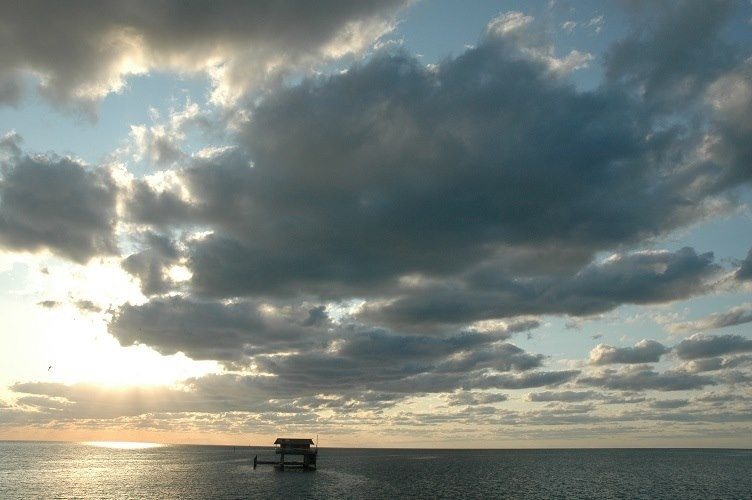
Sunrise reaches the buildings of Stiltsville.
NPS image by Matt Johnson · Public domain (U.S. federal government work) · Original recordImage changes
Resized and converted to JPEG for display; no subject alteration.
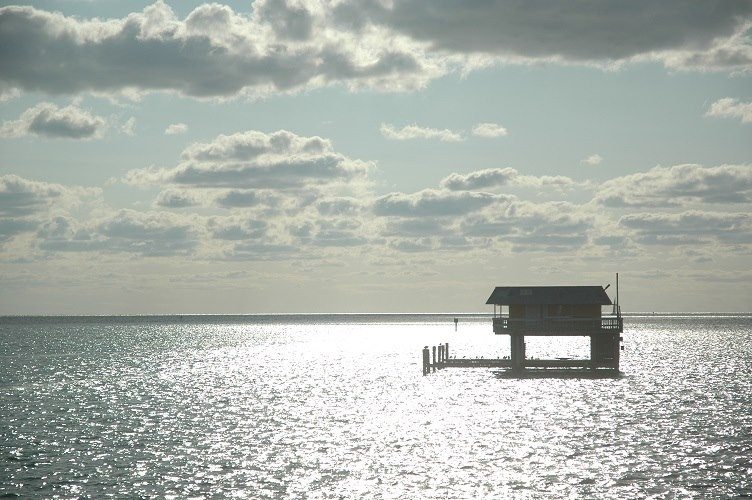
Stiltsville stands above Biscayne's open water.
NPS image by Matt Johnson · Public domain (U.S. federal government work) · Original recordImage changes
Resized and converted to JPEG for display; no subject alteration.
The words
Biscayne Bay
Biscayne Bay’s shallow bottom supports beds of seagrass, flowering plants that shelter young marine life. The bay lies inside a chain of keys that helps protect it and the mainland from the open ocean.
Park Service: Convoy Point’s bay habitats (opens a new tab) · Park Service: Elliott Key’s geology (opens a new tab)
Black Caesar
The Park Service recounts a local legend in which Black Caesar served aboard Blackbeard’s ship and operated in the waters around Caesar’s Creek.
Boca Chita
Boca Chita Key preserves traces of a private island retreat. Mark Honeywell built its ornamental lighthouse in the 1930s; the 65-foot (20 m) tower overlooks the island’s harbor.
Park Service: Boca Chita’s lighthouse (opens a new tab) · Park Service: Elliott Key’s geology (opens a new tab)
Convoy Point
Convoy Point is the park’s mainland base beside Biscayne Bay. The Dante Fascell Visitor Center and nearby jetty walk connect the shoreline’s living habitats with exhibits about ships lost on the reefs.
Elliott Key
Ancient coral reefs form Elliott Key’s rocky foundation, exposed after sea level fell. The island shelters the bay, while salt-tolerant shoreline plants give way inland to tropical trees such as mahogany and gumbo limbo.
Fowey Rocks
Built in 1878, Fowey Rocks Lighthouse marks the reef area where passing ships faced grounding hazards. It forms part of Biscayne’s Maritime Heritage Trail, which links the light with historic shipwreck sites.
Did you know?
The ship Arratoon Apcar grounded nearby in 1878 while workers were still building the lighthouse intended to help mariners avoid the reef.
Jones Lagoon
Mangrove forests border Jones Lagoon. Park surveys during the 2021–2022 nesting season recorded roseate spoonbills and great egrets nesting here, showing the lagoon’s importance to colonial waterbirds.
Park Service: Jones Lagoon mangroves (opens a new tab) · Park Service: 2021–2022 nesting surveys (opens a new tab)
Lancelot Jones
Lancelot Jones, an African American farmer, grew pineapples and key limes on his family’s islands. In 1970 the family sold the land to the federal government for conservation.
Manatee
Manatees are plant-eating mammals found in Biscayne’s aquatic habitats. They can move between fresh, salt and mixed waters, feeding on seagrasses and other submerged or floating plants.
Park Service: Biscayne’s ecosystems (opens a new tab) · Florida Wildlife: Manatee food and habitat (opens a new tab)
Mandalay
The schooner Mandalay grounded on Long Reef on January 1, 1966, while returning from the Bahamas. Coast Guard helicopters and patrol boats responded; unsuccessful salvage attempts left the vessel on the reef.
Did you know?
Before it became a cruise ship called Mandalay, the schooner sailed under the names Hardi Biou and Valor.
Parrotfish
On Biscayne’s reefs, stoplight parrotfish bite coral to feed on algae and tiny coral animals called polyps, taking in bits of stone as well.
Did you know?
At night, some parrotfish surround themselves with a coating of mucus that forms a kind of sleeping bag.
Patch Reef
A distinct coral reef surrounded by a ring of sand.
Biscayne’s adult spiny lobsters use patch reefs as well as ledges and rocky seafloor. The coral heads and their crevices support a mix of reef fish and invertebrates.
Park Service: Spiny lobster habitats (opens a new tab) · Florida Museum: Patch reef communities (opens a new tab)
Red Mangrove
Red mangroves grow along Biscayne’s saltwater shoreline, with long roots extending out into the water. These roots take on a reddish tinge when wet, giving the tree its common name.
Spite Highway
The clearing through Elliott Key became a symbol of the struggle between development and preservation. After Biscayne National Monument was established in 1968, forest grew back along the bulldozed corridor.
Stiltsville
Stiltsville’s buildings stand on pilings above Biscayne Bay’s shallow seagrass beds. The settlement began with waterfront shacks in the 1930s and developed into a social gathering place near Miami Beach.
Did you know?
In 1992, Hurricane Andrew left seven buildings standing; none had survived from Stiltsville’s busiest years, when the settlement reached 27 structures in 1960.
Sources
- Convoy Point Jetty Walk (Self-Guided) - Biscayne National ParkNational Park Service
- Volume 5, No. 1 - South Florida Collections Management CenterNational Park Service
- Maritime Heritage Trail - Biscayne National ParkNational Park Service
- Biscayne National Park Hosting Lancelot Jones Day Event - Biscayne National ParkNational Park Service
- Nature - Biscayne National ParkNational Park Service
- Mandalay - Biscayne National ParkNational Park Service
- Coral Reefs - Biscayne National ParkNational Park Service
- Crustaceans - Biscayne National ParkNational Park Service
- The Birth of Biscayne National Park - Biscayne National ParkNational Park Service
- Stiltsville - Biscayne National ParkNational Park Service
- Florida Keys - Biscayne National ParkNational Park Service
- Boca Chita Key - Biscayne National ParkNational Park Service
- Reef CommunitiesFlorida Museum of Natural History
- Manatee HabitatFlorida Fish and Wildlife Conservation Commission
- Mangroves and Climate Change - Biscayne National ParkNational Park Service
- Colonial Nesting Birds in Biscayne National Park: 2021-2022 Nesting Year SummaryNational Park Service