
The Life of Jesus
Puzzle 75 · Toward the Holy City · Page 107 in print
The Good Shepherd
The sheepfold and shepherd describe recognition, protection and life, contrasting devoted care with theft and hired labour.
Jump to a word
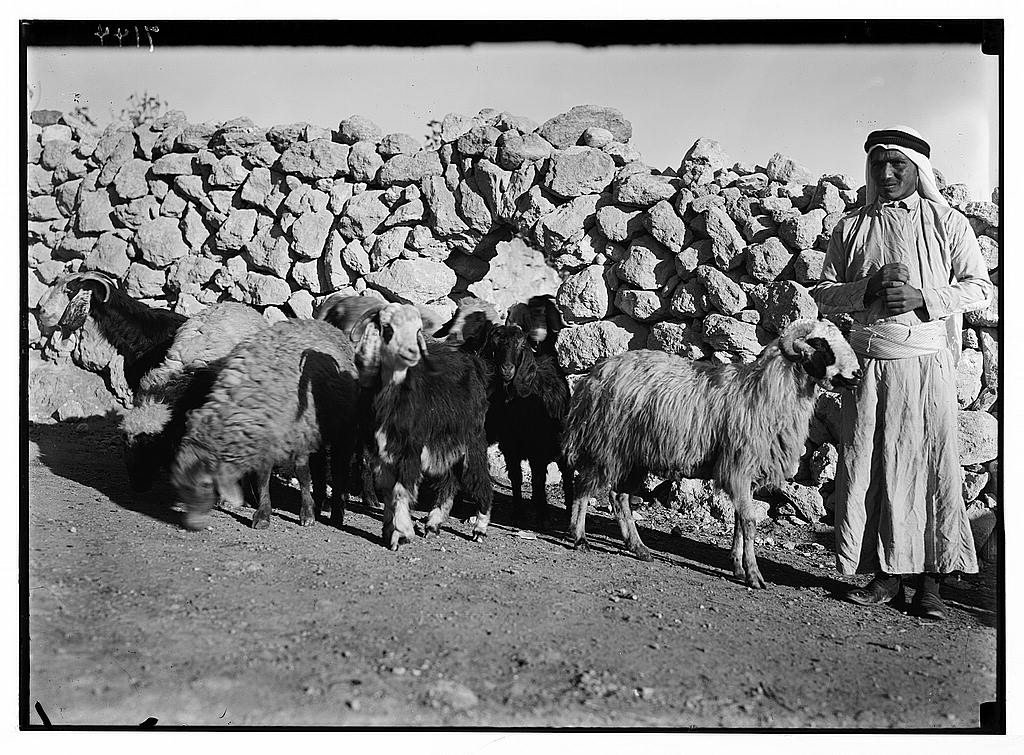
Shepherd leading a flock near Bethlehem, 1934–1939.
The later shepherd leading a flock directly illustrates the work behind the Good Shepherd imagery.
American Colony (Jerusalem). Photo Department; G. Eric and Edith Matson Photograph Collection, Library of Congress. · No known restrictions on publication · Original recordImage changes
Resized proportionally to at most 1440px and JPEG compressed; no crop or content alteration.
The words
Abundantly
In John’s account, Jesus contrasts the thief’s stealing, killing and destruction with his own purpose of bringing life. Abundantly describes the fullness of the life he says he brings.
John 10:10 (opens a new tab) · NET Bible: John 10 (opens a new tab)
Careth
Jesus says the hireling in his comparison flees because he does not care for the sheep. The following contrast returns to the good shepherd’s knowledge of his own sheep.
Climbeth
In the opening picture, the person climbing into the sheepfold by another way is called a thief and robber. John contrasts that entry with the shepherd’s use of the door.
Door
The door first marks the shepherd’s entrance into the sheepfold. Jesus then identifies himself as the door for the sheep and describes entering through him, being saved and finding pasture.
Good Shepherd
Jesus names himself the good shepherd in John, saying that he gives his life for the sheep. He later links that title with knowing his sheep and being known by them.
Hireling
A worker hired to tend the sheep.
Jesus’s hireling does not own the sheep. On seeing the wolf, he leaves them and runs; this hired worker is contrasted with the good shepherd who gives his life for the sheep.
John 10:11–13 (opens a new tab) · NET Bible: John 10 (opens a new tab)
Leadeth
The shepherd first calls his own sheep by name and leads them out. John then describes him going ahead of them; their following rests on recognizing his voice.
Openeth
The porter opens for the shepherd in John’s opening scene. The sheep hear the shepherd’s voice, and his calling them by name leads into their being brought out.
Pasture
After calling himself the door, Jesus describes entering through him, being saved, and going in and out to find pasture. The grazing image belongs to his explanation of what that entrance provides.
Porter
Gatekeeper or doorkeeper.
The porter admits the shepherd through the sheepfold’s entrance. The NET calls him the doorkeeper; his role in the scene is opening for the shepherd, whose voice the sheep recognize.
John 10:1–4 (opens a new tab) · NET Bible: John 10 (opens a new tab)
Robber
John’s opening thief and robber enters by a route other than the door. The following verses distinguish that intruder from the shepherd who uses the door and is followed by his own sheep.
Scattereth
John places the scattering of the sheep after the hireling’s flight and the wolf’s attack. The next verse says the worker flees because he has no care for the sheep.
John 10:12–13 (opens a new tab) · NET Bible: John 10 (opens a new tab)
Sheepfold
An enclosure for keeping sheep.
The sheepfold is the enclosed setting of Jesus’s opening comparison, with an entrance and a porter. Entry by the door distinguishes the shepherd from someone climbing in by another route.
Did you know?
In John 10:16, the KJV says “one fold,” while the NET says “one flock.” Both retain the following image of one shepherd, giving two English renderings within the same passage.
John 10:1–3, 16 (opens a new tab) · NET Bible: John 10 (opens a new tab)
Stranger
The sheep in John’s comparison refuse to follow a stranger and instead flee. Their response turns on the voice they do not recognize, in contrast with following their own shepherd’s familiar call.
Wolf
The wolf’s approach exposes the hireling’s lack of commitment: he leaves the sheep and flees. John then describes the wolf catching and scattering the sheep, while Jesus contrasts the good shepherd’s care.
Sources
- John 10:1-21 (King James Version)King James Version, passage navigation via Bible Gateway
- John 10 (NET Bible), translation and notesNET Bible, via Bible Gateway