
The Life of Jesus
Puzzle 74 · Toward the Holy City · Page 106 in print
The Man Born Blind
A man born blind receives sight after washing at Siloam; the healing brings repeated questioning and a dispute about spiritual blindness.
Jump to a word
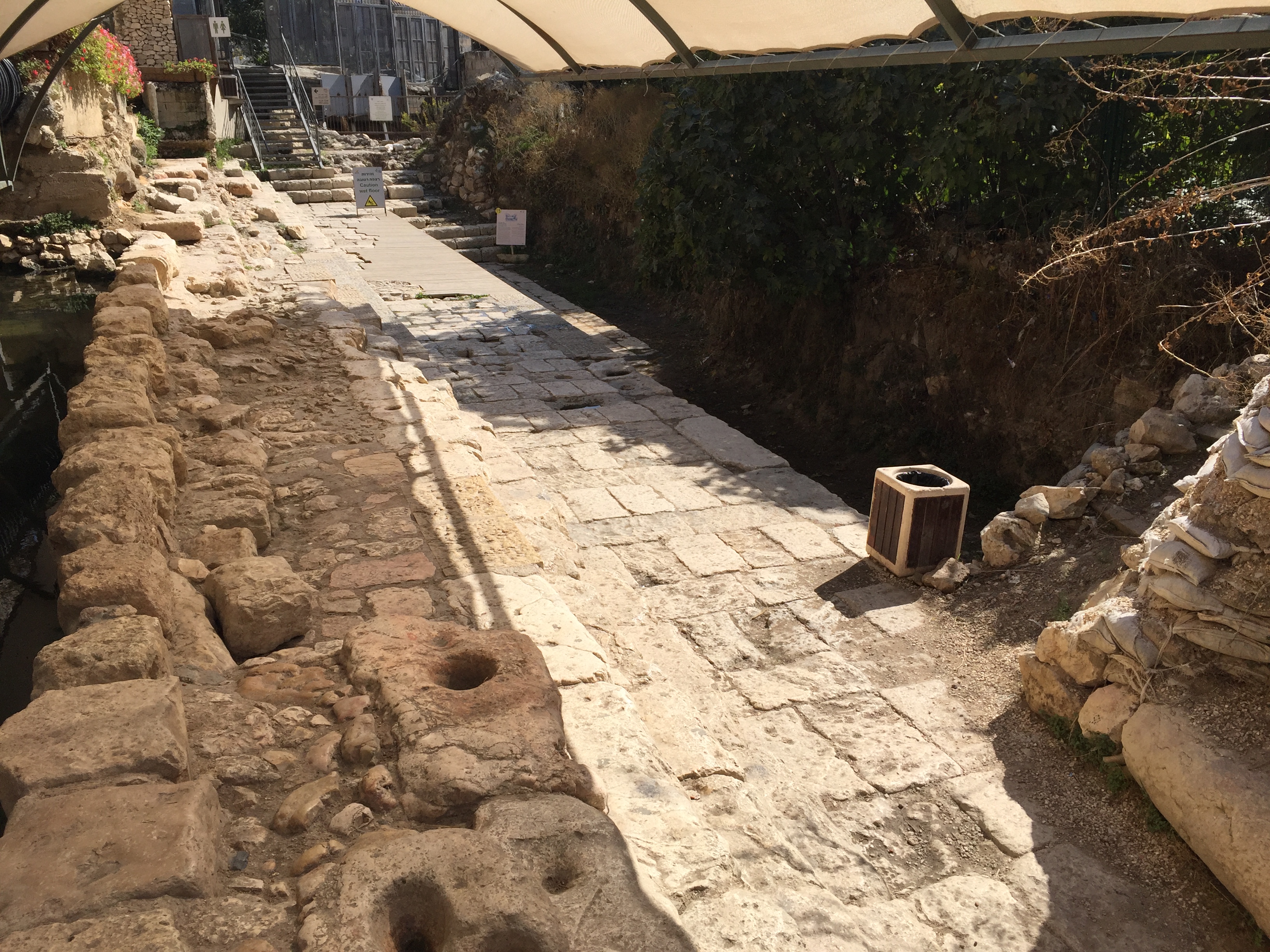
Excavated steps at the site known as the Pool of Siloam, Jerusalem, photographed November 1, 2015.
Markbarnes / Wikimedia Commons · CC BY-SA 4.0 · Original recordImage changes
Display copies resized; original downloaded JPEG preserved.
The words
Aforetime
Formerly; in an earlier time.
Aforetime describes the man’s earlier blindness when he is brought to the Pharisees. John then identifies the healing day as a Sabbath, leading into their questions about how he received sight.
Begged
John describes neighbors debating whether this is the man who used to sit and beg. Some think he only resembles him, while the man insists that he is the same person.
Birth
The questioners ask his parents whether he is their son and was born blind. The parents affirm both points but say they do not know how he has received sight.
Born Blind
John introduces a man blind from birth. Asked whether his or his parents’ sin caused the blindness, Jesus rejects both explanations and speaks about God’s works being revealed.
Clay
Mud, in this account’s wording.
John says Jesus makes clay and applies it to the man’s eyes. The healing prompts a Sabbath dispute because Jesus made the clay and opened his eyes on that day.
John 9:6, 14–16 (opens a new tab) · NET Bible: John 9 (opens a new tab)
Marvellous
Remarkable or astonishing.
The man calls it marvelous that his questioners do not know where Jesus comes from, even though Jesus has opened his eyes. The NET renders his reaction as remarkable.
John 9:29–30 (opens a new tab) · NET Bible: John 9 (opens a new tab)
Parents
The parents say that he is their son and was born blind, but tell the questioners to ask him about his sight. John explains that they fear exclusion from the synagogue.
Reviled
Insulted or abused verbally.
During the questioning, the man asks whether his hearers also want to become Jesus’s disciples. They revile him and call themselves Moses’s disciples; the NET says they heap insults on him.
John 9:27–28 (opens a new tab) · NET Bible: John 9 (opens a new tab)
Seeing
John says the man returns seeing after washing. When questioned again, he distinguishes what he does not know about Jesus from what he knows directly: he was blind and can see.
Siloam
Sent, as John explains the pool’s name.
Jesus sends the man to wash in the pool of Siloam. John pauses to explain its name as Sent, then reports that the man goes, washes and returns seeing.
Did you know?
In ’Atiqot 113, archaeologist Nahshon Szanton proposes identifying Birkat el-Ḥamra as Solomon’s Pool and Silwan Pool as Siloam, differing from the identification used in the printed note.
John 9:7 (opens a new tab) · Szanton: Siloam and Solomon’s pools (opens a new tab)
Sinned
The disciples ask whose sin explains the man’s blindness. Jesus rejects both proposed answers. His later questioners accuse him of being “born in sins” as they reject his argument.
Spat
John describes Jesus spitting on the ground before making clay and applying it to the man’s eyes. The following instruction sends the man to wash in the pool of Siloam.
Spittle
Saliva; the older word used here.
Spittle is what John names as the material with which Jesus makes clay. When the man later explains what happened, he reports the clay on his eyes, washing and receiving sight.
John 9:6, 11 (opens a new tab) · NET Bible: John 9 (opens a new tab)
Washed
John says the man goes to wash at Siloam and returns able to see. The man repeats this sequence when questioned, naming Jesus as the one who sent him.
Worshipper
A person who reveres God; rendered devout in the NET.
Worshipper belongs to the healed man’s reasoning about who God hears. He pairs worship with doing God’s will, then argues that Jesus could do nothing if he were not from God.
John 9:31–33 (opens a new tab) · NET Bible: John 9 (opens a new tab)
Sources
- John 9:1-41 (King James Version)King James Version, passage navigation via Bible Gateway
- John 9 (NET Bible), translation and notesNET Bible, via Bible Gateway
- Ritual Purification and Bathing: The Location and Function of Siloam Pool and Solomon’s Pool in Second Temple Period Jerusalem’Atiqot 113, PDF copy hosted by James Tabor