
The Life of Jesus
Puzzle 72 · Toward the Holy City · Page 104 in print
The Feast of Tabernacles
At the feast in Jerusalem, Jesus teaches publicly amid argument about his identity and an invitation to receive living water.
Jump to a word
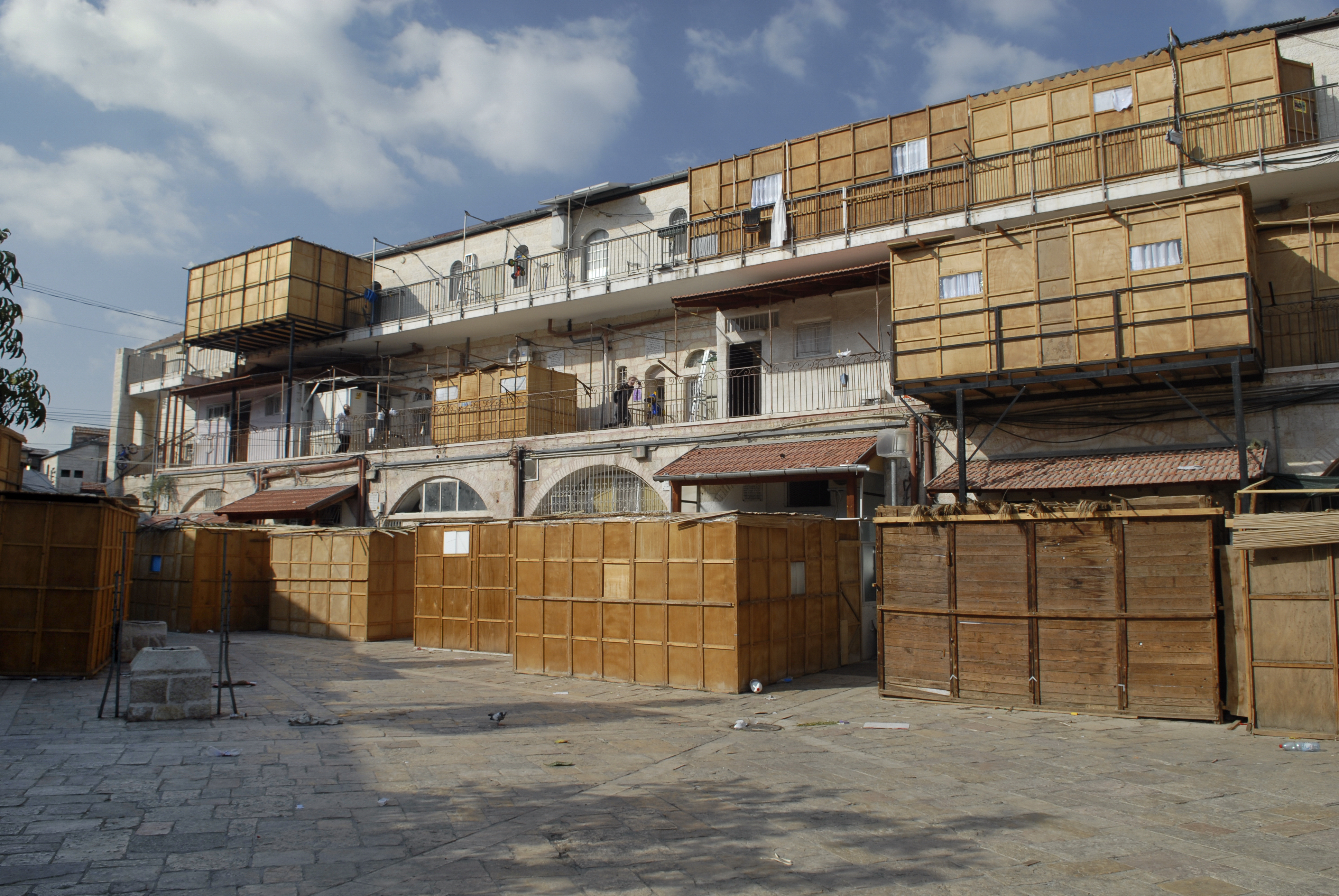
Modern booths for Sukkot, the Feast of Tabernacles, in Mea Shearim, Jerusalem, photographed October 20, 2008.
Simon Mannweiler / Wikimedia Commons · CC BY-SA 4.0 · Original recordImage changes
Display copies resized; original downloaded JPEG preserved.
The words
Appearance
After comparing Sabbath circumcision with making a man whole, Jesus contrasts judging by appearance with righteous judgment. John places the saying at the close of this exchange about the Sabbath.
Boldly
Openly or publicly.
Some Jerusalem residents remark that Jesus speaks boldly while the rulers say nothing to him. They wonder whether the rulers recognize him as the Christ; the NET renders boldly as speaking publicly.
John 7:25–26 (opens a new tab) · NET Bible: John 7 (opens a new tab)
Circumcision
Jesus reminds his hearers that they circumcise a man even “on the sabbath day,” so the law of Moses is not broken, and asks why healing a man that day angers them.
John 7:22–23 (opens a new tab) · John 7:22–23 (2) (opens a new tab)
Deceiveth
Deceives or misleads.
John reports conflicting talk about Jesus before his public teaching at the feast. Some people call him a good man; others accuse him of deceiving the people.
Division
John describes a divided crowd after Jesus’s invitation: some call him the Prophet, others the Christ, while others question a Galilean origin. The dispute includes Bethlehem and descent from David.
Great Day
John calls the feast’s closing day great. Jesus stands and invites anyone who thirsts to come and drink; the NET note says identifying this as the seventh or eighth day is uncertain.
John 7:37 (opens a new tab) · NET Bible: John 7 (opens a new tab)
Hateth
Hates or detests.
Speaking to his brothers before the feast, Jesus says the world hates him because he testifies that its works are evil. John then describes him remaining in Galilee.
Jewry
Judaea; rendered Judea in the NET.
John contrasts Jesus’s movements in Galilee with his avoidance of Jewry because leaders sought to kill him. The NET names the region Judea and identifies the opponents as Jewish authorities.
John 7:1 (opens a new tab) · NET Bible: John 7 (opens a new tab)
Learned
Taught or formally instructed.
When Jesus teaches in the temple, his hearers wonder how he acquired learning without formal instruction. The NET note explains that the question concerns recognized rabbinic training, rather than an inability to read.
John 7:14–15 (opens a new tab) · NET Bible: John 7 (opens a new tab)
Letters
Learning or education.
The question about letters comes as Jesus teaches midway through the feast. He answers that his teaching is not his own, but comes from the one who sent him.
Living Water
Jesus’s invitation to drink leads into his promise of living water. John explains the saying as referring to the Spirit whom believers would receive, connecting the water image with belief in Jesus.
Murmuring
Quiet discussion or grumbling.
John describes divided talk among the people before Jesus begins teaching in the temple. Some call him good; others accuse him of misleading people, and fear keeps them from speaking openly.
John 7:12–14 (opens a new tab) · NET Bible: John 7 (opens a new tab)
Officers
Men sent to detain Jesus.
The chief priests and Pharisees send officers to take Jesus. When the men return without him, they explain their failure by referring to the extraordinary way he speaks.
Rivers
In the KJV, Jesus speaks of rivers of living water flowing from the believer’s belly. John’s next verse explains the image in terms of the Spirit believers would receive.
Tabernacles
Booths or shelters; here, the feast’s name.
John names the approaching feast before describing Jesus’s journey to Jerusalem. Leviticus links the seven-day feast with living in booths and remembering Israel’s departure from Egypt.
Did you know?
Nehemiah describes booths on rooftops and in courtyards, alongside daily reading from the law during the feast. Its account adds a communal setting to the shelter imagery in this puzzle.
John 7:2, 10 · Leviticus 23:34, 42–43 (opens a new tab) · Leviticus 23:33–43 (opens a new tab) · NET Bible: John 7 (opens a new tab) · Nehemiah 8:14–18 (opens a new tab)
Sources
- John 7:1-52 (King James Version)King James Version, passage navigation via Bible Gateway
- John 7:22-23 (King James Version)King James Version, passage navigation via Bible Gateway
- John 7 (NET Bible), translation and notesNET Bible, via Bible Gateway
- Leviticus 23:33-43 (King James Version)King James Version, passage navigation via Bible Gateway
- Nehemiah 8:14-18 (King James Version)King James Version, passage navigation via Bible Gateway