
The Life of Jesus
Puzzle 71 · Toward the Holy City · Page 103 in print
The Unmerciful Servant
Peter’s question about forgiveness becomes a parable of a forgiven debtor who refuses mercy to someone else.
Jump to a word
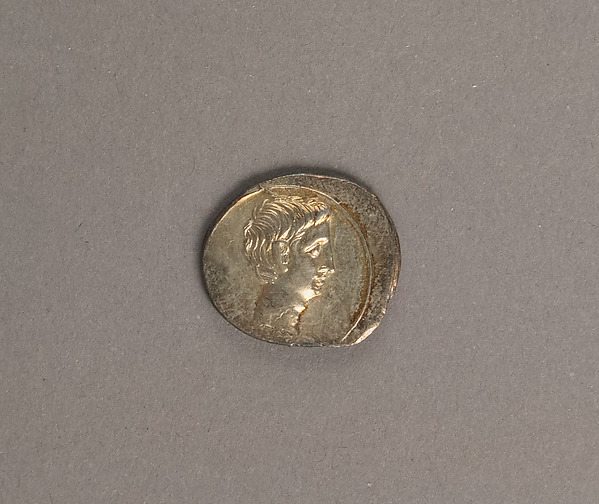
Silver denarius of Octavian (Augustus), ca. 29–27 BCE. Roman.
A real silver coin helps distinguish a small monetary unit from the enormous talent debt in the parable; no conversion is inferred from the image.
The Metropolitan Museum of Art; Rogers Fund, 1908; object 08.170.89. · CC0 / Public Domain · Original recordImage changes
Resized proportionally to at most 1440px and JPEG compressed; no crop or content alteration.
The words
Certain King
A king settling accounts with his servants opens Jesus’s parable. The NET calls them slaves; when the first cannot pay, the king orders him, his wife, children and possessions sold.
Matthew 18:23–25 (opens a new tab) · NET Bible: Matthew 18 (opens a new tab)
Debt
After the first servant pleads for patience, the king releases him and forgives the debt. The servant later refuses his fellow servant’s plea and has him imprisoned until the smaller debt is paid.
Desiredst
Asked or begged.
The king reminds the first servant that he forgave the debt because the servant had asked him. Desiredst points back to that earlier plea for patience; the NET uses begged.
Matthew 18:26, 32 (opens a new tab) · NET Bible: Matthew 18 (opens a new tab)
Fellowservant
Another servant of the same master.
The fellow servant owes the released debtor a hundred pence, identified as a hundred denarii in the NET note. His plea echoes the first servant’s, but he receives imprisonment instead of mercy.
Matthew 18:28–30 (opens a new tab) · NET Bible: Matthew 18 (opens a new tab)
Owest
Owe; are indebted for.
The first servant demands that his fellow servant pay what he owes, even after his own release. Matthew puts the demand alongside his seizure of the man by the throat.
Patience
Both debtors ask for patience and promise to repay everything. The king responds to the first plea with compassion and forgiveness; the first servant refuses the second plea and imprisons his fellow servant.
Payment
Matthew first mentions payment when the king orders the servant who cannot pay, his family and possessions sold. After the servant’s plea, the king releases him and forgives the debt instead.
Pity
The king asks why the servant did not show his fellow servant compassion like the pity he himself received. That question follows the other servants’ report of the man’s treatment.
Reckon
Settle accounts.
The king begins to reckon when the first debtor is brought before him owing ten thousand talents. This accounting opens the parable that follows Peter’s question about forgiveness.
Seven Times
Peter asks whether forgiving a brother seven times is enough. Jesus answers with seventy times seven in the KJV; the NET reads seventy-seven and notes the alternative translation.
Did you know?
In a separate saying, Luke describes forgiving someone who wrongs another seven times in one day and returns each time saying he repents. Matthew’s question does not specify a single day.
Matthew 18:21–22 (opens a new tab) · NET Bible: Matthew 18 (opens a new tab) · Luke 17:3–4 (opens a new tab)
Talents
Large ancient monetary units; here, units of debt.
Matthew gives the first servant’s debt in talents. The NET note describes a talent as a monetary unit worth about 6,000 denarii, explaining the scale behind the printed comparison.
Matthew 18:24 (opens a new tab) · NET Bible: Matthew 18 (opens a new tab)
Ten Thousand
Ten thousand measures the talents owed to the king, not the smaller debt owed by the fellow servant. Matthew later gives that second obligation as a hundred pence.
Throat
Released from his own debt, the first servant seizes his fellow servant by the throat and demands payment. Matthew places the second man’s plea for patience immediately after this demand.
Tormentors
Torturers; the jailers in the parable’s final punishment.
After the other servants report what happened, the angry king hands the unforgiving servant to tormentors until he should pay all he owes. The NET note identifies them as torturers.
Matthew 18:31–34 (opens a new tab) · NET Bible: Matthew 18 (opens a new tab)
Wicked
The king calls the servant wicked, reminding him of the debt he had forgiven and the compassion he expected in return. Jesus closes with a warning about forgiving from the heart.
Sources
- Matthew 18:21-35 (King James Version)King James Version, passage navigation via Bible Gateway
- Matthew 18 (NET Bible), translation and notesNET Bible, via Bible Gateway
- Luke 17:3-4 (King James Version)King James Version, passage navigation via Bible Gateway