
The Life of Jesus
Puzzle 70 · Called to Follow · Page 99 in print
Who Is the Greatest
A question about greatness leads Jesus to set a child among the disciples and warn against harming little ones.
Jump to a word
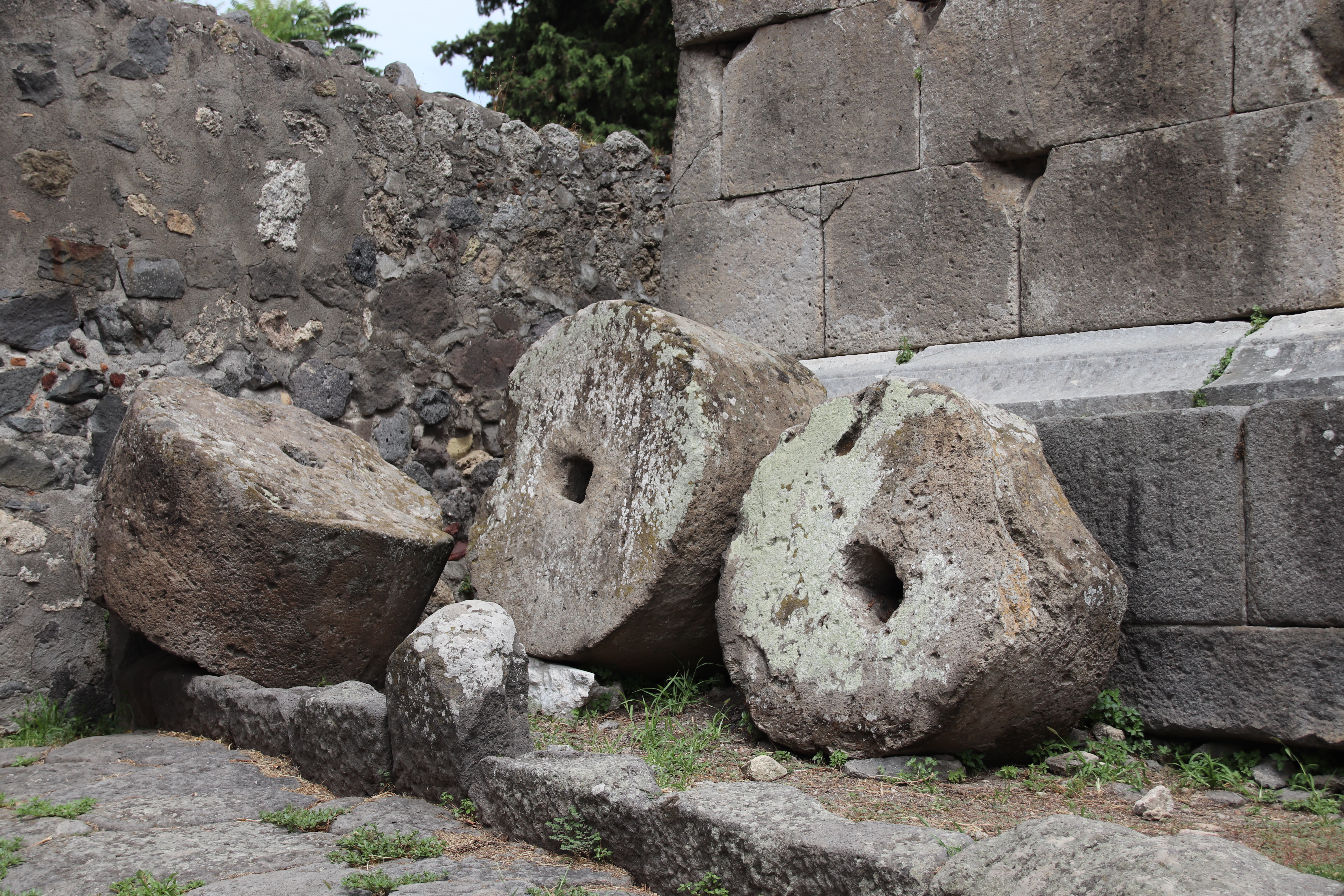
Ancient Roman millstones at Pompeii, photographed August 2, 2019.
Gary Todd / Wikimedia Commons · Public domain · Original recordImage changes
Display copies resized; original downloaded JPEG preserved.
The words
Astray
Matthew’s sheep story follows the warning not to despise little ones. One sheep leaves a flock of a hundred; its owner searches and rejoices if he finds it.
Converted
Turned around; changed, in this saying.
After setting a child among the disciples, Jesus says they must be converted and become like little children to enter the kingdom. The NET renders converted as turn around.
Matthew 18:2–3 (opens a new tab) · NET Bible: Matthew 18 (opens a new tab)
Depth of the Sea
Matthew places the sea in Jesus’s millstone warning about causing a believing little one to stumble. The NET renders the setting as open sea, distinguishing it from water near a coastline.
Matthew 18:6 (opens a new tab) · NET Bible: Matthew 18 (opens a new tab)
Despise
Look down on; treat with contempt.
Jesus warns against despising any of the little ones, saying their angels behold his Father’s face in heaven. The NET uses disdain; the sheep story follows this warning.
Matthew 18:10, 12 (opens a new tab) · NET Bible: Matthew 18 (opens a new tab)
Disputed
Argued or debated.
In Mark, Jesus asks in the house at Capernaum what the disciples discussed on the way. They remain silent because their dispute concerned which of them should be greatest.
Drowned
In Matthew, drowning belongs to Jesus’s severe comparison about someone who causes a believing little one to stumble. The passage gives a warning, rather than reporting a drowning that occurred.
Greatest
Matthew opens with the disciples asking who is greatest in the kingdom of heaven. Jesus sets a child among them and answers in terms of humbling oneself like the child.
Hanged
Hung or suspended.
Hanged describes the millstone hanging around a person’s neck in Matthew’s warning. The image concerns the one who causes a believing little one to stumble, not punishment of the child.
Hell Fire
Matthew uses hell fire in Jesus’s warning about an eye that causes stumbling. The saying contrasts entering life with one eye and having two eyes but being cast into hell fire.
Humble
Jesus answers the question about greatness by naming the person who humbles himself like the child he has placed among them. Matthew ties the answer directly to the kingdom of heaven.
Did you know?
A proverb about wisdom places humility before honor. Its KJV wording, “before honour is humility,” offers a separate scriptural parallel to the puzzle’s language about greatness.
Matthew 18:2, 4 (opens a new tab) · Proverbs 15:33 (opens a new tab)
Little Child
Both Matthew and Mark describe Jesus placing a child among the disciples. Mark adds that Jesus takes the child in his arms before speaking about receiving such children in his name.
Matthew 18:2 · Mark 9:36–37 (opens a new tab) · Mark 9:33–37 (opens a new tab)
Little Ones
Matthew’s warning names little ones who believe in Jesus. He then warns against despising them and closes the sheep comparison by saying the Father does not will that one should perish.
Millstone
A stone used for grinding grain.
The millstone appears in Jesus’s warning about causing a believing little one to stumble. The NET note identifies the Greek expression as a large stone turned by a donkey to grind grain.
Matthew 18:6 (opens a new tab) · NET Bible: Matthew 18 (opens a new tab)
Neck
The neck is where the millstone is hung in Matthew’s severe warning. Jesus uses the comparison while speaking against causing a little one who believes in him to stumble.
Offences
Causes of stumbling or sin, in this passage.
After the warning about a little one, Matthew records Jesus’s words about offences and the person through whom they come. The NET renders offences as stumbling blocks, clarifying the older wording.
Matthew 18:6–7 (opens a new tab) · NET Bible: Matthew 18 (opens a new tab)
Sources
- Matthew 18:1-14 (King James Version)King James Version, passage navigation via Bible Gateway
- Mark 9:33-37 (King James Version)King James Version, passage navigation via Bible Gateway
- Matthew 18 (NET Bible), translation and notesNET Bible, via Bible Gateway
- Proverbs 15:33 (King James Version)King James Version, passage navigation via Bible Gateway