
The Life of Jesus
Puzzle 69 · Called to Follow · Page 98 in print
Help Thou Mine Unbelief
A father brings his afflicted son after the disciples cannot help; his plea holds trust and uncertainty together.
Jump to a word
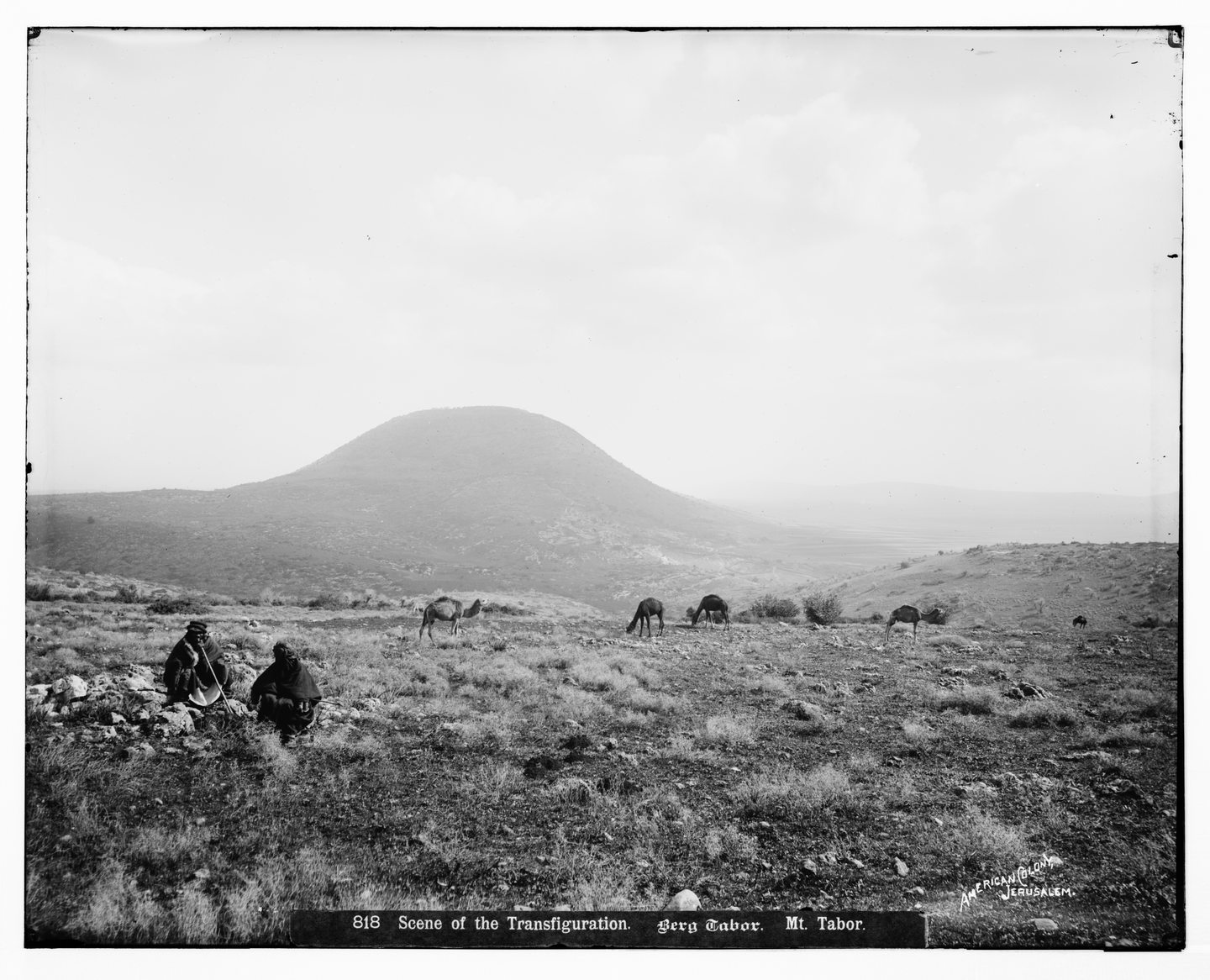
Mount Tabor, the traditional mount of the Transfiguration (between 1898 and 1914).
This traditionally associated mountain is shown as a later geographical view, not proof of the unnamed mountain or the episode at its foot.
G. Eric and Edith Matson Photograph Collection, Library of Congress · Public Domain Mark 1.0 · Original recordImage changes
Resized proportionally to at most 1440px and JPEG compressed; no crop or content alteration.
The words
Dumb Spirit
A spirit described as preventing speech.
In Mark, the father describes his son as having a dumb spirit and reports that the disciples could not cast it out. The NET says the spirit makes him mute, explaining the speech-related wording.
Mark 9:17–18 (opens a new tab) · NET Bible: Mark 9:14-29 (opens a new tab)
Faithless
Unbelieving, in the rebuke’s wording.
Jesus’s rebuke addresses a faithless generation after the report that the disciples could not help. He then tells them to bring the boy; the NET Matthew note says the address is plural.
Mark 9:18–19 (opens a new tab) · Matthew 17:17 (opens a new tab) · NET Bible: Matthew 17:14-21 (opens a new tab)
Fasting
The KJV pairs fasting with prayer. The King James Version follows later manuscripts here; many modern Bibles, following older ones, read differently or put these words in a footnote.
Mark 9:28–29 (opens a new tab) · Matthew 17:21 (opens a new tab) · NET Bible: Mark 9:14-29 (opens a new tab) · NET Bible: Matthew 17:14-21 (opens a new tab)
Foameth
Foams at the mouth.
Foaming is part of the father’s report of what happens to his son in Mark. Mark later describes the boy foaming on the ground; Luke’s father also reports foaming in his account.
Mark 9:18, 20 (opens a new tab) · Luke 9:39 (opens a new tab) · NET Bible: Luke 9:37-43 (opens a new tab)
Foul Spirit
Unclean spirit; the religious description in Luke.
Mark calls the spirit foul as Jesus rebukes it and orders it to leave and not return. Luke uses unclean spirit when describing Jesus’s rebuke, healing the boy and returning him to his father.
Gnasheth
Grinds his teeth.
The father says his son gnashes with his teeth among the other signs he reports to Jesus. The NET renders this as grinding his teeth, alongside foaming and becoming rigid.
Mark 9:17–18 (opens a new tab) · NET Bible: Mark 9:14-29 (opens a new tab)
Greatly Amazed
Mark places the crowd’s amazement at the beginning of the encounter, when they see Jesus. They run to greet him before the father describes his son and the disciples’ inability to help.
Ofttimes
Often; repeatedly.
In Mark, the father says the spirit has often thrown his son into fire and water to destroy him, then asks for compassion and help. Matthew also reports repeated falls into fire and water.
Mark 9:21–22 (opens a new tab) · Matthew 17:15 (opens a new tab) · NET Bible: Matthew 17:14-21 (opens a new tab)
Pineth
Becomes rigid, in the NET’s wording here.
The KJV includes “pineth away” in the father’s description, after foaming and grinding the teeth. The NET renders this part of the report as becomes rigid, giving a different wording for the boy’s condition.
Mark 9:18 (opens a new tab) · NET Bible: Mark 9:14-29 (opens a new tab)
Possible
The father asks if Jesus can help; Jesus responds about belief and possibility. The NET repeats the father’s “If you are able?” where the KJV says “If thou canst believe.”
Mark 9:22–24 (opens a new tab) · NET Bible: Mark 9:14-29 (opens a new tab)
Questioning
Arguing; disputing.
The scribes are questioning the disciples when Jesus arrives, and he asks what they are discussing. The NET renders the interaction as arguing; the father then reports that the disciples could not cast out the spirit.
Mark 9:14–18 (opens a new tab) · NET Bible: Mark 9:14-29 (opens a new tab)
Saluted
Greeted; welcomed him.
After seeing Jesus and reacting with amazement, the crowd runs to him and salutes him. The NET renders saluted as greeted; this welcome precedes the father’s account of his son’s distress.
Did you know?
Third John closes with a personal greeting: friends send their salutations, and the recipient is asked to greet the friends by name.
Mark 9:15–17 (opens a new tab) · NET Bible: Mark 9:14-29 (opens a new tab) · 3 John 1:14 (opens a new tab)
Teareth
Throws him down, in the NET’s wording.
The father says the spirit tears his son, rendered throws him down in the NET. Mark then describes the boy falling and rolling on the ground; Luke likewise describes him being thrown down as he approaches.
Mark 9:18, 20 (opens a new tab) · Luke 9:42 (opens a new tab) · NET Bible: Mark 9:14-29 (opens a new tab)
Unbelief
In Mark, the father’s cry joins “I believe” with a request for help with unbelief. Jesus then commands the spirit to leave; Mark later describes him taking the boy’s hand and raising him.
Wallowed
Rolled about on the ground.
Mark says the boy falls to the ground and wallows, foaming, after he is brought to Jesus. The NET renders the movement as rolled around; the following exchange begins with Jesus asking how long this has happened.
Mark 9:20–21 (opens a new tab) · NET Bible: Mark 9:14-29 (opens a new tab)
Sources
- Mark 9:14-29 (King James Version)King James Version, passage navigation via Bible Gateway
- Matthew 17:14-21 (King James Version)King James Version, passage navigation via Bible Gateway
- Luke 9:37-43 (King James Version)King James Version, passage navigation via Bible Gateway
- Mark 9:14-29 (NET Bible), translation and notesNET Bible, via Bible Gateway
- Matthew 17:14-21 (NET Bible), translation and notesNET Bible, via Bible Gateway
- Luke 9:37-43 (NET Bible), translation and notesNET Bible, via Bible Gateway
- 3 John 1:14 (King James Version)King James Version, passage navigation via Bible Gateway