
The Life of Jesus
Puzzle 68 · Called to Follow · Page 97 in print
The Transfiguration
On a mountain, Jesus is transfigured before three disciples and speaks with Moses and Elijah; the precise mountain is unnamed.
Jump to a word
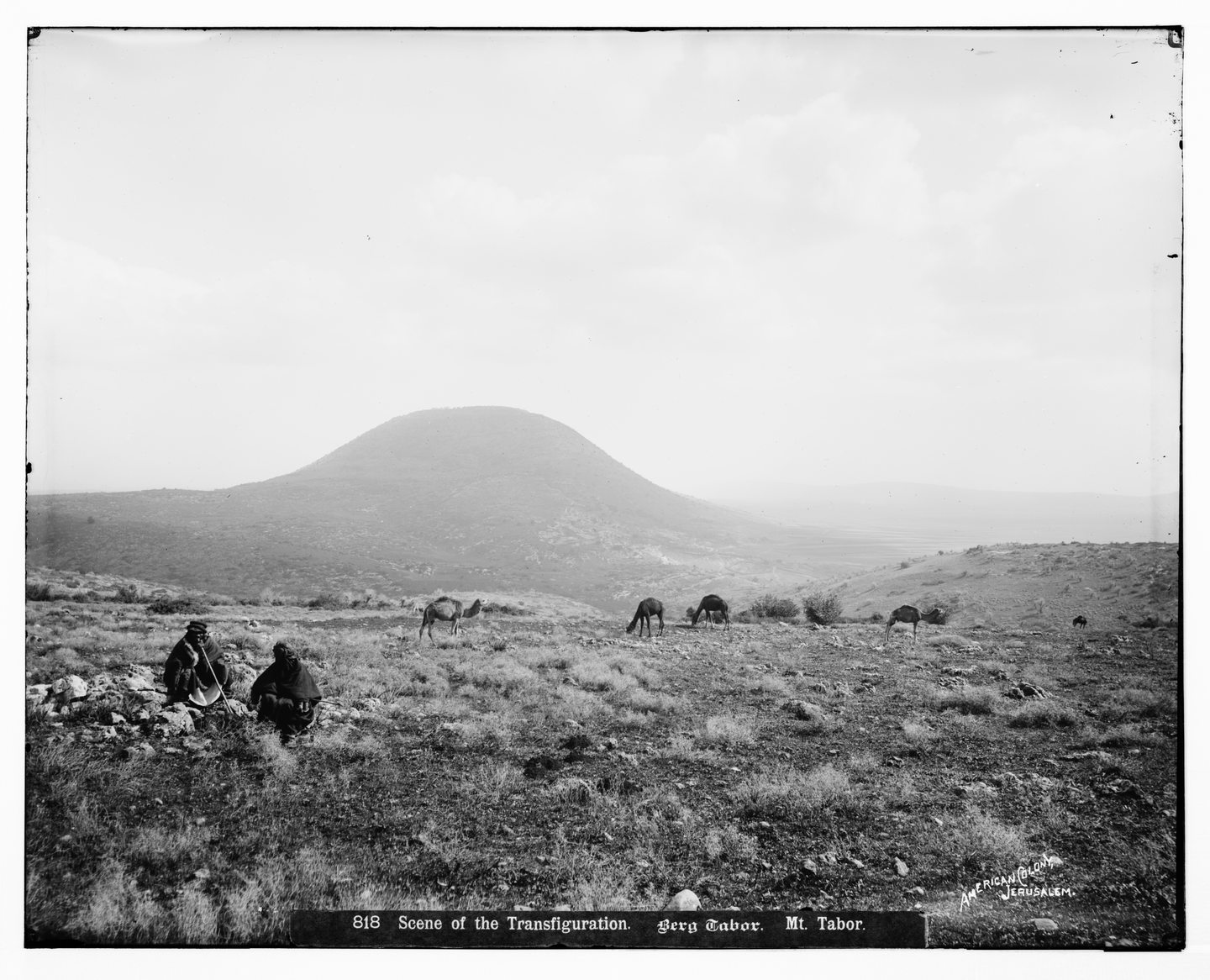
Mount Tabor, the traditional mount of the Transfiguration (between 1898 and 1914).
Mount Tabor is a traditional identification of the Transfiguration mountain; the Gospel itself leaves the mountain unnamed.
G. Eric and Edith Matson Photograph Collection, Library of Congress · Public Domain Mark 1.0 · Original recordImage changes
Resized proportionally to at most 1440px and JPEG compressed; no crop or content alteration.
The words
Accomplish
Luke places the conversation with Moses and Elijah on the mountain: they speak of Jesus’s departure, which he is to accomplish at Jerusalem. The NET also gives bring to completion as a rendering of the verb.
Luke 9:28–31 (opens a new tab) · NET Bible: Luke 9:28-36 (opens a new tab)
Altered
Luke says the appearance of Jesus’s face changes while he prays, and his clothing becomes white and shining. Matthew describes his face shining like the sun and his clothing white as light.
Luke 9:29 (opens a new tab) · Matthew 17:2 (opens a new tab)
Apart
Privately; separately from others.
Matthew says Jesus takes Peter, James and John up a high mountain apart. Mark adds by themselves; the NET Matthew wording is privately, describing the separation of the three from others.
Matthew 17:1 (opens a new tab) · Mark 9:2 (opens a new tab) · NET Bible: Matthew 17:1-13 (opens a new tab)
Bright Cloud
Matthew describes a bright cloud overshadowing them while Peter is still speaking. A voice from the cloud identifies Jesus as the beloved Son and tells the disciples to hear him.
Countenance
Face; facial appearance.
Countenance names Jesus’s face in Luke’s description: its appearance changes as he prays, alongside the white, shining clothing. The NET uses face; the following scene introduces Moses and Elijah speaking with him.
Luke 9:29–31 (opens a new tab) · NET Bible: Luke 9:28-36 (opens a new tab)
Decease
Departure; here, Jesus’s death and return to glory.
Moses and Elijah speak with Jesus on the mountain about his decease, to be accomplished at Jerusalem. The NET renders this as departure and explains it through his death and return to glory.
Luke 9:28–31 (opens a new tab) · NET Bible: Luke 9:28-36 (opens a new tab)
Elias
Elijah; the KJV form of his name.
Elias is the KJV name for the figure appearing with Moses and speaking with Jesus. Matthew later records a question about Elijah’s coming and says the disciples understand Jesus’s reply as referring to John the Baptist.
Matthew 17:3, 10–13 (opens a new tab) · NET Bible: Matthew 17:1-13 (opens a new tab)
Glistering
Shining brilliantly.
Luke describes Jesus’s clothing as white and glistering while the appearance of his face changes in prayer. The NET calls the clothing brilliant white; Mark separately compares its whiteness with what a launderer could achieve.
Luke 9:29 (opens a new tab) · Mark 9:3 (opens a new tab) · NET Bible: Luke 9:28-36 (opens a new tab) · NET Bible: Mark 9:2-13 (opens a new tab)
Heavy
Sleepy; weighed down with sleep.
Luke says Peter and his companions are heavy with sleep, then describes them awake and seeing Jesus’s glory with the two men. The NET calls them quite sleepy, keeping the word tied to sleep.
Luke 9:32 (opens a new tab) · NET Bible: Luke 9:28-36 (opens a new tab)
High Mountain
Matthew and Mark describe a high mountain, while Luke says Jesus goes up a mountain to pray. All three accounts name the disciples but leave the mountain itself unnamed.
Matthew 17:1 (opens a new tab) · Mark 9:2 (opens a new tab) · Luke 9:28 (opens a new tab)
Listed
Desired; wished to do.
Jesus says Elijah has come and was treated as people wished, then speaks of his own suffering. Matthew says the disciples understood John the Baptist, whose beheading he earlier records.
Matthew 17:12–13 (opens a new tab) · Mark 9:13 (opens a new tab) · Matthew 14:10 (opens a new tab) · NET Bible: Mark 9:2-13 (opens a new tab)
Moses
Moses appears with Elijah, speaking with Jesus in all three accounts. Luke specifies their subject as Jesus’s departure to be accomplished at Jerusalem; Peter then proposes three shelters, one for each figure.
Matthew 17:3–4 (opens a new tab) · Mark 9:4–5 (opens a new tab) · Luke 9:30–33 (opens a new tab)
Six Days
Matthew and Mark place the ascent after six days; Luke says about eight days after the preceding sayings and specifically describes going up the mountain to pray.
Did you know?
Exodus 24:16 also describes six days with a mountain cloud: it covers Sinai, and on the seventh day the Lord calls Moses from within it.
Matthew 17:1 (opens a new tab) · Mark 9:2 (opens a new tab) · Luke 9:28 (opens a new tab) · Exodus 24:16 (opens a new tab)
Sore Afraid
Very afraid; terrified.
Matthew says the disciples fall on their faces, “sore afraid,” after hearing the voice; Jesus then touches and reassures them. Mark separately uses the phrase when explaining Peter’s uncertainty about what to say.
Matthew 17:5–7 (opens a new tab) · Mark 9:5–6 (opens a new tab) · NET Bible: Matthew 17:1-13 (opens a new tab)
Transfigured
Changed in appearance before the disciples.
Matthew and Mark say Jesus is transfigured before the three disciples. Matthew describes his shining face and clothing; Luke places the changed appearance of his face and clothing during prayer.
Matthew 17:1–2 (opens a new tab) · Mark 9:2–3 (opens a new tab) · Luke 9:28–29 (opens a new tab)
Sources
- Matthew 17:1-13 (King James Version)King James Version, passage navigation via Bible Gateway
- Mark 9:2-13 (King James Version)King James Version, passage navigation via Bible Gateway
- Luke 9:28-36 (King James Version)King James Version, passage navigation via Bible Gateway
- Matthew 17:1-13 (NET Bible), translation and notesNET Bible, via Bible Gateway
- Mark 9:2-13 (NET Bible), translation and notesNET Bible, via Bible Gateway
- Luke 9:28-36 (NET Bible), translation and notesNET Bible, via Bible Gateway
- Exodus 24:15-18 (King James Version)King James Version, passage navigation via Bible Gateway
- Matthew 14:1-12 (King James Version)King James Version, passage navigation via Bible Gateway