
The Life of Jesus
Puzzle 67 · Called to Follow · Page 96 in print
Peter's Confession
Peter’s confession is followed by Jesus’s first prediction of suffering and a call to costly discipleship.
Jump to a word
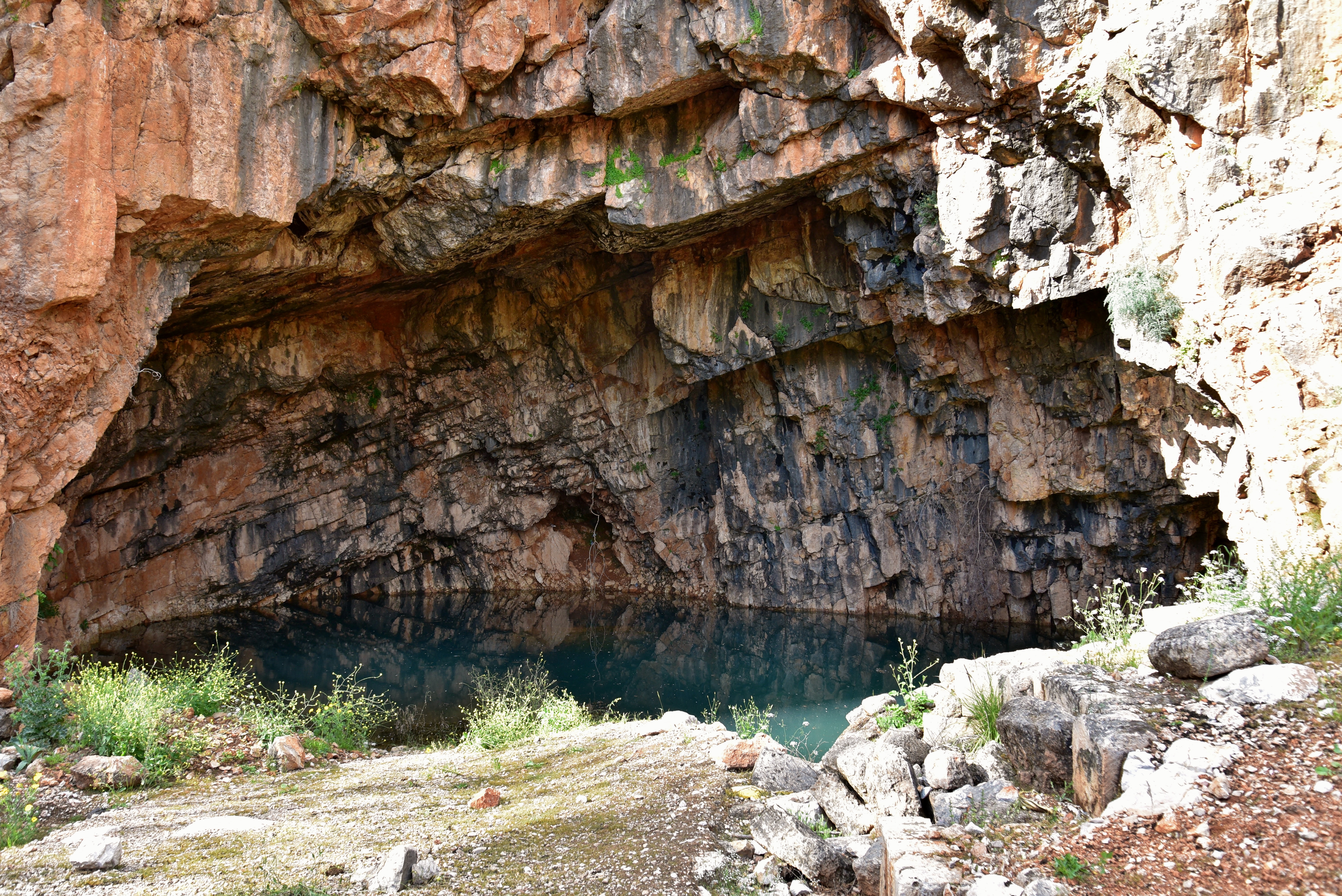
Cave of Pan at Banias (Caesarea Philippi), photographed April 16, 2019.
Bahnfrend / Wikimedia Commons · CC BY-SA 4.0 · Original recordImage changes
Display copies resized; original downloaded JPEG preserved.
The words
Barjona
Son of Jonah.
Jesus addresses Simon as Barjona after his confession, calling him blessed and attributing the revelation to the Father in heaven. The NET renders the address as Simon son of Jonah.
Matthew 16:16–17 (opens a new tab) · NET Bible: Matthew 16:13-28 (opens a new tab)
Caesarea
Matthew places the scene in the KJV’s “coasts” of Caesarea Philippi, rendered area in the NET. Mark mentions its towns and says Jesus questions the disciples about his identity on the way.
Matthew 16:13 (opens a new tab) · Mark 8:27 (opens a new tab) · NET Bible: Matthew 16:13-28 (opens a new tab)
Christ
Messiah; the Anointed One.
Peter answers Jesus’s question about his identity by calling him the Christ. Matthew’s answer also names him Son of the living God; the NET note gives Messiah as another rendering of Christ.
Matthew 16:15–16 (opens a new tab) · Mark 8:29 (opens a new tab) · NET Bible: Mark 8:27-38 (opens a new tab)
Church
Jesus says he will build his church on “this rock” and that the gates of hell will not prevail against it. This promise follows Peter’s confession and Jesus’s reply about revelation.
Cross
After predicting his suffering and death, Jesus tells his disciples to deny themselves, take up the cross and follow him. Mark gives the instruction to the crowd as well as the disciples.
Matthew 16:21, 24 (opens a new tab) · Mark 8:31, 34 (opens a new tab)
Exchange
Jesus asks what someone gains by winning the whole world and losing the soul, then asks what could be given in exchange. Mark records both questions; the NET renders soul as life in this passage.
Matthew 16:26 (opens a new tab) · Mark 8:36–37 (opens a new tab) · NET Bible: Mark 8:27-38 (opens a new tab)
Flesh and Blood
Human knowledge or agency, in this contrast.
Jesus contrasts flesh and blood with the Father as the source of Peter’s revelation. The NET note allows either another human being or Peter’s own intuition as the phrase’s referent.
Matthew 16:17 (opens a new tab) · NET Bible: Matthew 16:13-28 (opens a new tab)
Gates of Hell
Gates of Hades, in the NET’s wording.
In Matthew, Jesus says the gates of hell will not prevail against the church he will build. The NET renders the phrase gates of Hades and notes power of death as another possible rendering.
Matthew 16:18 (opens a new tab) · NET Bible: Matthew 16:13-28 (opens a new tab)
Keys
Jesus promises Peter the keys of the kingdom of heaven, followed by sayings about binding and loosing on earth and in heaven. The promise comes directly after the statement about building his church.
Did you know?
Isaiah 22:20–22 gives another key image: Eliakim is promised authority, and the key of David’s house is to be laid on his shoulder, with opening and shutting described.
Matthew 16:18–19 (opens a new tab) · Isaiah 22:20–22 (opens a new tab)
Living God
In Matthew, Peter calls Jesus the Christ and Son of the living God. Jesus answers by naming the Father in heaven as the source of this revelation; Mark’s recorded confession is the shorter Christ statement.
Matthew 16:16–17 (opens a new tab) · Mark 8:29 (opens a new tab)
Offence
A stumbling block, in the NET’s wording.
After Peter objects to the predicted suffering and death, Jesus rebukes him and calls him an “offence.” The NET renders this as stumbling block, followed by the contrast between God’s interests and human ones.
Matthew 16:21–23 (opens a new tab) · NET Bible: Matthew 16:13-28 (opens a new tab)
Peter
Peter answers Jesus’s question directly with the confession that he is the Christ. Matthew records Jesus’s blessing and promises to Peter, then shows Peter objecting when Jesus predicts suffering, death and resurrection.
Matthew 16:15–23 (opens a new tab) · Mark 8:29 (opens a new tab)
Prevail
Overpower; overcome.
Prevail names what the gates of hell will not do against the church in Jesus’s promise. The NET uses overpower; the statement follows Jesus’s words about Peter, the rock and building his church.
Matthew 16:18 (opens a new tab) · NET Bible: Matthew 16:13-28 (opens a new tab)
Revealed
Jesus says Peter’s confession comes from the Father in heaven rather than flesh and blood. Matthew places this reply immediately after Peter identifies Jesus as the Christ and Son of the living God.
Savourest
Set your mind on; think in terms of.
In rebuking Peter’s objection to suffering, Jesus uses “savourest” to contrast God’s things with human ones. The NET expresses this as setting the mind on God’s interests rather than human interests.
Matthew 16:21–23 (opens a new tab) · Mark 8:31–33 (opens a new tab) · NET Bible: Mark 8:27-38 (opens a new tab)
Sources
- Matthew 16:13-28 (King James Version)King James Version, passage navigation via Bible Gateway
- Mark 8:27-38 (King James Version)King James Version, passage navigation via Bible Gateway
- Matthew 16:13-28 (NET Bible), translation and notesNET Bible, via Bible Gateway
- Mark 8:27-38 (NET Bible), translation and notesNET Bible, via Bible Gateway
- Isaiah 22:20-23 (King James Version)King James Version, passage navigation via Bible Gateway