
The Life of Jesus
Puzzle 40 · The Sermon on the Mount · Page 63 in print
Love Your Enemies
Jesus moves from retaliation to generosity, then commands love and prayer for enemies.
Jump to a word
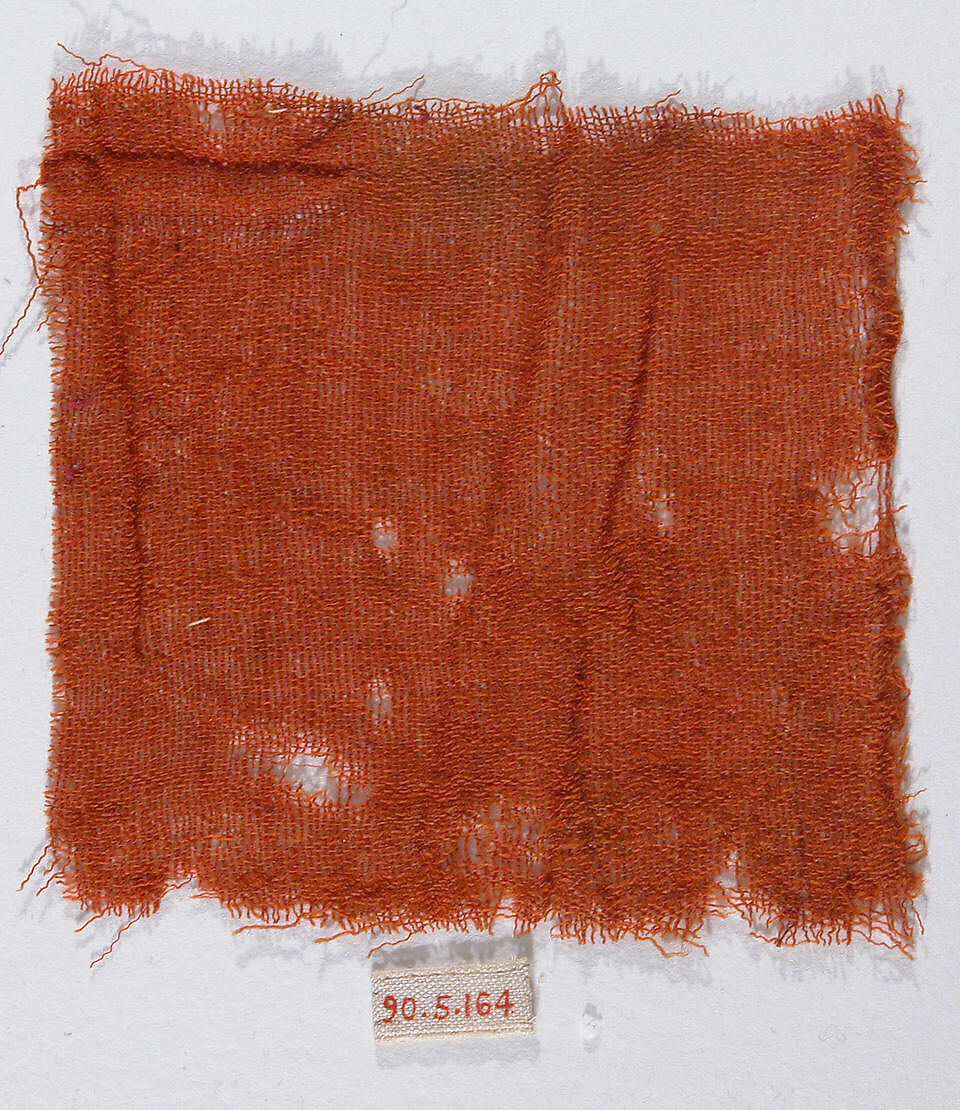
Linen fragment attributed to Egypt, 1st century BCE–1st century CE.
The Metropolitan Museum of Art, Gift of George F. Baker, 1890 (90.5.164) · CC0 · Original recordImage changes
Display copies resized; original downloaded JPEG preserved.
The words
Borrow
Matthew records Jesus pairing giving to someone who asks with not turning away someone who would borrow; this follows the garment and compelled-mile examples.
Cloke
Cloak; an outer garment.
Matthew’s KJV spells this garment “cloak”: in the lawsuit example, Jesus says to let the person seeking the coat have the cloak also; the printed puzzle uses Cloke.
Matthew 5:40 (opens a new tab) · NET Bible: Matthew 5:38-48 (opens a new tab)
Coat
Tunic; a long garment worn beneath a cloak.
Matthew’s KJV names the coat as the garment sought in the lawsuit; the NET calls it a tunic and explains that it is worn beneath the cloak.
Matthew 5:40 (opens a new tab) · NET Bible: Matthew 5:38-48 (opens a new tab)
Compel
Force or require.
Matthew places compel in the example of someone requiring a mile of travel; Jesus’s response in the KJV is “go with him twain,” before the instruction about giving.
Matthew 5:41–42 (opens a new tab) · NET Bible: Matthew 5:38-48 (opens a new tab)
Despitefully
Abusively; with mistreatment.
In Matthew’s KJV, Jesus says to pray for those who “despitefully use you”; NET Matthew has “pray for those who persecute you” and explains the shorter manuscript reading.
Matthew 5:44 (opens a new tab) · NET Bible: Matthew 5:38-48 (opens a new tab)
Enemies
Matthew records Jesus saying “Love your enemies” after the saying about loving a neighbor and hating an enemy; he then speaks of the Father’s sun and rain.
Eye for an Eye
Matthew introduces Jesus’s response with “An eye for an eye, and a tooth for a tooth”; Exodus 21:24 contains the corresponding eye-and-tooth formula in the KJV.
Matthew 5:38–39 (opens a new tab) · Exodus 21:24 (opens a new tab)
Mile
A Roman mile, about 4,850 feet (1,480 m).
Matthew gives one mile as the required distance in Jesus’s example, followed by twain; the lexical entry identifies the unit as a Roman mile, shorter than a modern mile.
Did you know?
Thayer describes the Roman mile as a thousand paces or eight stadia, noting that it was shorter than the mile familiar to his readers.
Matthew 5:41 (opens a new tab) · Bible Hub G3400: Roman mile (opens a new tab)
Perfect
Jesus closes this section with “Be ye therefore perfect,” naming the heavenly Father as the comparison; Matthew places this after the examples about loving and greeting others.
Resist
Matthew’s KJV places Jesus’s words “resist not evil” after the eye-for-an-eye quotation and before the right-cheek example; the garment and compelled-mile examples follow in the next verses.
Right Cheek
Matthew’s KJV specifies the right cheek in Jesus’s striking example, followed by the instruction to turn the other also; the next example concerns a lawsuit over a garment.
Salute
Greet; acknowledge someone on meeting.
Matthew records Jesus asking what is distinctive about greeting only one’s brethren; the KJV uses salute in this question, while the NET uses greet.
Matthew 5:47 (opens a new tab) · NET Bible: Matthew 5:38-48 (opens a new tab)
Smite
Strike or hit.
In Matthew’s KJV, smite is the action directed at the right cheek in Jesus’s example; his response in the saying is to turn the other cheek also.
Twain
Two, referring here to miles.
Matthew’s KJV gives “go with him twain” as Jesus’s response to someone compelling a mile of travel; the word makes the stated distance two miles.
Matthew 5:41 (opens a new tab) · NET Bible: Matthew 5:38-48 (opens a new tab)
Unjust
Matthew pairs the unjust with the just as recipients of rain in Jesus’s description of the Father; the same verse places evil and good together under the rising sun.
Matthew 5:45 (opens a new tab) · NET Bible: Matthew 5:38-48 (opens a new tab)
Sources
- Matthew 5:38-48 (King James Version)King James Version, passage navigation via Bible Gateway
- Exodus 21:24 (King James Version)King James Version, passage navigation via Bible Gateway
- Matthew 5:38-48 (NET Bible), translation and notesNET Bible, via Bible Gateway
- Greek lexical entries, G3400: milionNAS Exhaustive Concordance and Thayer’s Greek Lexicon, via Bible Hub