
The Life of Jesus
Puzzle 38 · The Sermon on the Mount · Page 61 in print
Blessed Are the Meek
The opening blessings of the Sermon on the Mount name people and qualities that ordinary measures of success may overlook.
Jump to a word
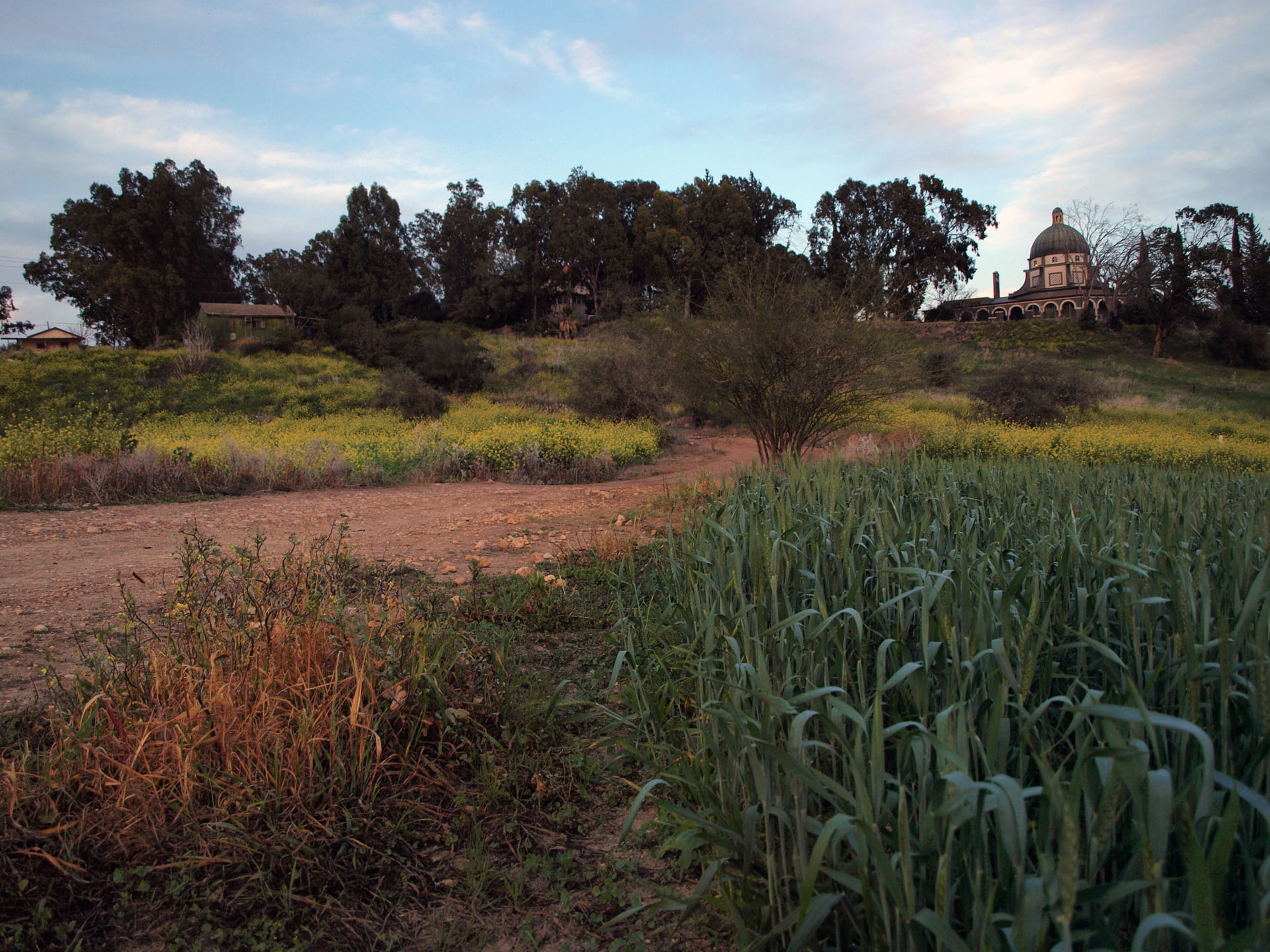
Church of the Beatitudes, built in 1938; photographed February 28, 2014.
A modern shrine at a traditional site of the Sermon on the Mount.
Obendorf / Wikimedia Commons · CC0 · Original recordImage changes
Display copies resized; original downloaded JPEG preserved.
The words
Blessed
Matthew repeats Blessed as Jesus names the poor in spirit, mourners, the meek and others, pairing each description with a promise in the opening of his teaching.
Comforted
Jesus’s promise that mourners “shall be comforted” follows the blessing of the poor in spirit and precedes the promise that the meek will inherit the earth.
Exceeding Glad
Very glad; greatly rejoicing.
Matthew records Jesus urging “Rejoice, and be exceeding glad” after describing insults and persecution for his sake; Jesus then refers to the persecution of earlier prophets.
Hunger
Jesus pairs hunger with thirst “after righteousness” and promises that those described will be filled; Matthew later repeats righteousness in the blessing of those persecuted for it.
Inherit
Matthew’s promise to the meek uses “inherit the earth,” also found in KJV Psalm 37:11; it stands between the blessings for mourners and those who hunger for righteousness.
Matthew 5:4–6 (opens a new tab) · Psalms 37:11 (opens a new tab)
Meek
Mild or humble, in Strong’s explanation.
Jesus names the meek as those who will inherit the earth; Strong’s explains the Greek word as mild or humble, without changing the KJV’s promise.
Matthew 5:5 (opens a new tab) · Strong’s G4239: meek (opens a new tab)
Merciful
Jesus pairs the merciful with the promise that they will obtain mercy; Matthew places this blessing after hunger for righteousness and before purity of heart.
Mountain
Matthew opens with Jesus seeing the multitudes, going up a mountain and sitting down; his disciples come to him before he begins the blessings.
Did you know?
Notre Dame’s location report explains that the pictured modern church has eight sides representing the eight Beatitudes; the building commemorates the teaching rather than establishing its exact location.
Matthew 5:1–3 (opens a new tab) · Notre Dame: Mount of Beatitudes (opens a new tab)
Mourn
Matthew places those who mourn among the people Jesus calls blessed, with comfort as their promise; the verse does not name a particular mourner or occasion.
Peacemakers
Jesus promises that peacemakers will be called “the children of God”; Matthew places this blessing between those for the pure in heart and those persecuted for righteousness.
Persecuted
Matthew records Jesus blessing those persecuted “for righteousness’ sake” and promising the kingdom of heaven; the following verses address his hearers directly about persecution for his sake.
Poor in Spirit
Jesus opens the blessings with the poor in spirit and “theirs is the kingdom of heaven”; Matthew repeats that kingdom promise for those persecuted for righteousness.
Pure in Heart
Matthew records Jesus’s promise that the pure in heart “shall see God,” between the blessing of the merciful and the naming of peacemakers as God’s children.
Revile
Insult or speak abusively about someone.
Matthew places reviling alongside persecution and false accusations in Jesus’s address to his hearers; the NET uses insult, while both retain the qualification about false statements.
Matthew 5:11 (opens a new tab) · NET Bible: Matthew 5:1-12 (opens a new tab)
Righteousness
Matthew uses righteousness in two blessings: Jesus promises filling to those who hunger and thirst for it, and the kingdom of heaven to those persecuted for its sake.
Sources
- Matthew 5:1-12 (King James Version)King James Version, passage navigation via Bible Gateway
- Psalms 37:11 (King James Version)King James Version, passage navigation via Bible Gateway
- Matthew 5:1-12 (NET Bible), translation and notesNET Bible, via Bible Gateway
- Strong’s Exhaustive Concordance, G4239: prausStrong’s Exhaustive Concordance, via Bible Hub
- Mount of Beatitudes, Holy Land location reportUniversity of Notre Dame, FaithND