
The Life of Jesus
Puzzle 32 · Works of Healing · Page 53 in print
The Widow's Son at Nain
At Nain’s gate, Jesus meets a funeral procession and restores a widow’s only son to her.
Jump to a word
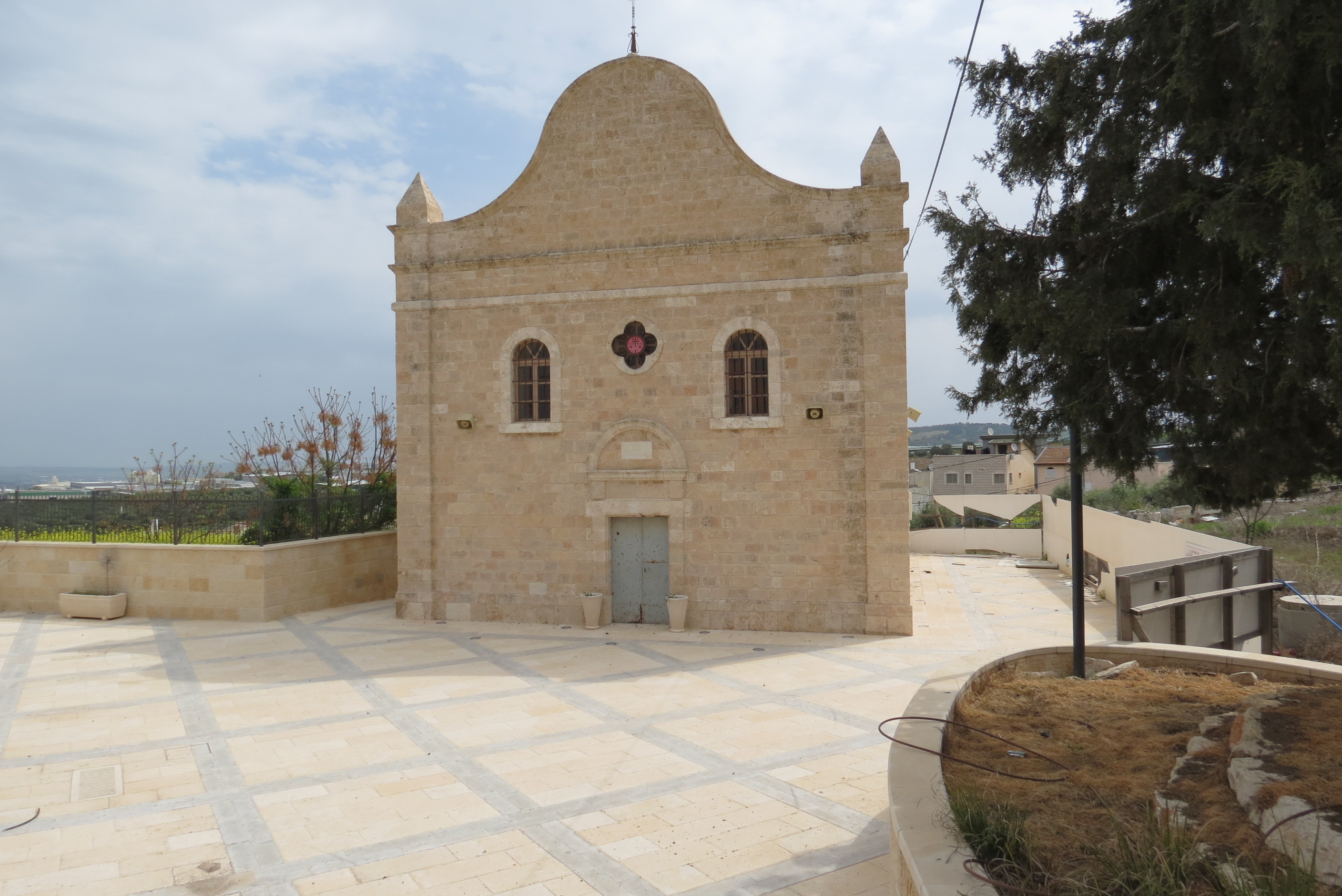
The Church of the Resurrection of the Widow’s Son at Na’in, built in 1881; photographed March 29, 2017.
Hoshvilim / Wikimedia Commons · CC BY-SA 4.0 · Original recordImage changes
Display copies resized; original downloaded JPEG preserved.
The words
Bare
Luke’s “they that bare him” refers to those carrying the dead man; they stop when Jesus touches the bier, before he addresses the young man.
Bier
A support for carrying the dead.
Luke says Jesus touches the bier and its bearers stop; the NET note describes the support as a stretcher or wooden plank used for burial.
Luke 7:14 (opens a new tab) · NET Bible: Luke 7:11-17 (opens a new tab)
Carried
Luke brings Jesus and a following crowd toward Nain as another crowd accompanies a widow’s son being carried out dead near the city gate.
Compassion
Luke describes Jesus seeing the widow and having compassion on her; she has lost her only son, and people from the city accompany her.
Dead Man
Luke identifies the dead man as the widow’s only son; after Jesus tells him to arise, Luke says he sits up and begins to speak.
Gate
Luke places the meeting near the city gate as Jesus approaches and a dead man is carried out; the widow and many townspeople are with the procession.
Glorified
Luke describes the crowd glorifying God and gives their words, “A great prophet is risen up among us” and “God hath visited his people.”
Great Prophet
Luke records the crowd calling Jesus a “great prophet”; 1 Kings 17:22–23 also describes Elijah giving a widow’s revived son back to his mother.
Luke 7:15–16 (opens a new tab) · 1 Kings 17:20–23 (opens a new tab)
Nain
Luke names Nain as the destination and places the encounter at its gate; the Custody cites Eusebius’s record from the fourth century, placing the village near Mount Tabor.
Did you know?
The Custody of the Holy Land describes paintings from the late nineteenth century inside the Nain church; it dates the photographed building to 1881.
Luke 7:11–12 (opens a new tab) · Custody of the Holy Land: Nain (opens a new tab)
Rumour
News or a report.
Luke closes with the report about Jesus spreading through Judaea and the surrounding region; the NET renders the KJV’s “rumour” as “report.”
Luke 7:17 (opens a new tab) · NET Bible: Luke 7:11-17 (opens a new tab)
Sat Up
Luke says the man who was dead “sat up, and began to speak,” then describes Jesus giving him back to his mother after the command to arise.
Stood Still
Luke places the bearers’ stopping between Jesus touching the bier and saying, “Young man, I say unto thee, Arise”; the next verse reports the man sitting up.
Visited
Came to help.
Luke quotes the crowd saying God has “visited his people,” rendered “come to help” in the NET; Luke 1:68 likewise uses visited in Zacharias’s prophecy.
Luke 7:16 (opens a new tab) · NET Bible: Luke 7:11-17 (opens a new tab) · Luke 1:67–68 (opens a new tab)
Weep Not
Luke gives “Weep not” as Jesus’s words to the widow after describing his compassion for her; he then approaches and touches the bier.
Young Man
Luke gives “Young man, I say unto thee, Arise” as Jesus’s address; the young man then sits up and speaks before being given back to his mother.
Sources
- Luke 7:11-17 (King James Version)King James Version, passage navigation via Bible Gateway
- Luke 1:67-75 (King James Version)King James Version, passage navigation via Bible Gateway
- 1 Kings 17:17-24 (King James Version)King James Version, passage navigation via Bible Gateway
- Luke 7:11-17 (NET Bible), translation and notesNET Bible, via Bible Gateway
- Nain: sanctuary and Christian traditionCustody of the Holy Land