
The Life of Jesus
Puzzle 22 · The First Signs · Page 41 in print
The Woman at the Well
At Jacob’s well, Jesus speaks with a Samaritan woman about water, worship and a harvest already ready.
Jump to a word
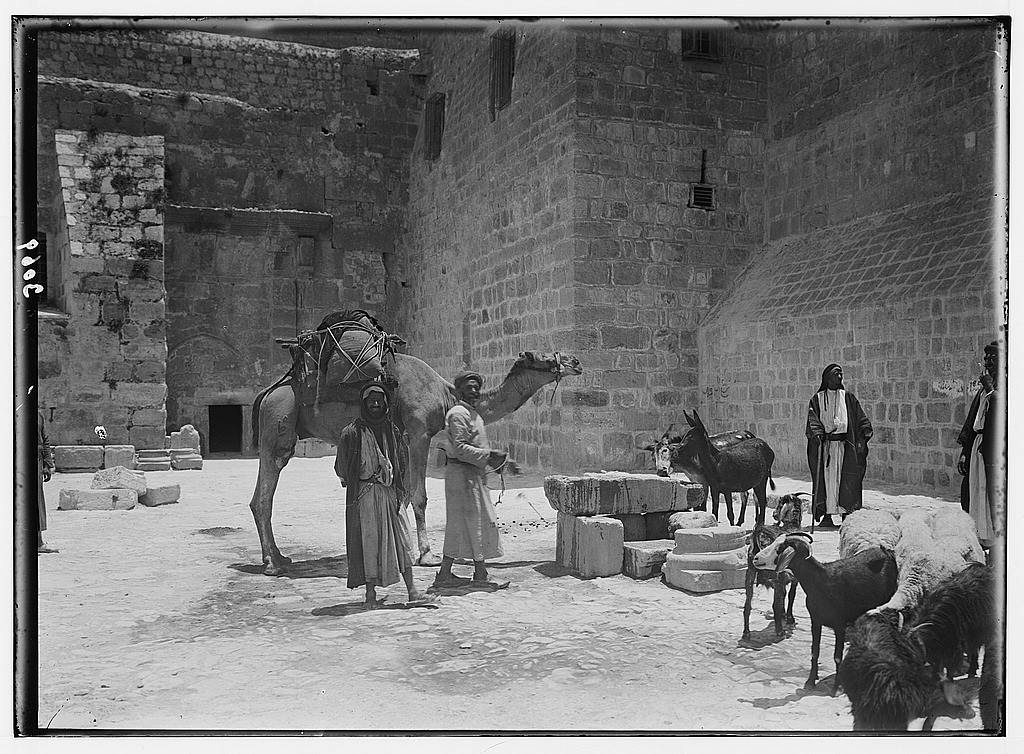
Animals being watered at a village well in Bethlehem, about 1920–1933.
A later village well shows the work of drawing water; this is Bethlehem’s well, not Jacob’s well.
American Colony (Jerusalem). Photo Department; G. Eric and Edith Matson Photograph Collection, Library of Congress. · No known restrictions on publication · Original recordImage changes
Resized proportionally to at most 1440px and JPEG compressed; no crop or content alteration.
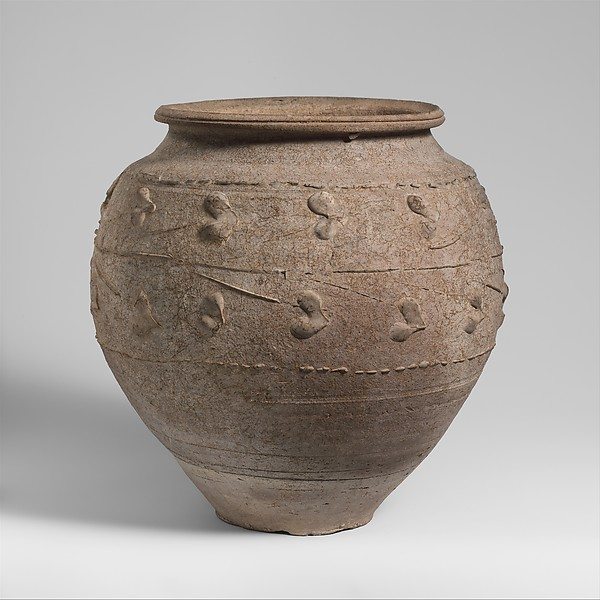
Terracotta jar with barbotine decoration, 2nd–3rd century CE. Roman.
The photographed jar offers material context for water-carrying vessels; it is not the woman’s waterpot.
The Metropolitan Museum of Art; Gift of J. Pierpont Morgan, 1917; object 17.194.878. · CC0 / Public Domain · Original recordImage changes
Resized proportionally to at most 1440px and JPEG compressed; no crop or content alteration.
The words
Dealings
John’s KJV text says Jews have “no dealings” with Samaritans; the NET reads “use nothing in common,” as the woman questions Jesus’s request for a drink.
John 4:7–9 (opens a new tab) · NET Bible: John 4:1-15 (opens a new tab)
Draw
John says the woman comes to draw water; Jesus asks her for a drink, and she later points out that he has nothing to draw with.
Drinketh
Drinks; an older verb form.
John gives Jesus’s contrast between drinking the well’s water and drinking the water he offers, connecting the latter with a well springing into everlasting life.
John 4:13–14 (opens a new tab) · NET Bible: John 4:1-15 (opens a new tab)
Four Months
John records Jesus asking about the saying “four months, and then cometh harvest,” before telling the disciples to look at fields already ready for harvest.
Gift of God
John records Jesus telling the woman that knowing God’s gift and who is asking for a drink would lead her to ask him for living water.
Harvest
In John’s account, Jesus links reaping with gathering fruit for eternal life and describes sower and reaper rejoicing together, then speaks of entering work others have already done.
Did you know?
John later describes Samaritans asking Jesus to stay; he remains for two days, and people say they have heard him for themselves.
Jacob's Well
John places Jacob’s well near Sychar and the parcel associated with Joseph; Jesus sits there weary from travel, and the woman recalls Jacob’s use of the well.
Parcel
John locates Sychar near a parcel of ground Jacob gave to his son Joseph, before introducing Jacob’s well and Jesus sitting there after his journey.
Did you know?
Genesis 33:19 also uses “parcel of a field” when Jacob buys land from Hamor’s children for “an hundred pieces of money.”
John 4:5–6 (opens a new tab) · Genesis 33:18–19 (opens a new tab)
Samaria
John describes Jesus leaving Judaea for Galilee and going through Samaria; the well conversation takes place near the Samaritan city he calls Sychar.
Sixth Hour
John says it was “about the sixth hour” when Jesus, weary from the journey, sat at the well; the woman then comes to draw water.
Springing
Rising or leaping up.
John records Jesus describing his offered water as becoming a well within the recipient, “springing up into everlasting life,” after his contrast with ordinary well water.
John 4:13–14 (opens a new tab) · NET Bible: John 4:1-15 (opens a new tab)
Sychar
John names Sychar as a city of Samaria near the parcel Jacob gave Joseph, before introducing the well, Jesus’s rest and the woman’s arrival.
Thirst
John contrasts Jesus’s words about thirst returning after well water with his promise about the water he gives; the woman then asks for that water.
Wearied
Tired from the journey.
John describes Jesus as wearied by the journey when he sits at Jacob’s well; his disciples have gone to the city to buy food.
John 4:6–8 (opens a new tab) · NET Bible: John 4:1-15 (opens a new tab)
Worshippers
John records Jesus saying the Father seeks people who worship him “in spirit and in truth,” after the woman mentions worship on the mountain and in Jerusalem.
Sources
- John 4:1-15 (King James Version)King James Version, passage navigation via Bible Gateway
- John 4:16-26 (King James Version)King James Version, passage navigation via Bible Gateway
- John 4:27-42 (King James Version)King James Version, passage navigation via Bible Gateway
- Genesis 33:18-20 (King James Version)King James Version, passage navigation via Bible Gateway
- John 4:1-15 (NET Bible), translation and notesNET Bible, via Bible Gateway