
Wildlife of the World
Puzzle 74 · Deserts and High Plateaus · Page 111 in print
Markhor Cliffs
The markhor is Pakistan’s national animal. In Torghar, a local conservation programme used community guards and revenue from limited trophy hunting to help rebuild the area’s markhor population.
Jump to a word
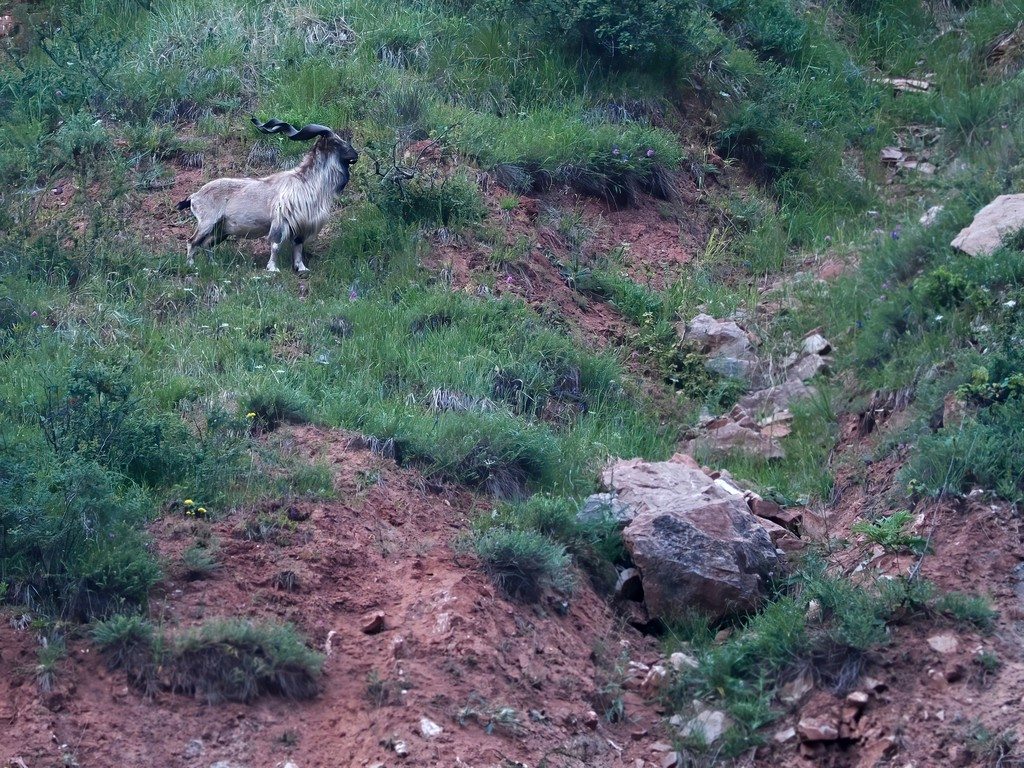
A markhor moves across a steep green slope in Tajikistan.
Species reference for Markhor Cliffs. The photograph does not necessarily show the population or place named in the puzzle.
James Eaton / iNaturalist (CC0) · CC0 1.0 · Original recordImage changes
Resized and converted to JPEG for display; no subject alteration.
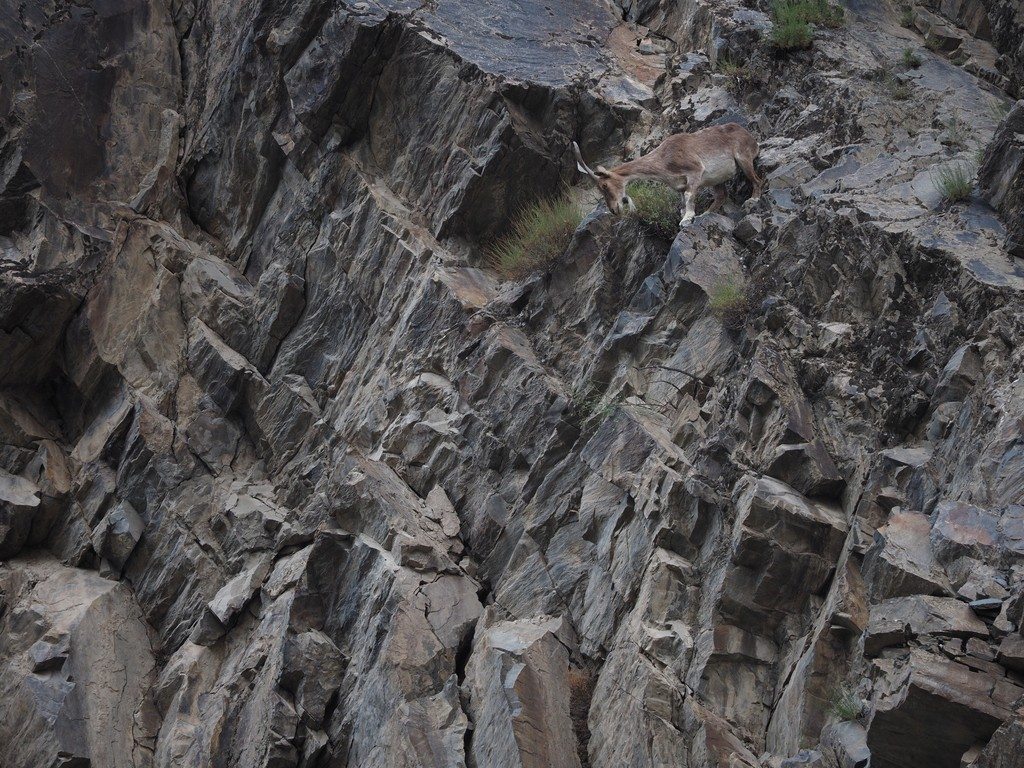
Markhor blend into rocky cliffs in Pakistan.
Species reference for Markhor Cliffs. The photograph does not necessarily show the population or place named in the puzzle.
James Eaton / iNaturalist (CC0) · CC0 1.0 · Original recordImage changes
Resized and converted to JPEG for display; no subject alteration.
The words
Afghanistan
Markhor occur in Afghanistan.
Beard
Both sexes have fringed beards.
Capra
The markhor is Capra falconeri.
Chitral
The Tushi game reserve in Chitral held good markhor populations.
Convention on Biological Diversity: IUCN case study (opens a new tab)
Goat
The markhor is in Capra, the goats and ibexes.
Ibex
The markhor differs from the ibex in lacking its dense winter underwool.
Juniper
Markhor are associated with scrub forests of oaks, pines and junipers.
Markhor
Capra falconeri is commonly called the markhor.
Mountains
The markhor is adapted to mountainous terrain.
Oaks
Markhor live in scrub forests of oaks, pines and junipers.
Pakistan
The markhor is Pakistan's national animal.
Screw Horns
Both sexes have bold corkscrew-like horns.
Snake Eater
Markhor may come from Persian words for snake-eater, though the animal eats only plants.
Tajikistan
Markhor occur in Tajikistan.
Torghar
Torghar, Balochistan, where tribesmen protect markhor.
Convention on Biological Diversity: IUCN case study (opens a new tab)
Sources
- markhoranimaldiversity.org
- Markhor Cliffs (source capture)Convention on Biological Diversity: IUCN case study (Ahmed, Tareen and Khan), Torghar, Pakistan