
Wildlife of the World
Puzzle 71 · Ocean Giants and Reef Life · Page 105 in print
Giant Clam
A giant clam can exceed a metre in shell length on an Indo-Pacific reef. Algae within its colourful tissues use sunlight to make food, contributing to the clam’s nutrition alongside filter feeding.
Jump to a word
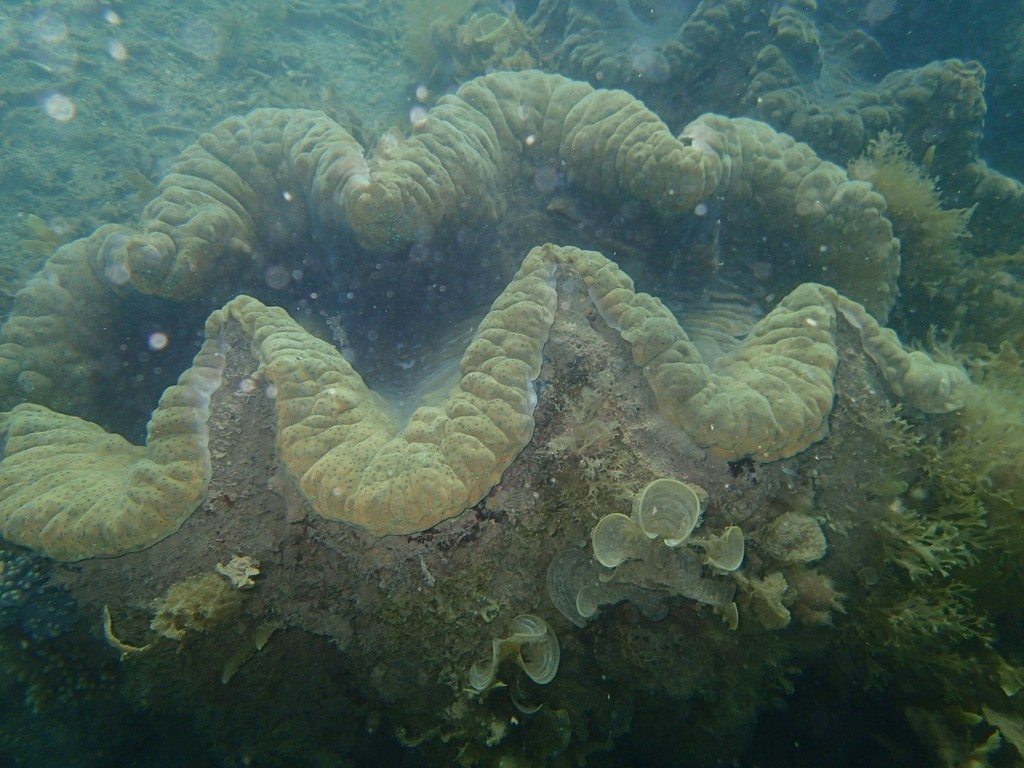
The folded mantle of a giant clam extends between its shell valves.
Species reference for Giant Clam. The photograph does not necessarily show the population or place named in the puzzle.
(c) botanygirl, some rights reserved (CC BY) · CC BY 4.0 · Original recordImage changes
Resized and converted to JPEG for display; no subject alteration.
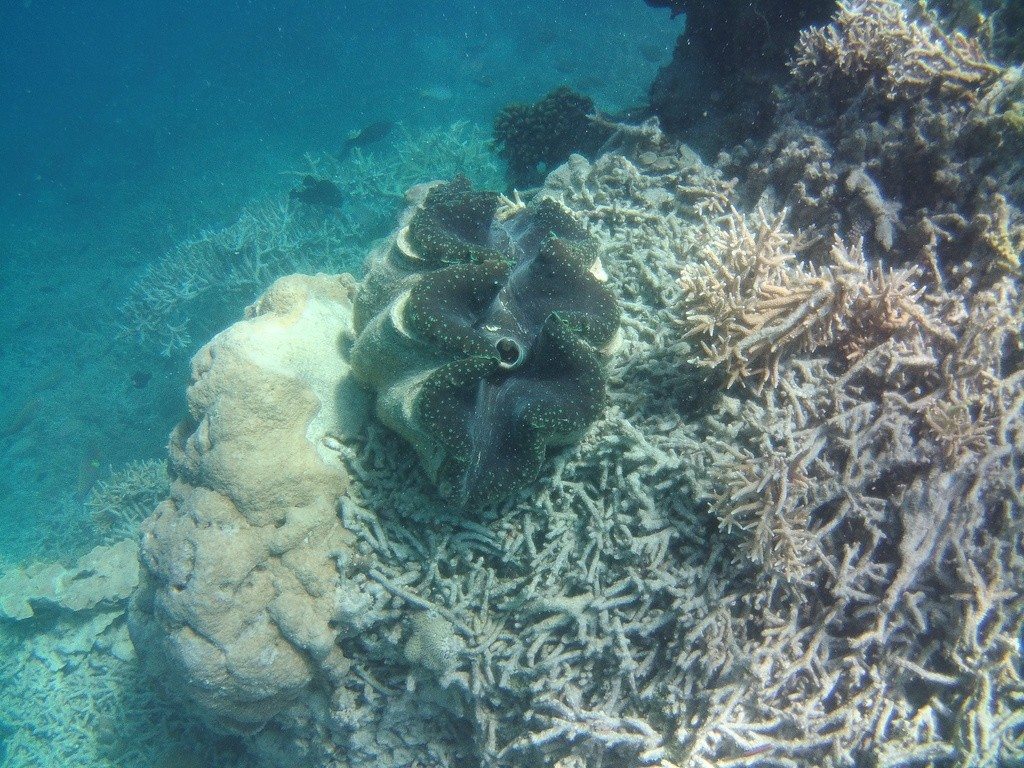
A giant clam sits embedded in reef habitat.
Species reference for Giant Clam. The photograph does not necessarily show the population or place named in the puzzle.
(c) Sockrosma, some rights reserved (CC BY) · CC BY 4.0 · Original recordImage changes
Resized and converted to JPEG for display; no subject alteration.
The words
Algae
Unicellular algae living in the clam supply its food.
Aquaculture
Giant clam aquaculture supports conservation and restocking.
Bivalve
The giant clam is the largest living bivalve.
Blue Rings
The mantle has many brilliant blue-green rings along its edges.
Byssus
The threads that anchor a young clam.
Giant clams lose the byssal apparatus as they grow.
Clam
The giant clam is a reef-dwelling bivalve that shelters algae in its tissues.
Coral Reefs
The true giant clam lives on coral reefs.
Iridescence
The mantle has many iridescent blue, purple or green spots.
Larvae
Giant clam larvae swim in open water before settling.
Mantle
The clam's mantle is brightly marked.
Mollusc
An animal in the group that includes clams, snails and octopuses; giant clams are bivalve molluscs.
Overfishing
Taking too many clams.
Giant clams have been severely over-harvested, and illegal fishing remains a problem.
Sunlight
Windows in the mantle may let more light reach the algae for photosynthesis.
Symbionts
The partner algae living in its tissues.
Giant clams house enormous populations of symbionts.
Tridacna
Tridacna gigas is the true giant clam.
Sources
- Tridacna Giant Clam (source capture)Animal Diversity Web, University of Michigan Museum of Zoology
- clam-sizewww.fisheries.noaa.gov
- Tridacna Giant Clam (source capture)Records of the Australian Museum (Yonge 1982), Australian Museum