
Wildlife of the World
Puzzle 64 · Ocean Giants and Reef Life · Page 98 in print
Manta Ray
Manta rays strain plankton through specialised gill plates; the oceanic manta, the largest ray, can span around seven metres, while reef mantas visit cleaning stations in shallower waters.
Jump to a word
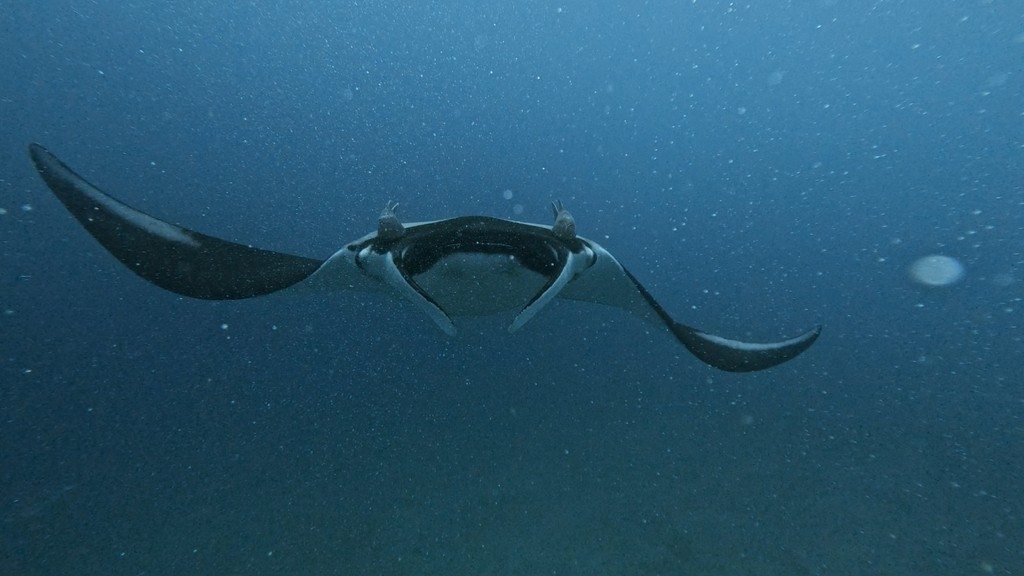
An oceanic manta ray spreads its broad fins in blue water.
Species reference for Manta Ray. The photograph does not necessarily show the population or place named in the puzzle.
(c) Victor E. Chocho, some rights reserved (CC BY) · CC BY 4.0 · Original recordImage changes
Resized and converted to JPEG for display; no subject alteration.
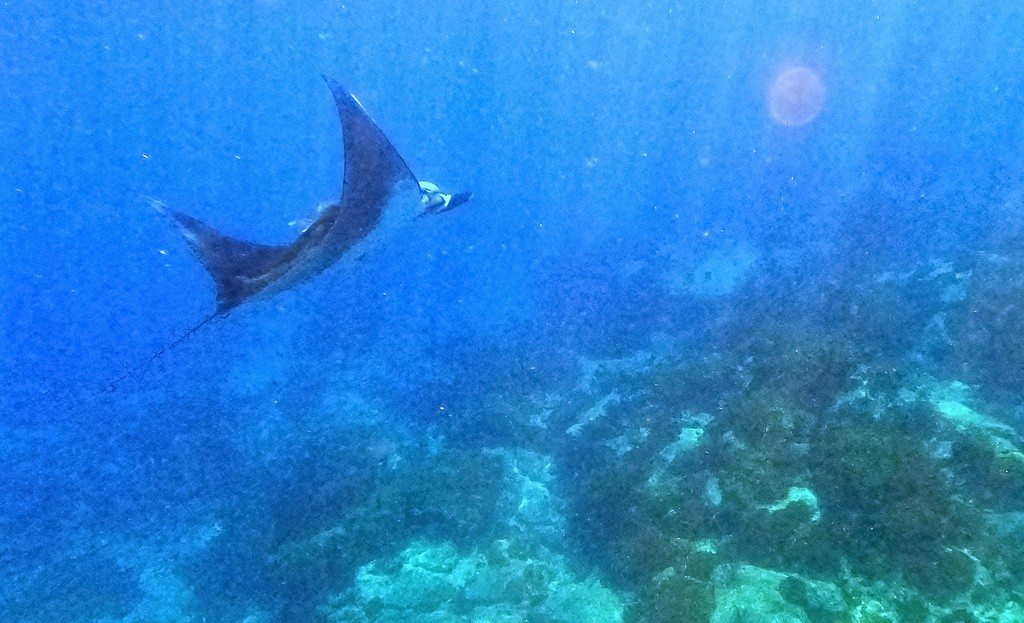
An oceanic manta ray swims above a reef off Mexico.
Species reference for Manta Ray. The photograph does not necessarily show the population or place named in the puzzle.
(c) Bill Levine, some rights reserved (CC BY) · CC BY 4.0 · Original recordImage changes
Resized and converted to JPEG for display; no subject alteration.
The words
Belly Spots
Mantas have distinct spot patterns on their bellies that identify individuals.
Cephalic Lobes
Two cephalic lobes in front of the mouth channel water in for feeding.
Chevron
Chevron is one of the manta's two colour types.
Cleaner Wrasse
Manta rays use reefs where blue-streak cleaner wrasse live.
Currents
The timing of manta visits seems to follow current circulation, among other factors.
Filter
Organisms are trapped by a filtering device of plates at the back of the mouth.
Fins
Mantas swim with their flexible pectoral fins.
Gill Plates
Mantas filter prey over their gill plates.
Gills
A manta's gills are on the underside of its body.
Maldives
The Maldives has the largest known population of reef manta rays.
Manta
There are two species of manta ray.
Mobula
The two mantas are Mobula birostris and Mobula alfredi.
Open Ocean
Offshore ocean waters form part of the giant manta’s habitat beyond coastal reefs.
NOAA Fisheries (opens a new tab) · Animal Diversity Web (opens a new tab)
Plankton
Mantas eat large quantities of zooplankton.
Somersault
The somersaults it turns while feeding.
Mantas feed by barrel rolling, doing somersaults over and over.
Sources
- Manta Ray (source capture)NOAA Fisheries
- manta-cleaningresearch.mantatrust.org
- Manta Ray (source capture)Animal Diversity Web, University of Michigan Museum of Zoology
- Manta Ray (source capture)The Manta Trust