
Wildlife of the World
Puzzle 49 · Islands of Evolution · Page 77 in print
Galapagos Giant Tortoise
Galapagos giant tortoises can live beyond a century, and large males may exceed 250 kilograms. Shell forms vary: some are domed, while saddleback tortoises have a higher opening above the neck.
Jump to a word
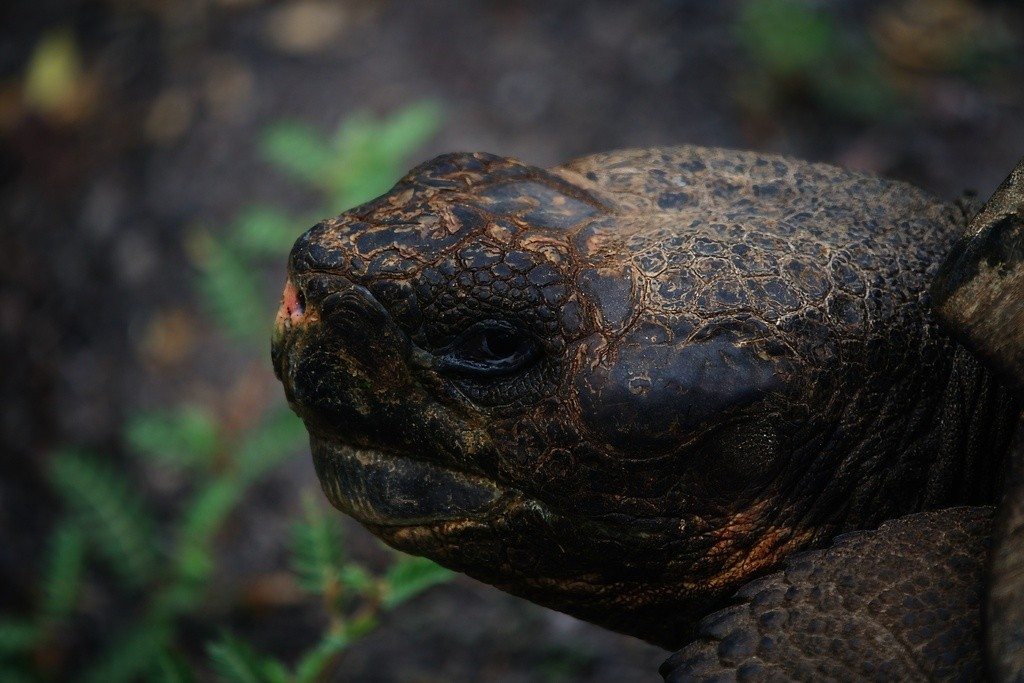
A Galápagos giant tortoise's head seen close up.
Species reference for Galapagos Giant Tortoise. The photograph does not necessarily show the population or place named in the puzzle.
(c) Bill Levine, some rights reserved (CC BY) · CC BY 4.0 · Original recordImage changes
Resized and converted to JPEG for display; no subject alteration.
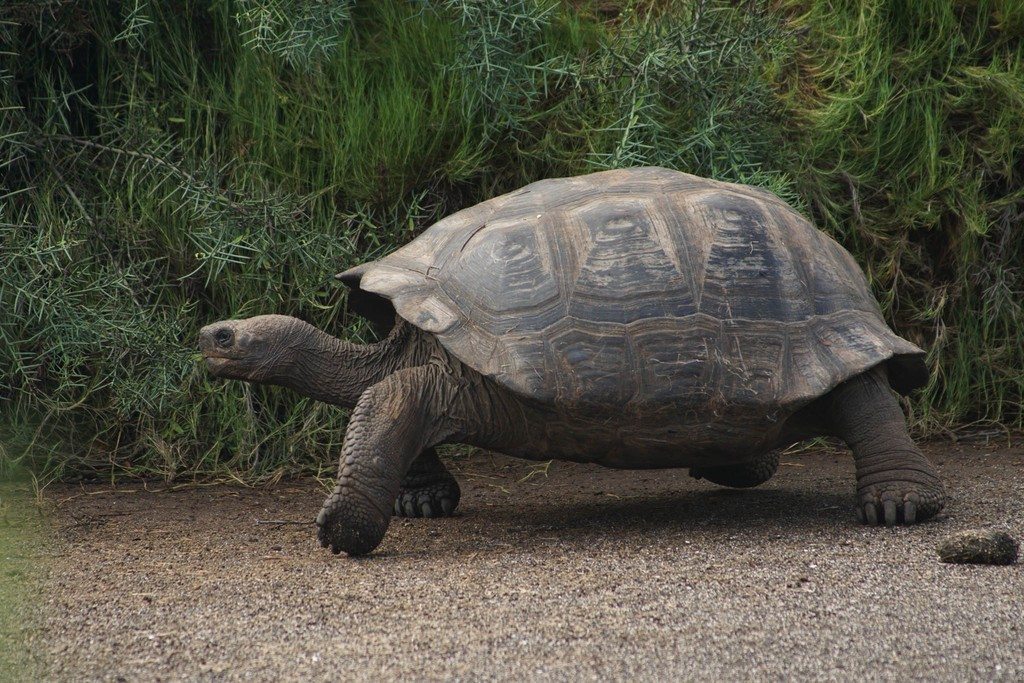
A giant tortoise walks on sturdy legs across Isabela Island.
Species reference for Galapagos Giant Tortoise. The photograph does not necessarily show the population or place named in the puzzle.
(c) Carrie Seltzer, some rights reserved (CC BY) · CC BY 4.0 · Original recordImage changes
Resized and converted to JPEG for display; no subject alteration.
The words
Archipelago
The Galapagos island chain.
The Archipelago is named after the tortoises.
Carapace
The carapace (shell) shape differs between domed and saddle-backed tortoises.
Century
A lifespan of a hundred years or more.
Many of its original tortoises are well over 100 years old.
Darwin
Charles Darwin noticed each larger island had a slightly different form of giant tortoise.
Dome
The rounded, domed shell type.
Dome-shelled tortoises live on large, humid islands.
Espanola
Tortoises from Española were moved to Santa Fe.
Floreana
158 giant tortoises have been reintroduced to Floreana.
Galapagos
The archipelago is named after its giant tortoises.
Isabela
Alcedo Volcano on Isabela holds one of the largest tortoise populations.
Pinta
Lonesome George was the last Pinta island tortoise.
Plastron
Males have a concave plastron (lower shell).
Prickly Pear
Prickly pear cactus is a favourite food.
Saddleback
Saddle-backed shells curve up at the front so the tortoise can reach higher plants.
Santa Cruz
The Santa Cruz highlands hold one of the largest tortoise populations.
Tortoise
The Galapagos giant tortoise is one of the islands' most famous animals.
Sources
- Galapagos Giant Tortoise (source capture)Galapagos Conservation Trust
- Galapagos Giant Tortoise (source capture)San Diego Zoo Wildlife Alliance
- tortoise-engineergalapagosconservation.org.uk
- Galapagos Giant Tortoise (source capture)San Diego Zoo Wildlife Alliance Library, Animal and Plant Fact Sheets