
Wildlife of the World
Puzzle 41 · Australasia and Zealandia · Page 67 in print
Tasmanian Devil
Devil facial tumour disease was first recorded in 1996; the cancer spreads between Tasmanian devils through contact such as biting and has caused severe declines in affected populations.
Jump to a word
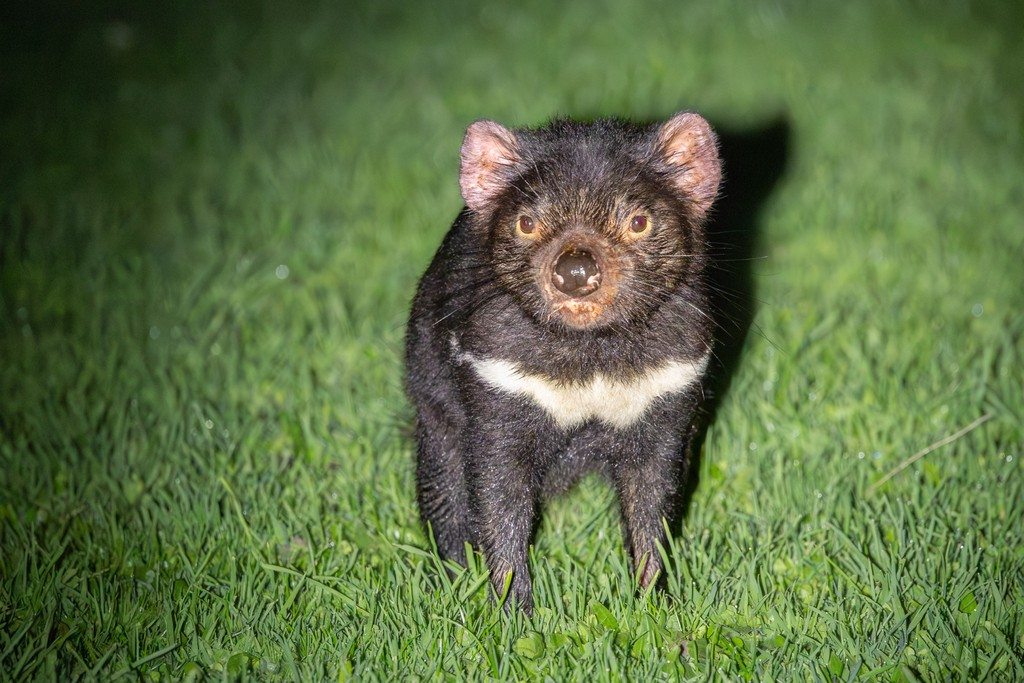
A Tasmanian devil's pale chest markings show against its dark fur.
Species reference for Tasmanian Devil. The photograph does not necessarily show the population or place named in the puzzle.
(c) Ramit Singal, some rights reserved (CC BY) · CC BY 4.0 · Original recordImage changes
Resized and converted to JPEG for display; no subject alteration.
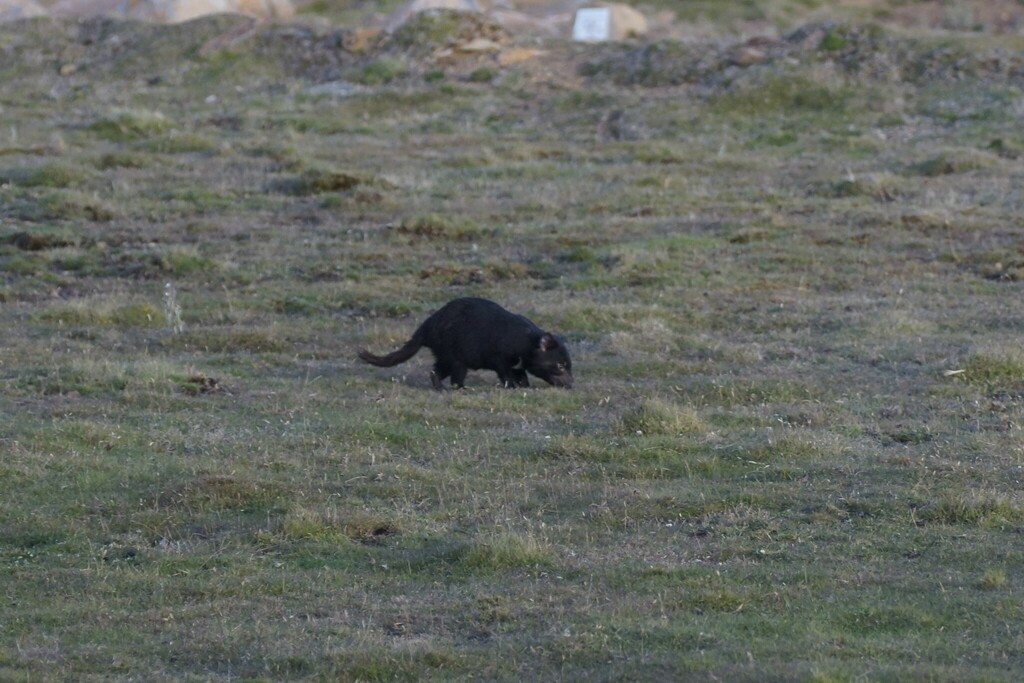
A Tasmanian devil moves across open ground on Tasmania's Central Plateau.
Species reference for Tasmanian Devil. The photograph does not necessarily show the population or place named in the puzzle.
(c) Rod Lowther, some rights reserved (CC BY) · CC BY 4.0 · Original recordImage changes
Resized and converted to JPEG for display; no subject alteration.
The words
Biting
The bites that pass on the facial tumour disease.
DFTD passes between devils through contact, including biting.
Carcasses
Devils clean up carcasses in bush and farmland.
Department of Natural Resources and Environment Tasmania (opens a new tab)
Devil
Early settlers named the animal "The Devil".
Department of Natural Resources and Environment Tasmania (opens a new tab)
Facial Tumour
Devil Facial Tumour Disease is the greatest recent threat to devils.
Department of Natural Resources and Environment Tasmania (opens a new tab)
Gape
The devil's famous gape or yawn looks threatening.
Department of Natural Resources and Environment Tasmania (opens a new tab)
Jaws
Powerful jaws and teeth let it devour prey, bones and all.
Department of Natural Resources and Environment Tasmania (opens a new tab)
Marsupial
The devil is the largest surviving carnivorous marsupial.
Department of Natural Resources and Environment Tasmania (opens a new tab)
Possums
Possums it eats as prey or carrion.
Wallabies, possums and wombats are favourite foods.
Department of Natural Resources and Environment Tasmania (opens a new tab)
Quoll
Another carnivorous marsupial; quolls and Tasmanian devils can compete for food.
Department of Natural Resources and Environment Tasmania (opens a new tab)
Sarcophilus
The Tasmanian devil is Sarcophilus harrisii.
Department of Natural Resources and Environment Tasmania (opens a new tab)
Screech
Devils make high-pitched screeches.
Department of Natural Resources and Environment Tasmania (opens a new tab)
Snarls
Devils make harsh coughs and snarls.
Department of Natural Resources and Environment Tasmania (opens a new tab)
Sneeze
A sharp sneeze challenges other devils before a fight.
Department of Natural Resources and Environment Tasmania (opens a new tab)
Tasmania
Devils remain widespread in Tasmania from the coast to the mountains.
Department of Natural Resources and Environment Tasmania (opens a new tab)
Wombat
Young devils are left in dens such as disused wombat burrows, and wombats are among its foods.
Department of Natural Resources and Environment Tasmania (opens a new tab)
Sources
- dftdnre.tas.gov.au
- Tasmanian Devil (source capture)Department of Natural Resources and Environment Tasmania