
Wildlife of the World
Puzzle 39 · Monsoon Asia and Sundaland · Page 63 in print
Sarus Crane
Sarus cranes can stand about 1.8 metres tall, making them the tallest flying birds; across northern India and Southeast Asia, their wetland displays include dancing and loud trumpeting calls.
Jump to a word
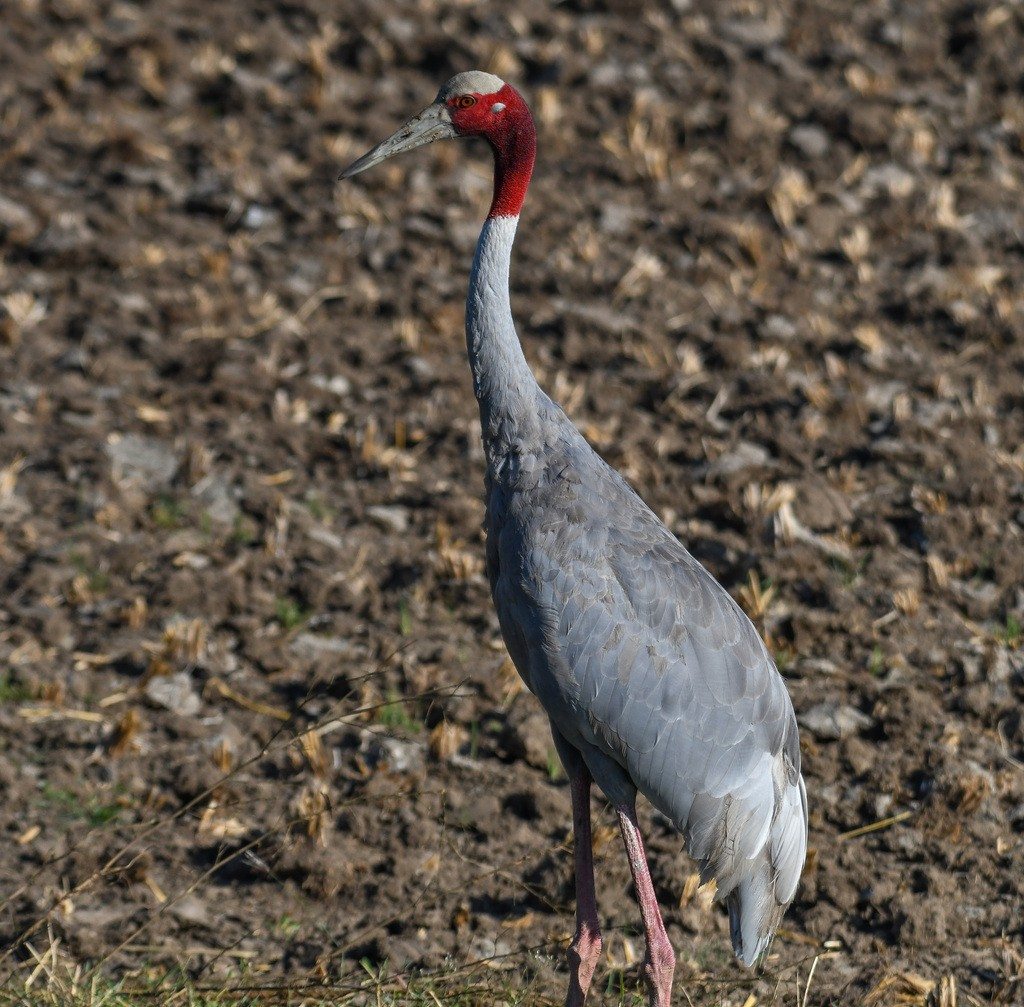
A sarus crane stands upright, showing its red head and neck.
Species reference for Sarus Crane. The photograph does not necessarily show the population or place named in the puzzle.
(c) Rejoice Gassah, some rights reserved (CC BY) · CC BY 4.0 · Original recordImage changes
Resized and converted to JPEG for display; no subject alteration.
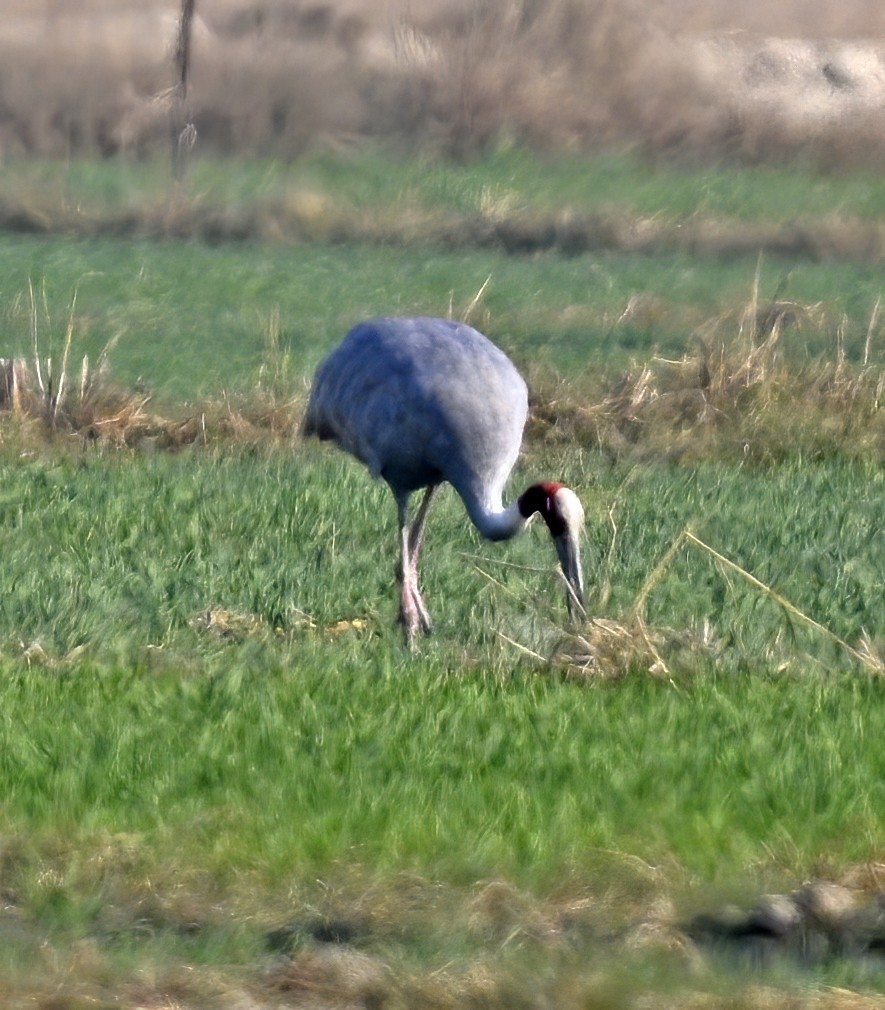
A sarus crane forages in low vegetation in India.
Species reference for Sarus Crane. The photograph does not necessarily show the population or place named in the puzzle.
(c) Pål A. Olsvik, some rights reserved (CC BY) · CC BY 4.0 · Original recordImage changes
Resized and converted to JPEG for display; no subject alteration.
The words
Cambodia
The eastern sarus crane occurs in Cambodia.
Dance
The leaping courtship display.
Sarus cranes dance to attract mates.
Gangetic Plain
Most sarus cranes live along the Gangetic plain.
Grus
The sarus crane is Grus antigone; Cornell's Birds of the World now places it in Antigone.
animaldiversity.org (opens a new tab) · International Crane Foundation (opens a new tab) · Birds of the World (opens a new tab)
India
Sarus cranes live in northern India.
Jackals
Jackals prey on sarus crane eggs and adults.
Keoladeo
Keoladeo National Park at Bharatpur.
Keoladeo's wetlands are a primary breeding ground for the sarus crane.
Mekong
Protecting Mekong River wetlands for Southeast Asia's sarus cranes.
Paddy Fields
Sarus cranes use flooded rice paddies.
Pair Bond
The lasting tie between mates.
The pair's duet strengthens their bond.
Power Lines
Power line collisions threaten sarus cranes.
Sarus
Sarus cranes are the tallest flying birds.
Trumpeting
Dances come with loud trumpeting calls.
Unison Call
The unison call is a pair's duet.
Wetlands
The marshes it feeds and nests in.
Sarus cranes live along low wetlands and flooded rice paddies.
Sources
- Sarus Crane (source capture)International Crane Foundation
- Sarus craneanimaldiversity.org
- Sarus Crane (source capture)Birds of the World, Cornell Lab of Ornithology
- Sarus Crane (source capture)Wildlife Institute of India, UNESCO Category 2 Centre