
Wildlife of the World
Puzzle 34 · Monsoon Asia and Sundaland · Page 58 in print
Gharial Rivers
Male gharials develop a bulbous snout knob used in courtship displays along South Asian river corridors.
Jump to a word
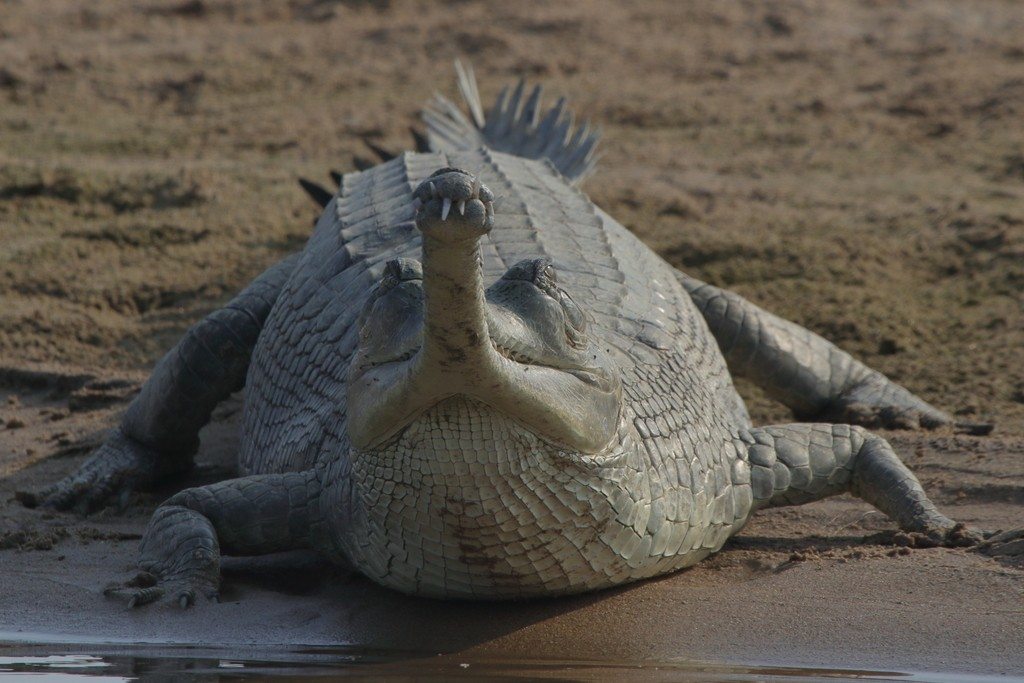
A gharial rests on a sandy riverbank, its long narrow snout facing the camera.
Species reference for Gharial Rivers. The photograph does not necessarily show the population or place named in the puzzle.
(c) Fábio Olmos, some rights reserved (CC BY) · CC BY 4.0 · Original recordImage changes
Resized and converted to JPEG for display; no subject alteration.
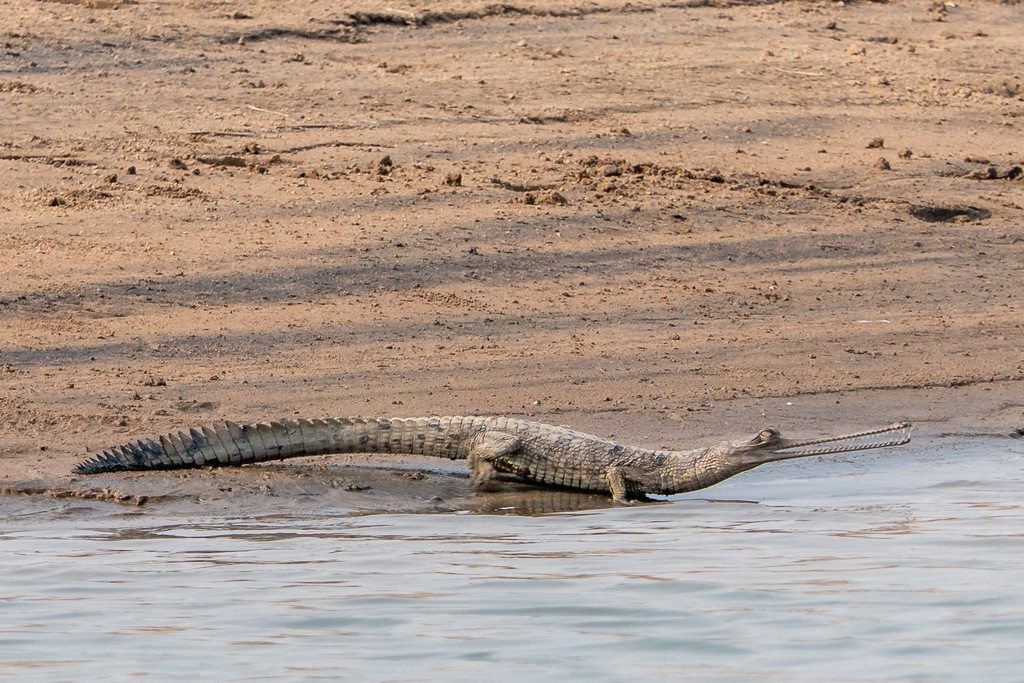
A gharial lies along the water's edge in India.
Species reference for Gharial Rivers. The photograph does not necessarily show the population or place named in the puzzle.
(c) Mike Prince, some rights reserved (CC BY) · CC BY 4.0 · Original recordImage changes
Resized and converted to JPEG for display; no subject alteration.
The words
Brahmaputra
The gharial historically lives in the Brahmaputra river system.
Chambal
Gharials live in the Chambal River.
Wildlife Institute of India (opens a new tab) · Smithsonian's National Zoo and Conservation Biology Institute (opens a new tab)
Crocodilian
Gharials are among the most threatened crocodilians.
Ganges
The gharial historically lives in the Ganges river system.
Ghara
The male's snout knob is called a ghara after an Indian pot.
Gharial
The gharial is known by its long, slender snout.
Girwa
The Girwa river runs through Katerniaghat, whose river channels carry gharial.
Hatchling
Females protect the hatchlings for several weeks.
Jaw Slapping
Males perform jaw slapping above and below the water to attract mates.
Katarniaghat
Katarniaghat Wildlife Sanctuary in Uttar Pradesh.
The river channels of the Dudhwa–Katerniaghat landscape are a conduit for gharial.
Monsoon
The rainy season that scatters the young.
Females guard hatchlings until the monsoon rains disperse them.
Mugger
Mugger crocodiles share the gharial's rivers.
Smithsonian's National Zoo and Conservation Biology Institute (opens a new tab) · National Tiger Conservation Authority (opens a new tab)
Sand Nest
Females dig nests in sandy riverbanks and guard them.
Sandbank
Gharials leave the water only to bask and nest on sandbanks.
Snout
The gharial has an elongated, narrow snout.
Sources
- Gharial Rivers (source capture)Animal Diversity Web, University of Michigan Museum of Zoology
- Gharial Rivers (source capture)Wildlife Institute of India
- Gharial Rivers (source capture)Smithsonian's National Zoo and Conservation Biology Institute
- Gharialnationalzoo.si.edu
- Gharial Rivers (source capture)National Tiger Conservation Authority, Government of India