
Wildlife of the World
Puzzle 33 · Monsoon Asia and Sundaland · Page 57 in print
Bengal Tiger
Bengal tigers swim between mangrove islands in the Sundarbans; India’s 2022 national assessment estimated roughly 3,700 wild tigers across the country.
Jump to a word
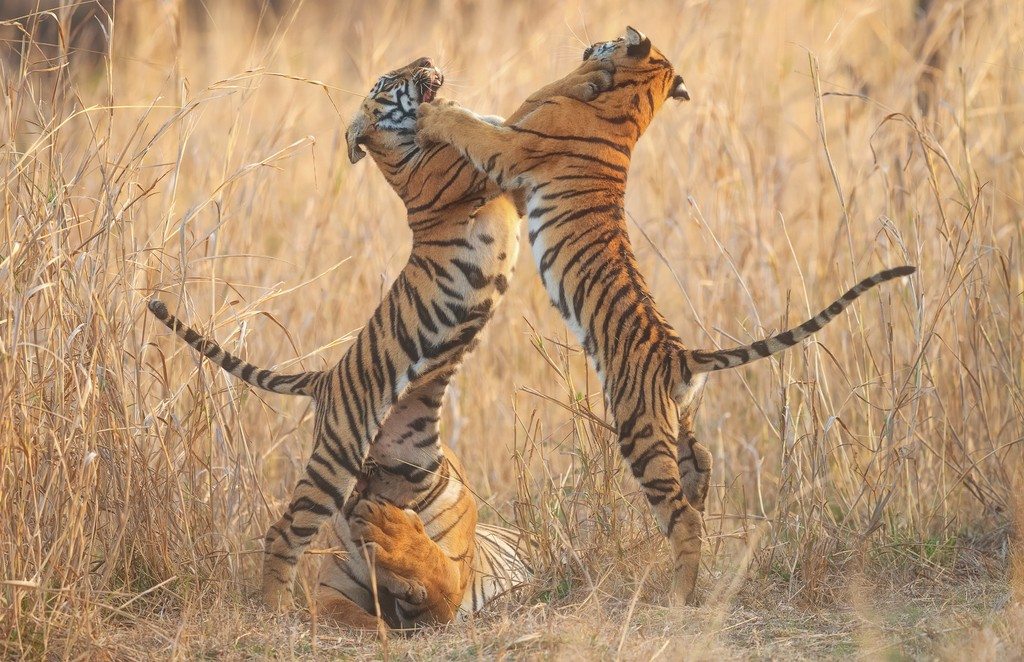
Two Bengal tigers rear up in dry grass in India.
Species reference for Bengal Tiger. The photograph does not necessarily show the population or place named in the puzzle.
(c) Morten Ross, some rights reserved (CC BY) · CC BY 4.0 · Original recordImage changes
Resized and converted to JPEG for display; no subject alteration.
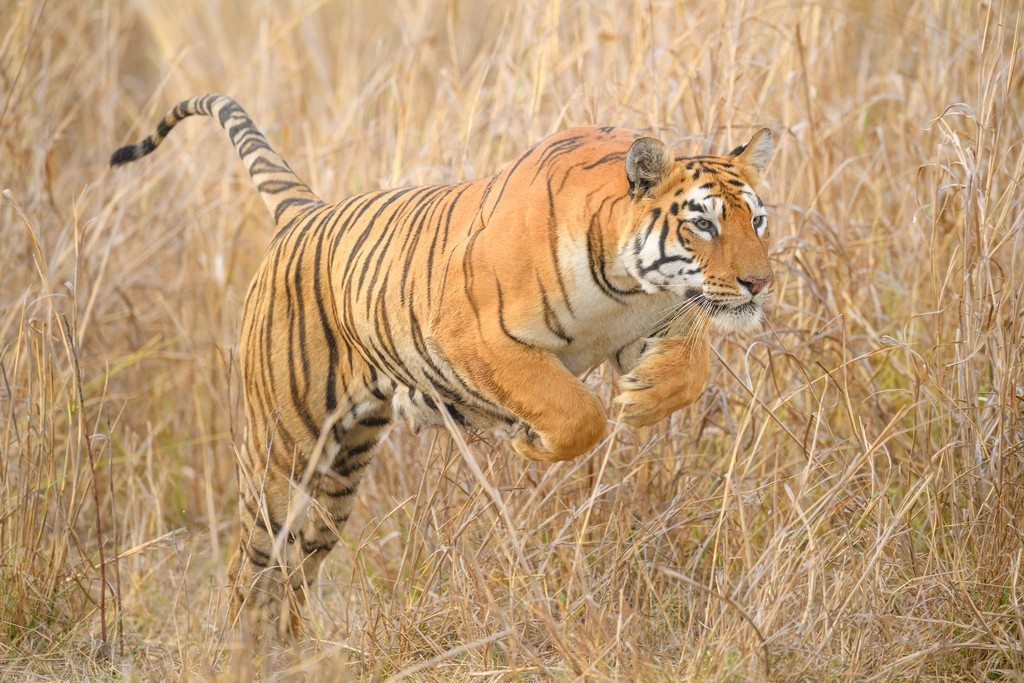
A Bengal tiger walks through tall golden grass.
Species reference for Bengal Tiger. The photograph does not necessarily show the population or place named in the puzzle.
(c) Morten Ross, some rights reserved (CC BY) · CC BY 4.0 · Original recordImage changes
Resized and converted to JPEG for display; no subject alteration.
The words
Bengal
Bengal tigers live in the forests and wetlands of India, Bangladesh, Bhutan and Nepal.
Camera Traps
The 2022 count drew on camera-trapped areas.
Chuff
A chuff is a friendly greeting, usually between a mother and her cubs.
Claws
Tigers hold prey with long retractable claws.
Creeks
The tidal creeks between the islands.
Creeks and channels cross the Sundarbans, which tigers often swim.
Fangs
Bengal tigers have the longest canines of any living large cat, 7.5–10 cm.
Paws
A tiger's front paws are large and strong to bring down prey.
Ranthambore
Ranthambhore Tiger Reserve is one of the best places in India to monitor the tiger.
Roar
The tiger's long-range call.
A tiger's roar signals dominance, size and location.
Scent Marking
Leaving scent to mark territory.
Tigers communicate by scent marking.
Smithsonian's National Zoo and Conservation Biology Institute (opens a new tab)
Spotted Deer
Spotted deer and wild boar are the Sundarbans tigers' main prey.
Stripes
Tigers have vertical black stripes on the flanks and shoulders.
Sundarbans
The Sundarbans is a maze of estuaries, channels and creeks where tigers swim between islands.
Terai
The grassy lowland belt below the Himalayas.
The Terai habitat links Indian and Nepali reserves along corridors tigers use.
Tiger
Tigers live in a wide variety of habitats, including mangrove swamps.
Sources
- Bengal Tiger (source capture)San Diego Zoo Wildlife Alliance
- Bengal Tiger (source capture)Press Information Bureau, Government of India
- Tiger habitatanimaldiversity.org
- Bengal Tiger (source capture)National Tiger Conservation Authority, Government of India
- Bengal Tiger (source capture)National Tiger Conservation Authority, Government of India
- Bengal Tiger (source capture)Smithsonian's National Zoo and Conservation Biology Institute
- Gharial Rivers (source capture)National Tiger Conservation Authority, Government of India