
Wildlife of the World
Puzzle 19 · Amazonia and the Neotropics · Page 37 in print
Capybara Llanos
The capybara is the world’s largest rodent, weighing up to about 65 kilograms; it grazes the seasonally flooded Llanos in family groups and lounges in rivers to escape the midday heat.
Jump to a word
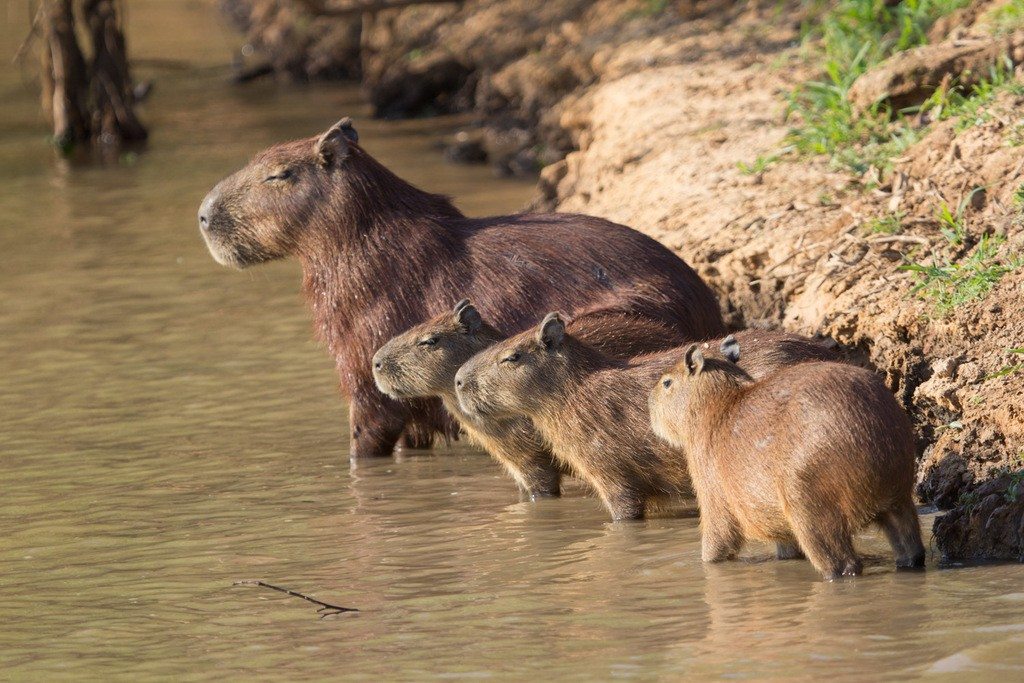
Capybaras gather together at the water's edge in Brazil.
Species reference for Capybara Llanos. The photograph does not necessarily show the population or place named in the puzzle.
(c) avocat, some rights reserved (CC BY) · CC BY 4.0 · Original recordImage changes
Resized and converted to JPEG for display; no subject alteration.
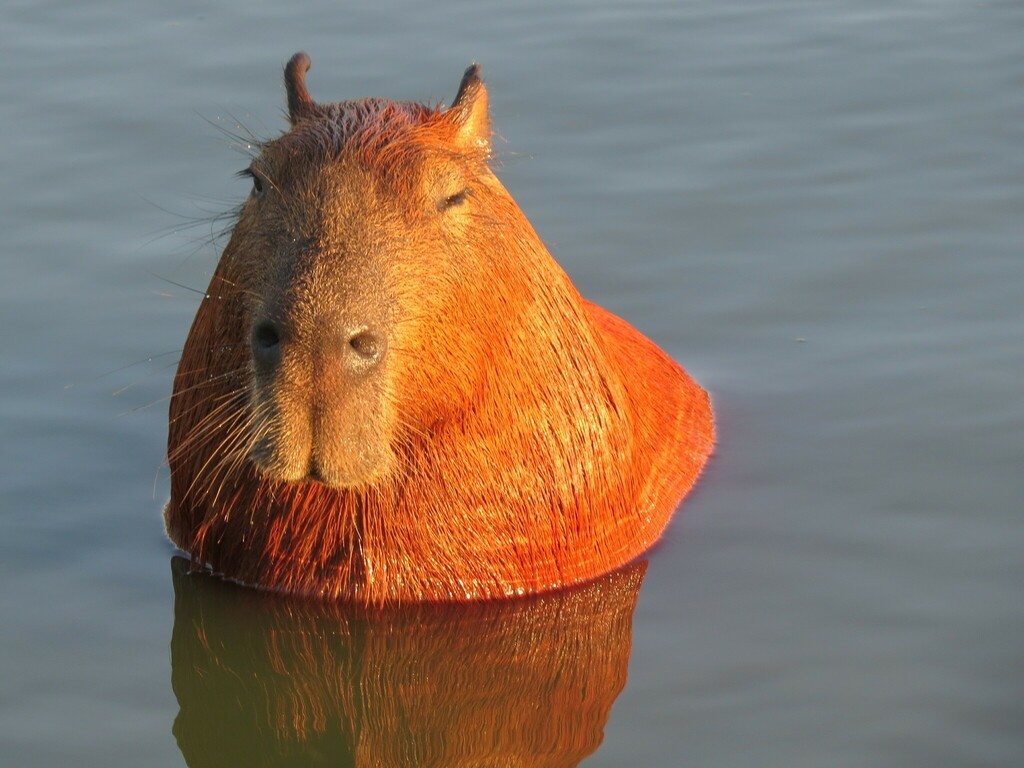
A capybara rests partly submerged in water.
Species reference for Capybara Llanos. The photograph does not necessarily show the population or place named in the puzzle.
(c) Lucas Mantelo Cruz, some rights reserved (CC BY) · CC BY 4.0 · Original recordImage changes
Resized and converted to JPEG for display; no subject alteration.
The words
Barking
Capybaras bark to warn the group of danger.
Capybara
Capybaras are the largest rodents.
Grazing
Capybaras are grazers of grasses and water plants.
Llanos
Capybaras graze the wet and flooded Venezuelan llanos.
Food and Agriculture Organization of the United Nations (opens a new tab)
Nose Gland
Males have a scent gland, the morillo, on top of the snout.
Ocelots
Young capybaras fall victim to ocelots.
Pampas
The capybara's range reaches south into the Argentine pampas.
Rivers
Capybaras live on riverbanks and by ponds and marshes.
Rodent
The animal group it belongs to.
The capybara is the largest rodent.
Swamps
Swampy ground near water where it lives.
Capybaras roam swampy, grassy regions by rivers and lakes.
Swimming
Capybaras are strong swimmers.
Venezuela
The capybara ranges through Venezuela.
Wallowing
Capybaras wallow in shallow water and mud on hot days.
Water Hog
Water hog is an old name for the capybara, once thought to be a kind of pig. Like a hippo, it can raise just its eyes, ears and nostrils above the water.
San Diego Zoo Wildlife Alliance (opens a new tab) · Darwin, Voyage of the Beagle, ch. 3 (opens a new tab) · Animal Diversity Web (opens a new tab)
Webbed Feet
The capybara's feet are partially webbed.
Sources
- Capybara Llanos (source capture)Animal Diversity Web, University of Michigan Museum of Zoology
- Capybara Llanos (source capture)Food and Agriculture Organization of the United Nations (FAO)
- Capybara Llanos (source capture)San Diego Zoo Wildlife Alliance
- The Voyage of the BeagleProject Gutenberg