
Wildlife of the World
Puzzle 18 · Amazonia and the Neotropics · Page 36 in print
Harpy Eagle
The harpy eagle carries rear talons over 12 centimetres long, as long as a grizzly bear’s claws, and uses them to lift sloths and monkeys straight out of the neotropical canopy.
Jump to a word
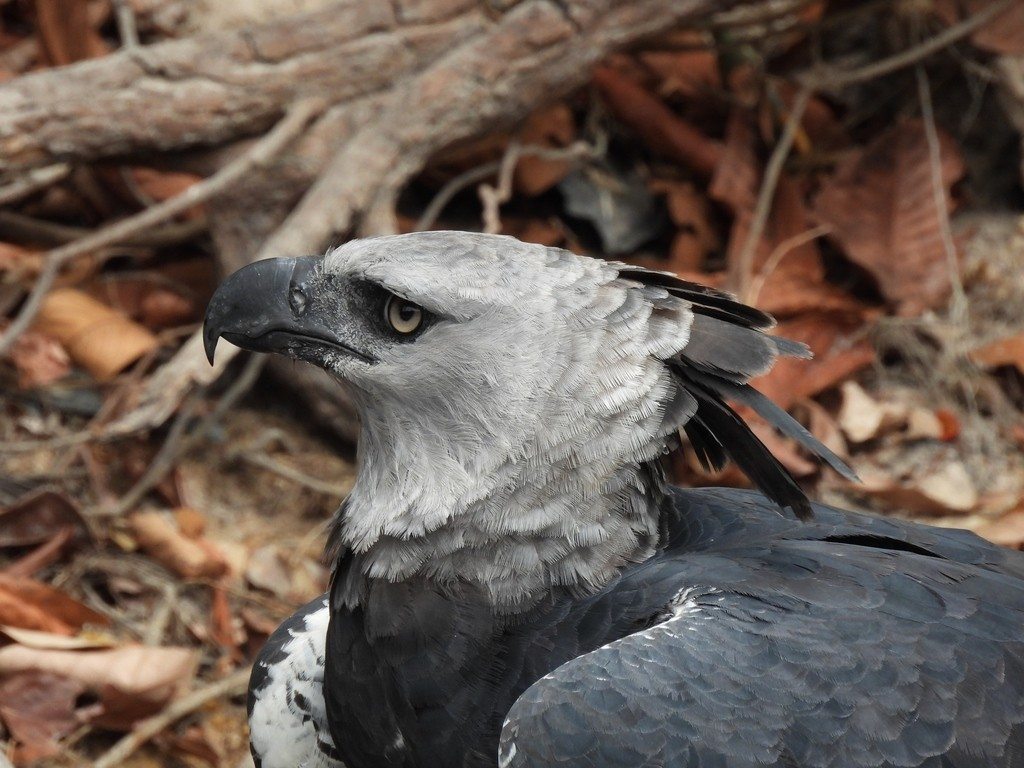
The harpy eagle's hooked bill and crest seen up close.
Species reference for Harpy Eagle. The photograph does not necessarily show the population or place named in the puzzle.
(c) Sidnei Dantas, some rights reserved (CC BY-SA) · CC BY-SA 4.0 · Original recordImage changes
Resized and converted to JPEG for display; no subject alteration.
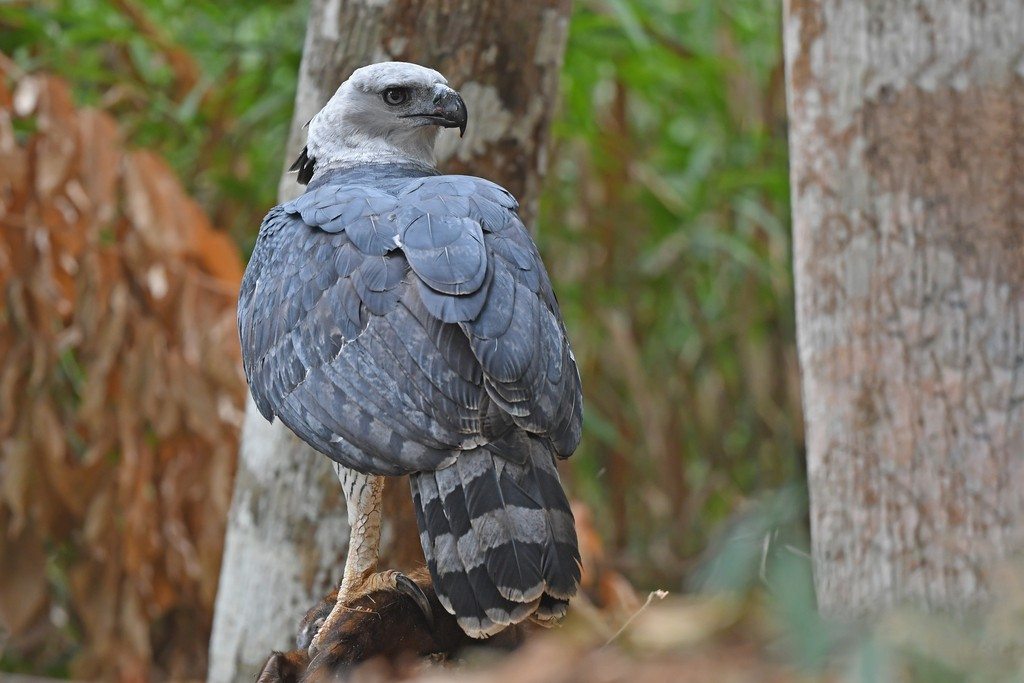
A harpy eagle perches beside a tree trunk.
Species reference for Harpy Eagle. The photograph does not necessarily show the population or place named in the puzzle.
(c) Christoph Moning, some rights reserved (CC BY) · CC BY 4.0 · Original recordImage changes
Resized and converted to JPEG for display; no subject alteration.
The words
Crown Feathers
Long black crown feathers rise when the bird is threatened.
Darien
Central America's largest known harpy population is in Darien Province, Panama.
Eaglet
The single chick a pair raises.
Harpy parents raise at most one eaglet every two years.
Facial Disk
Grey feathers form a facial disk that may focus sound.
Grizzly Claws
Its talons are the size of grizzly bear claws.
San Diego Zoo Wildlife Alliance (opens a new tab) · The Peregrine Fund (opens a new tab)
Harpia
The harpy eagle is Harpia harpyja.
Harpy
The powerful harpy flies below the forest canopy.
Iguanas
Large tree lizards it also eats.
Harpies hunt iguanas.
San Diego Zoo Wildlife Alliance (opens a new tab) · The Belize Zoo (opens a new tab)
Kapok
Harpies favour kapok (silk-cotton) trees for nesting.
Monkeys
The harpy snatches up monkeys and sloths.
Monogamy
Harpy eagles are monogamous and may mate for life.
National Bird
The harpy eagle is Panama's national bird.
Panama
Harpies are native to and released in Panama.
The Peregrine Fund (opens a new tab) · San Diego Zoo Wildlife Alliance (opens a new tab)
Sloths
Main prey snatched from the canopy.
The harpy snatches up monkeys and sloths.
Talons
The huge curved claws it seizes prey with.
Its back talons are 13 cm long.
Sources
- Harpy Eagle (source capture)Animal Diversity Web, University of Michigan Museum of Zoology
- Harpy Eagle (source capture)The Peregrine Fund
- Harpy Eagle (source capture)San Diego Zoo Wildlife Alliance
- Harpy Eagle (source capture)The Belize Zoo
- Harpy Eagle (source capture)The Peregrine Fund