
Wildlife of the World
Puzzle 16 · African Forests and Highlands · Page 31 in print
Mandrill
In the forests of west-central Africa, mandrill groups may gather into hordes of several hundred; adult males stand out with blue facial ridges, red noses and colourful rumps.
Jump to a word
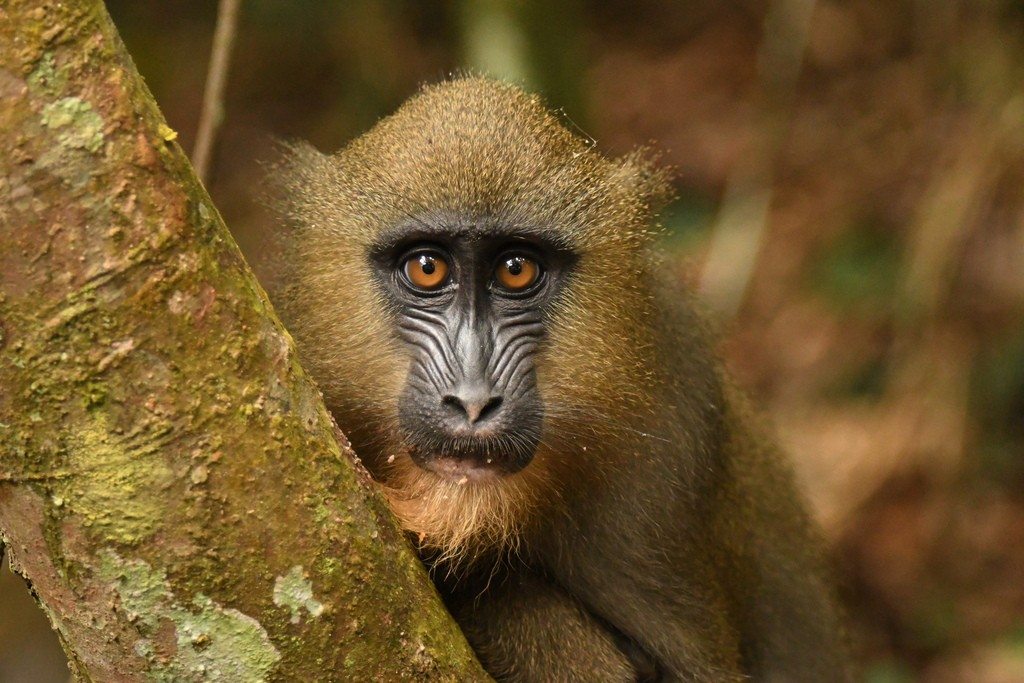
A mandrill peers around a tree trunk in Gabon.
Species reference for Mandrill. The photograph does not necessarily show the population or place named in the puzzle.
(c) Julien Renoult, some rights reserved (CC BY) · CC BY 4.0 · Original recordImage changes
Resized and converted to JPEG for display; no subject alteration.
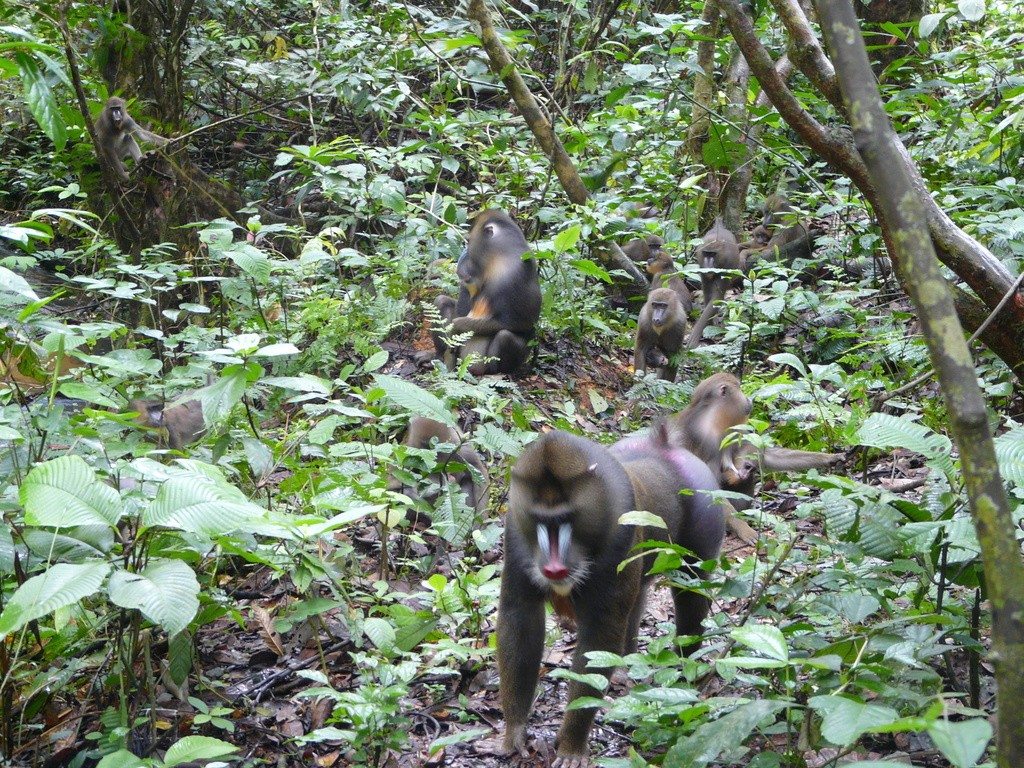
Mandrills move through dense forest undergrowth.
Species reference for Mandrill. The photograph does not necessarily show the population or place named in the puzzle.
(c) Julien Renoult, some rights reserved (CC BY) · CC BY 4.0 · Original recordImage changes
Resized and converted to JPEG for display; no subject alteration.
The words
Baboon
Mandrills are related to baboons.
Blue Ridges
Thick blue ridges run along the nose.
Blue Rump
Mandrills have a brilliant blue to purple bare rump.
Cameroon
Mandrills live in Cameroon.
Cheek Pouches
Cheek pouches hold food to eat later.
denverzoo.org (opens a new tab) · San Diego Zoo Wildlife Alliance (opens a new tab)
Forest Floor
Mandrills forage on the ground on all fours.
Gabon
The largest mandrill population is in Gabon.
Golden Beard
Mandrills have a golden beard.
Grin
Mandrills 'grin' to show their long canine teeth, usually as a friendly gesture.
Harem
A term used for a social group with a dominant male and females; such groups can form part of a much larger mandrill horde.
Horde
Groups join into hordes of up to several hundred.
Lope
Kate Abernethy studied mandrills in Gabon's Lopé National Park for ten years.
Mandrill
Mandrills live in west central Africa.
Scarlet Nose
Mandrills have a red nose and lips.
Troop
Family groups or troops of 10 to 30.
Sources
- Mandrill (source capture)San Diego Zoo Wildlife Alliance
- Mandrilldenverzoo.org
- Mandrill (source capture)Animal Diversity Web, University of Michigan Museum of Zoology
- Mandrill (source capture)National Wildlife Federation (National Wildlife magazine)