
Wildlife of the World
Puzzle 15 · African Forests and Highlands · Page 30 in print
Gelada Cliffs
The gelada is the world’s only primarily grass-eating primate; large bands graze the Ethiopian Highlands by day and retreat down sheer cliff faces to sleep on ledges at night.
Jump to a word
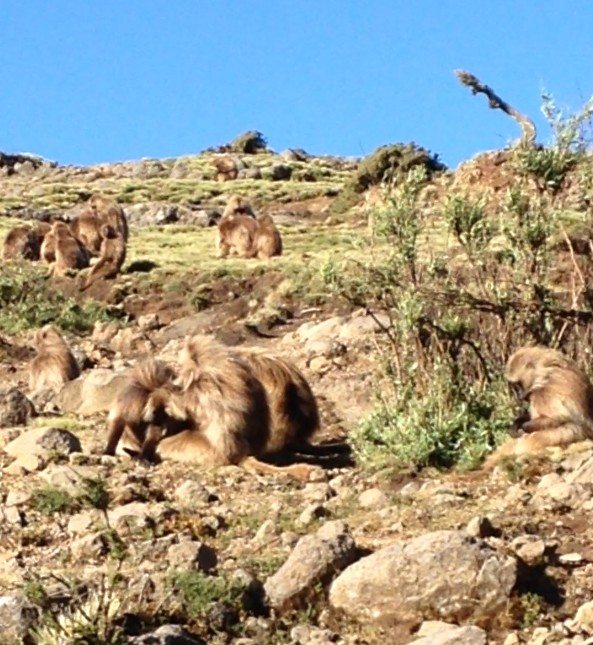
Geladas sit among rocks on an Ethiopian hillside.
Species reference for Gelada Cliffs. The photograph does not necessarily show the population or place named in the puzzle.
(c) Ty Creelan, some rights reserved (CC BY-SA) · CC BY-SA 4.0 · Original recordImage changes
Resized and converted to JPEG for display; no subject alteration.
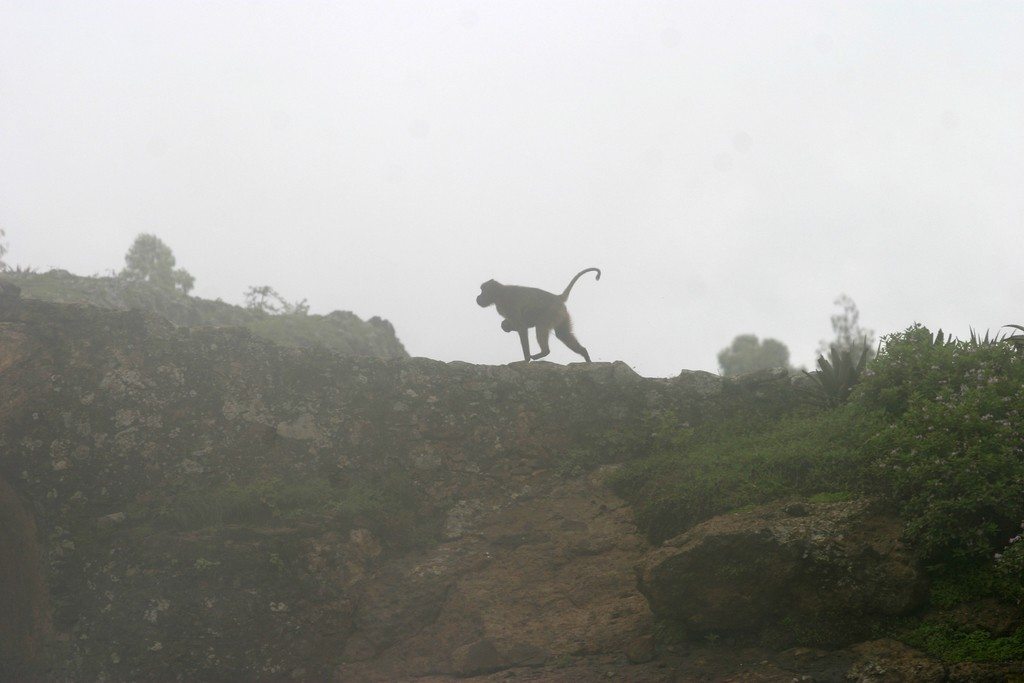
A gelada moves across a misty ridgeline.
Species reference for Gelada Cliffs. The photograph does not necessarily show the population or place named in the puzzle.
(c) Oleg Kosterin, some rights reserved (CC BY) · CC BY 4.0 · Original recordImage changes
Resized and converted to JPEG for display; no subject alteration.
The words
Bleeding Heart
Geladas are called bleeding-heart baboons for the red skin on their chest.
Cape of Hair
Males have a long cape of hair on the back.
Cliffs
Geladas sleep on cliffs.
Ethiopia
Geladas live in the highlands of Ethiopia.
Gelada
Geladas live on the high plateaus of the Ethiopian Highlands.
Grassland
Geladas live in the high grasslands of Ethiopia.
Grooming
Cleaning one another's fur to keep bonds.
Grooming is shared by all members of a family unit and keeps it stable.
Guassa
The Guassa highlands in Ethiopia support geladas studied in their Afro-alpine grassland habitat.
BMC Ecology and Evolution (opens a new tab) · San Diego Zoo Wildlife Alliance (opens a new tab)
Ledges
Bands sleep together on cliffs and ledges.
Lip Flip
The threatening 'lip flip' exposes gums and teeth.
Pale Eyelids
Geladas raise the forehead to flash pale eyelids.
Plateau
Geladas climb to the plateaus to graze.
Roots
Geladas dig up roots and rhizomes when grass runs short.
Shuffle Gait
Geladas move in a peculiar bipedal shuffle gait as they eat.
Simien
Most geladas live in the Semien Mountains National Park.
Sources
- Gelada Cliffs (source capture)San Diego Zoo Wildlife Alliance
- Gelada Cliffs (source capture)Animal Diversity Web, University of Michigan Museum of Zoology
- Gelada Cliffs (source capture)BMC Ecology and Evolution (peer-reviewed article, Ahmed et al. 2023), full text via Europe PMC
- Gelada Cliffs (source capture)San Diego Zoo Wildlife Alliance