
The Great Stories of the Old Testament
Puzzle 80 · Wisdom and Poetic Books · Page 116 in print
The Rose of Sharon
The poem speaks through flowers, fruit trees, animals and seasons; the images belong to love poetry rather than a botanical field guide.
Jump to a word
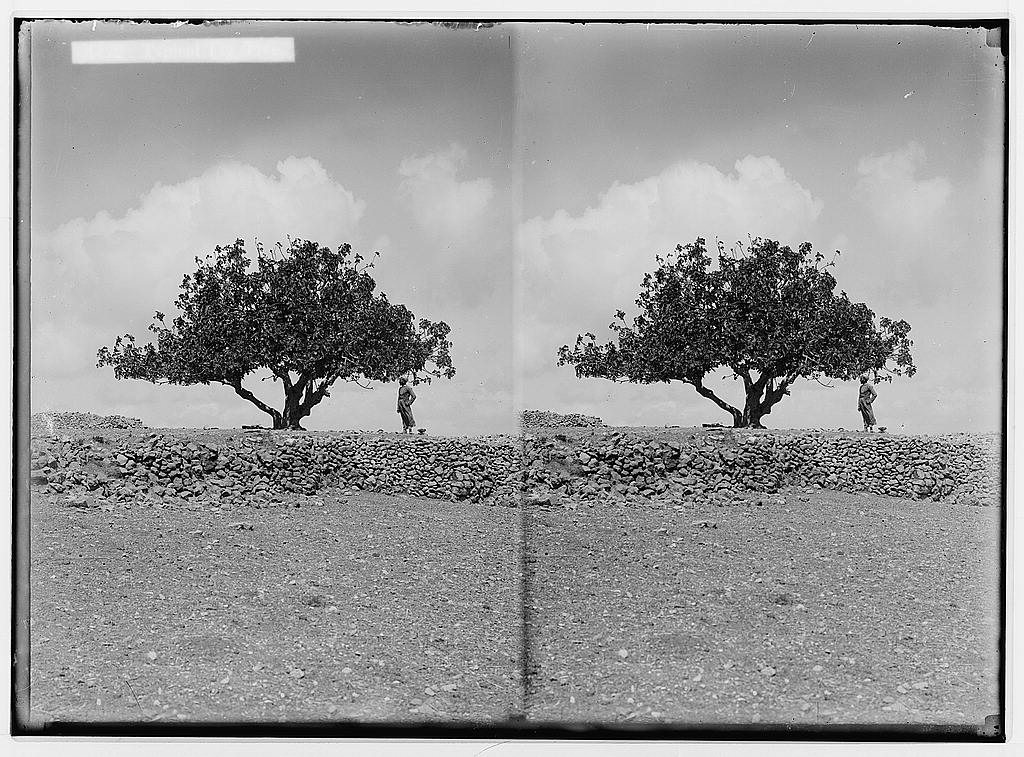
Fig tree before locust damage, photographed in 1915.
The actual fig tree connects directly with the seasonal fruit named in the poem.
American Colony (Jerusalem). Photo Department; G. Eric and Edith Matson Photograph Collection, Library of Congress. · No known restrictions on publication · Original recordImage changes
Resized proportionally to at most 1440px and JPEG compressed; no crop or content alteration.
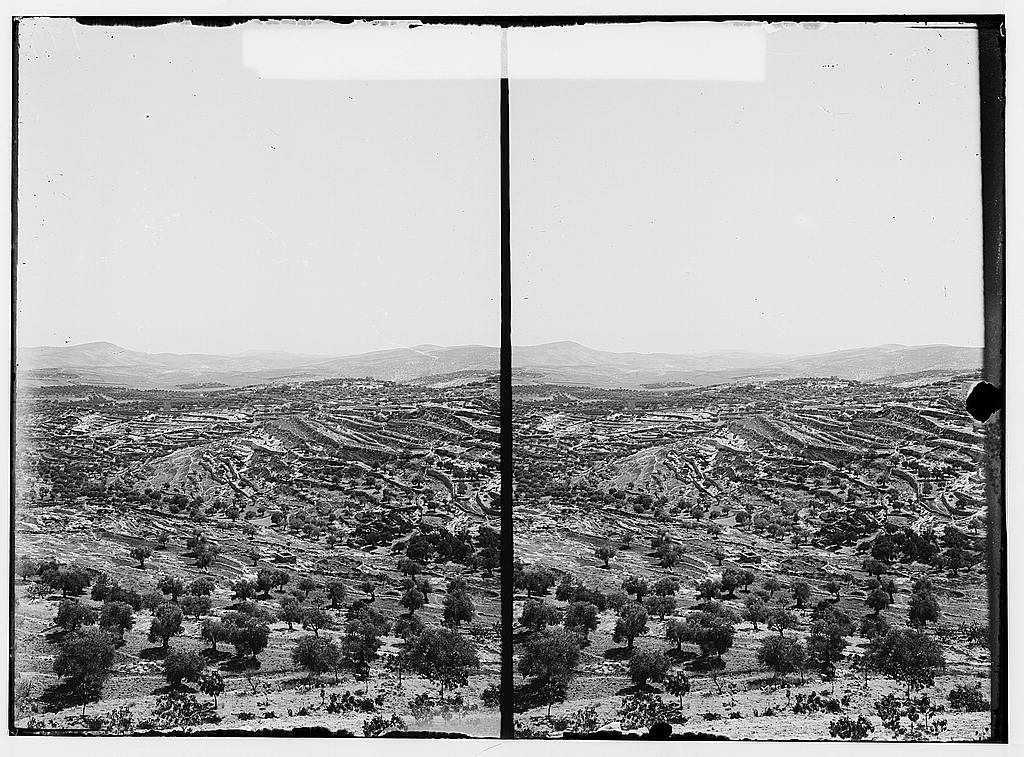
Vineyards and olive groves near Bethlehem, about 1900–1920.
A later vineyard makes the vines and the danger from little foxes concrete, without depicting the poem’s lovers or foxes.
American Colony (Jerusalem). Photo Department; G. Eric and Edith Matson Photograph Collection, Library of Congress. · No known restrictions on publication · Original recordImage changes
Resized proportionally to at most 1440px and JPEG compressed; no crop or content alteration.
The words
Apple
The beloved is compared to an apple tree among woodland trees; the speaker then describes delight in its shade and fruit.
Banner
Banquet hall, in the NET’s rendering of banqueting house.
In the banqueting house, the KJV says “his banner over me was love”; the NET instead describes a loving look.
Song of Solomon 2:4 (opens a new tab) · NET Bible: Song of Solomon 2:4 (opens a new tab)
Beloved
“My beloved is mine, and I am his” expresses mutual belonging; elsewhere the beloved arrives leaping over mountains and calls the speaker away.
Song of Solomon 2:16 (opens a new tab) · Song of Solomon 2:8–10 (opens a new tab)
Dove
Countenance is face; comely is lovely, in the NET.
The address “O my dove” leads to requests to see a countenance and hear a voice, described as comely and sweet.
Song of Solomon 2:14 (opens a new tab) · NET Bible: Song of Solomon 2:14-17 (opens a new tab)
Fig Tree
The fig tree puts forth green figs beside fragrant vines, part of the invitation to arise and come away.
Flower
Turtle is rendered turtledove in the NET.
Flowers appear after winter and rain have passed; the verse pairs their arrival with singing and the voice of the turtle.
Did you know?
The NET keeps two possibilities together, rendering the disputed seasonal phrase as time for pruning and singing.
Song of Solomon 2:11–12 (opens a new tab) · NET Bible: Song of Solomon 2:8-13 (opens a new tab)
Lily
The opening lily of the valleys becomes a lily among thorns; lilies return beside “My beloved is mine, and I am his.”
Song of Solomon 2:1–2 (opens a new tab) · Song of Solomon 2:16 (opens a new tab)
Little Foxes
Little foxes spoil the vines with tender grapes in the KJV; the NET pictures the vineyard as in bloom.
Song of Solomon 2:15 (opens a new tab) · NET Bible: Song of Solomon 2:14-17 (opens a new tab)
Rock
Stairs is rendered mountain crags in the NET.
The dove is addressed in clefts of the rock and secret places of the stairs, before the request for voice and countenance.
Song of Solomon 2:14 (opens a new tab) · NET Bible: Song of Solomon 2:14-17 (opens a new tab)
Rose
The KJV calls the speaker “the rose of Sharon”; the NET uses meadow flower, with notes discussing several proposed identifications.
Did you know?
The NET note links this flower word to Isaiah 35:1, where the KJV also says the desert shall blossom as the rose.
Song of Solomon 2:1 (opens a new tab) · NET Bible: Song of Solomon 2:1-2 (opens a new tab) · Isaiah 35:1 (opens a new tab)
Sharon
Sharon locates the flower image in the KJV; the NET note describes it as a low coastal plain south of Mount Carmel.
Song of Solomon 2:1 (opens a new tab) · NET Bible: Song of Solomon 2:1-2 (opens a new tab)
Song
The opening title calls the work “The song of songs, which is Solomon’s,” before the poem’s voices begin.
Did you know?
The NET renders song of songs as Most Excellent Love Song, expressing the title’s high praise for the composition.
Song of Solomon 1:1–2 (opens a new tab) · NET Bible: Song of Solomon 1:1 (opens a new tab)
Valleys
Valleys place the lily beside Sharon’s flower in the opening line; the next verse moves the lily into a comparison among thorns.
Wine
The opening asks “Let him kiss me” and says love is better than wine; verse 4 repeats the wine comparison.
Young Hart
Roe is rendered gazelle in the NET.
The beloved is compared to a roe or young hart after arriving over mountains and hills, then appears looking through the lattice.
Song of Solomon 2:8–9 (opens a new tab) · NET Bible: Song of Solomon 2:8-13 (opens a new tab)
Sources
- Song of Solomon 1:1-4 (King James Version)King James Version, passage navigation via Bible Gateway
- Song of Solomon 2:1-7 (King James Version)King James Version, passage navigation via Bible Gateway
- Song of Solomon 2:8-13 (King James Version)King James Version, passage navigation via Bible Gateway
- Song of Solomon 2:14-17 (King James Version)King James Version, passage navigation via Bible Gateway
- Song of Solomon 1:1 (NET Bible), translation and notesNET Bible, via Bible Gateway
- Song of Solomon 2:1-2 (NET Bible), translation and notesNET Bible, via Bible Gateway
- Song of Solomon 2:4 (NET Bible), translation and notesNET Bible, via Bible Gateway
- Song of Solomon 2:8-13 (NET Bible), translation and notesNET Bible, via Bible Gateway
- Song of Solomon 2:14-17 (NET Bible), translation and notesNET Bible, via Bible Gateway
- Isaiah 35:1 (King James Version)King James Version, passage navigation via Bible Gateway